




Morning Light Therapy: The 15-Minute Habit That Transforms Your Energy & Sleep

Most sleep advice feels noisy. One person says “sleep in.” Another says “wake at 5.” If you’re tired, foggy, and stuck in an on-off sleep pattern, it’s easy to feel like you’re doing it wrong.
Here’s the calmer truth. Your body runs on a daily timer called your circadian rhythm. When that timer drifts, sleep gets messy and mornings feel heavy.
Morning light therapy is a simple reset button. It’s not fancy. It’s not extreme. It’s a steady 15-minute habit that helps your brain know, “Day has started.”
What Morning Light Therapy Is (and what it isn’t)
Morning light therapy means getting bright light soon after you wake. That light can come from outdoor morning sunlight exposure or a bright light therapy box. The goal is timing, not tanning.
It’s not red light therapy. It’s not looking at the sun. It’s not a “power through” hack.
Think of it like setting a wall clock. If the clock runs slow, you don’t blame the clock. You set it using a clear time signal.
Morning light vs “blue light at night”
Morning light tells your brain, “Start the day.” Evening light tells your brain, “Stay awake.” That’s why late scrolling can make sleep feel far away.
It’s not that screens are “bad.” It’s the timing that matters most. Morning light and evening dimness work as a pair.
The Science in Plain English: Why Morning Light Works
Your brain has a master timekeeper. Scientists call it the SCN (suprachiasmatic nucleus). It sits deep inside the brain and helps set sleep timing.
Your eyes send the SCN a daily update. This update comes from special light-sensing cells in the retina. They act like a “morning report” for your body clock.
Light is a zeitgeber. That word means “time cue.” Morning light is one of the strongest time cues we have.
Retina to SCN: the “master clock” route
The SCN doesn’t “see” pictures. It tracks light and dark to set your internal day. That’s why even with closed blinds, your body still cares about light.
This system links to hormones and alertness. Two big names here are melatonin and cortisol. Melatonin supports sleep, and cortisol supports wake-up energy.
Melatonin, DLMO, and the bedtime signal
Melatonin starts rising a few hours before sleep. That start point is called DLMO (dim light melatonin onset). It’s like your body’s “bedtime countdown.”
Morning light can help set that countdown earlier. Night light can push it later. That’s a big reason late nights can turn into late mornings.
Melanopsin and ipRGCs: the light sensors that matter
Some retinal cells react strongly to bright light. They’re called ipRGCs (intrinsically photosensitive retinal ganglion cells). They use a light-catching pigment called melanopsin.
Here’s the simple version. These cells help tell your brain when the day begins. That message affects alertness and sleep timing.
What studies show (quick evidence, no hype)
A small clinical trial in adults with insomnia tested morning light therapy. After about two weeks, people in the light group showed better scores on tools like ESS (daytime sleepiness) and sleep questionnaires like ISI and PSQI. That points to real-world changes like less daytime dozing and steadier nights.
Other research in older adults, including people with dementia, found morning bright light helped sleep and daily rhythm. And newer population research links morning sun time (before about 10 a.m.) with an earlier sleep midpoint and slightly better sleep quality scores. That doesn’t prove cause, but it fits what we know about the body clock.
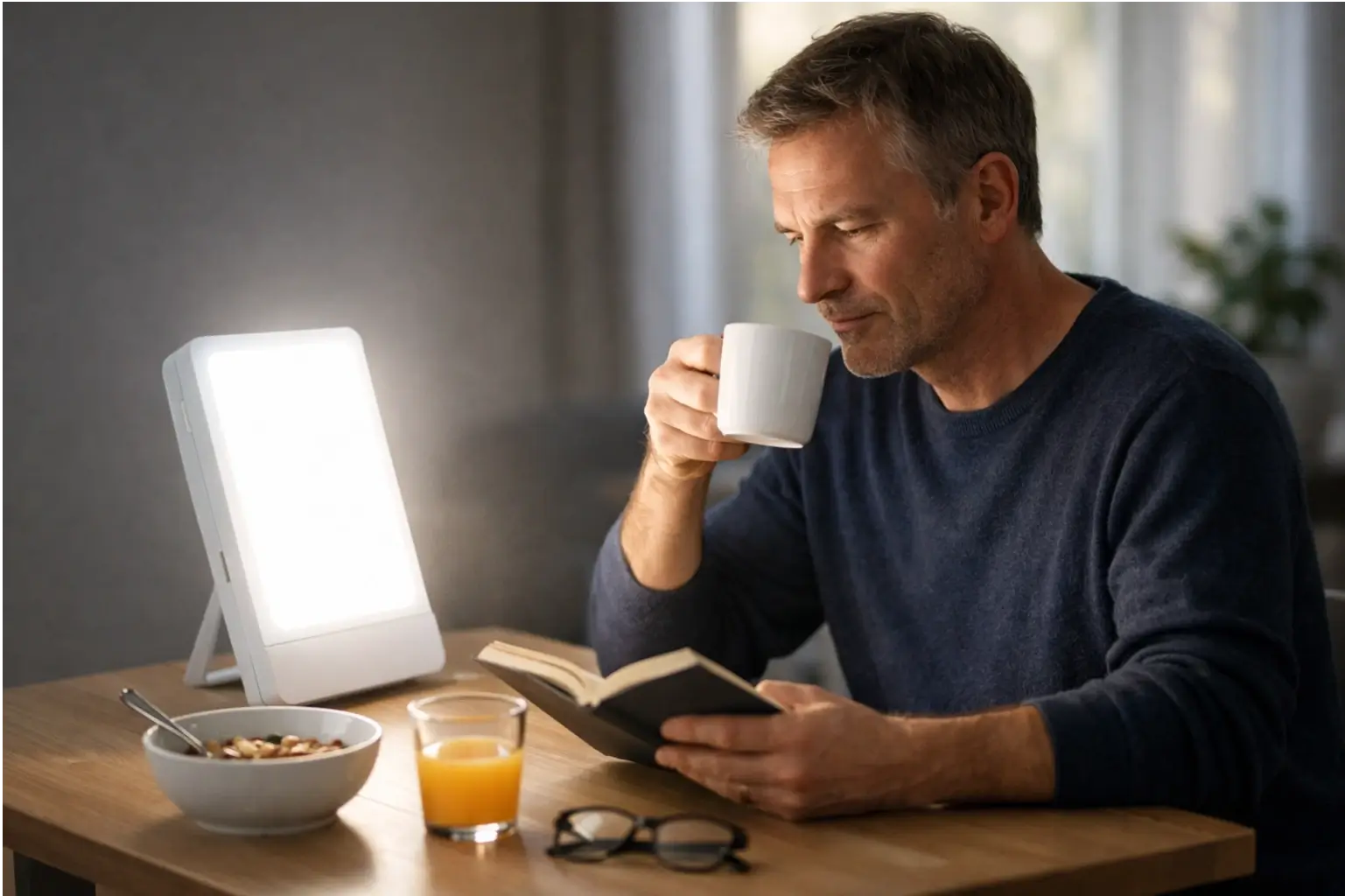
The 15-Minute Morning Light Protocol (step-by-step)
This is the part most people need. Not theory. Not rules. Just a plan you can do on a normal weekday.
Step 1: Timing (best window)
Aim for light within the first hour of waking. Earlier usually works better than later. Pick a time you can repeat most days, including weekends.
If you wake at 7, get light by 8. If you wake at 10, get light by 11. The point is a steady “start of day” signal.
Step 2: Duration (15 vs 30 minutes)
Start with 10 to 15 minutes. That’s a solid minimum for many people. If mornings are dark, cloudy, or wintery, go longer.
A common target is 20 to 30 minutes. More time helps when light is weaker. Keep it simple and repeatable.
Step 3: Outdoor vs Light Box (choose your setup)
Outdoor light is the easiest option when you can get it. Even a cloudy morning outside often beats indoor room light. A short walk, a balcony sit, or a doorstep coffee can work.
A window helps, but it’s not the same. Glass cuts the intensity and changes the light. If you rely on a window, add time and sit close.
A light box works when mornings are dark or busy. Look for 10,000 lux at a normal sitting distance. Many guides suggest around 16 to 24 inches (about 40 to 60 cm) from your face.
Use the box with your eyes open. Don’t stare at it. Keep it slightly off to the side while you eat or read.
Pick a lamp with UV filtering. Skip anything that feels like it could sunburn skin. Light therapy isn’t a tanning session.
Step 4: “Do this while you do that” (habit stacking)
Make the habit fit your life. We don’t need perfect. We need repeatable. Tie light to something you already do.
Here are easy pairings:
- Sit in bright light while you eat breakfast
- Walk outside while you listen to a short podcast
- Stand by the window while you pack a bag
- Take a slow lap around the block with a warm drink
Keep caffeine timing in mind. If coffee hits too early, try light first, then coffee. Many people feel more steady that way.
Quick troubleshooting
If you wake before sunrise, use a light box. Or try a dawn simulator that brightens your room before the alarm. Keep the timing steady, even if the sky is dark.
If you can’t go outside, use the brightest safe option indoors. A light box beats a dim room. Place it where you’ll actually sit.
If light makes you jittery, cut the dose. Start with 5 minutes. Build up slowly across a week.
Match the Light to Your Goal (energy, sleep, mood)
Morning light can help in different ways. The same habit can support both sleep and daytime energy. The key is choosing the right goal and sticking with it.
For daytime energy and focus
If you feel groggy for hours, morning light may help. In sleep research, daytime sleepiness is often tracked with ESS. Some studies show morning light can move that score in a better direction.
In real life, that can look like this. You wake up and feel “online” sooner. You stop needing three cups of tea just to think.
For insomnia or poor sleep quality
If nights feel broken, morning light can support a steadier rhythm. Sleep quality tools like PSQI and insomnia tools like ISI often show change when people use light daily. This works best when you keep a steady wake time too.
Morning light won’t fix every sleep problem alone. Stress, pain, and noise still matter. But it can make your sleep timing less random.
For circadian rhythm disorders (important nuance)
Sometimes the issue isn’t “bad sleep.” It’s a body clock that runs late or early. Two names you may see are DSWPD (delayed sleep-wake phase disorder) and ASWPD (advanced sleep-wake phase disorder).
If you’re a strong night owl, morning light often helps pull sleep earlier. If you get sleepy very early and wake too early, the plan can differ. In some cases, evening light gets used instead of morning light, so it’s smart to ask a clinician if timing feels extreme.
Safety, Side Effects, and Who Should Ask a Doctor First
Light therapy is usually well tolerated. Still, it’s not for everyone. It’s worth a quick safety check before you start.
Common mild effects include headache, eyestrain, nausea, and feeling wired. These often ease when you reduce time or move the lamp farther away. Start low if you’re sensitive.
Some people should speak with a healthcare professional first. This matters most if you have eye disease or a mood condition. Light changes brain timing, and that can affect mood in rare cases.
Safety checklist
Use extra care if any of these fit:
- You have bipolar disorder, or a past manic episode
- You have retinal disease, macular issues, or diabetes-related eye damage
- You take medicine that makes you very light-sensitive
- You get migraines triggered by bright light
- You have serious sleep timing problems that don’t match your life
If you check one box, it doesn’t mean “no.” It means “get advice first.” That keeps the plan safe.
One more trust note. Light boxes vary a lot, and the market isn’t tightly controlled. Choose a reputable brand and follow distance and time guidance.

How to Choose a Light Box (so you don’t waste money)
A good light box feels simple to use. It should sit where you’ll actually use it. If it’s a pain, it won’t last past week one.
Start with the basics. Look for 10,000 lux at a realistic distance. Many guides use about 16 to 24 inches (40 to 60 cm) as a workable range.
Check for UV filtering. That’s a must. You want bright visible light, not UV exposure.
Look for a size you can live with. Bigger screens spread light better. Small ones can work, but the distance and angle matter more.
Think about your routine. Do you eat breakfast at a table, or on a sofa? Pick a lamp that fits that spot.
Lux and time: the simple rule
Lux and time trade places. More lux can mean less time. Less lux can mean more time.
That’s why many plans use “10,000 lux for about 30 minutes.” But people also use longer sessions with lower-intensity lamps. If the lamp feels weak, add time rather than forcing closeness.
Light type and colour notes
Some devices mention blue-enriched light and wavelengths around 480 nm. That range connects to melanopsin sensitivity. For most readers, the bigger win is bright light at the right time, every day.
Keep your eyes comfortable. If your eyes feel dry or sore, adjust distance and time. Comfort helps consistency.
How fast you’ll notice results (and how to track progress)
Expect small signs first. You may wake a bit easier within a few days. Some people notice less afternoon slump in week one.
Sleep timing often takes longer. Give it two weeks before you judge it. Some studies track changes in that time frame.
For deeper rhythm changes, think in two to four weeks. That’s when routines start to stick. It’s also when bedtime can start moving earlier without force.
Tracking helps, and it doesn’t need an app. Use a simple notes page. Write two lines each day.
Track these items:
- Wake time and bedtime
- How long it took to fall asleep
- Night wake-ups (rough count)
- Midday sleepiness (0 to 10)
- Your “sleep midpoint” (halfway between sleep and wake)
If you want a quick check, use a mini PSQI-style view. Ask, “Was sleep deep, okay, or poor?” Patterns matter more than one bad night.
The simplest way to start tomorrow
Pick your wake time. Then pick your light plan. Make it easy enough to repeat.
Try this tomorrow:
- Wake up
- Get bright light within one hour
- Keep it going for 15 minutes
- Repeat daily for two weeks
If sleep advice has felt confusing, this is a steadier place to start. Morning light gives your body clock one clear signal. When that signal stays steady, sleep often gets less messy and days feel more usable.
FAQs
How long should morning light therapy be, 15 minutes or 30 minutes?
Most people can start with 10 to 15 minutes of bright morning light within the first hour of waking. If mornings are dark, cloudy, or mostly indoors, 20 to 30 minutes often works better. The goal is daily consistency, not a perfect number.
15 minutes is a strong entry point. It’s easy to repeat, which is the real win.
If you’re using a light box, follow its guidance. Distance changes intensity. If you sit farther away, add time.
What’s the best time to get morning light after waking?
The best window is usually within the first hour after you wake. That early light gives your body clock a clear “day has started” cue. When you repeat that timing most days, it can support steadier sleep timing and easier mornings over time.
Treat it like brushing your teeth. Same time, most days.
If your wake time changes, move the light with it. Don’t wait until midday. Late light sends a weaker timing message.
Does it still work on a cloudy day or in winter?
Yes, it can still work. Outdoor light stays brighter than most indoor rooms, even when the sky is grey. In winter or low-light mornings, you may need more time, like 20 to 30 minutes. A light box can also fill the gap when daylight is limited.
Cloudy doesn’t mean “no light.” It means “less light.”
If you can, go outside anyway. If you can’t, use a bright lamp setup. Keep it steady across the season.
Is outdoor light better than a light box?
Outdoor morning light often gives higher intensity than indoor lighting, and it comes with movement and fresh air. A light box can still work well when weather, time, or sunrise makes outdoor light hard. The best choice is the one you’ll use daily without stress.
Outdoor light wins on simplicity. Step out, get light, come back.
A light box wins on control. It’s there even in dark mornings. Pick what fits your life best.
Can morning light therapy help insomnia, or is it only for mood?
Morning light therapy may help sleep in some people, not only mood. Small studies in adults with insomnia found morning light routines linked with better scores on sleep questionnaires and less daytime sleepiness after a couple of weeks. It’s most useful when paired with a steady wake time.
Insomnia has many causes. Light helps the timing part.
If worry, stress, or pain drives insomnia, you may need more support. Still, a steadier body clock can make sleep feel less random. That’s often a relief on its own.
What are the side effects of light therapy?
Common side effects include headache, eyestrain, nausea, and feeling restless or wired. These are usually mild and often improve when you reduce session time, increase distance, or stop earlier in the morning. If symptoms feel strong or last, it’s smart to pause and get medical advice.
Start small if you’re unsure. Five minutes is fine.
Move the lamp back if your eyes feel sore. Keep the light slightly to the side. Comfort matters.
Is light therapy safe if I have bipolar disorder?
People with bipolar disorder should talk with a clinician before using bright light therapy. In rare cases, bright light can trigger hypomania or mania, especially with long sessions or the wrong timing. If a clinician approves it, they may suggest shorter sessions and careful mood tracking at first.
This is a safety-first zone. Mood changes can move fast.
If you have a history of mania, don’t self-test bright light. Get guidance on timing and dose. That keeps risk low.
Is light therapy safe if I have eye problems like macular disease or diabetes-related damage?
If you have retinal disease, macular problems, or diabetes-related eye damage, check with an eye doctor before using a light box. Bright light may irritate sensitive eyes, and safety depends on your condition. If you’re cleared to use it, choose a UV-filtering device and start with short sessions.
Eye health matters more than routine. Get advice if you have any doubt.
Outdoor light may still be fine, but ask first if your eyes are fragile. If you use a box, follow distance rules. Don’t push through eye discomfort.
Can morning light help if I’m a night owl and can’t fall asleep early?
Morning light can help many late sleepers move their sleep timing earlier, especially when used soon after waking every day. It works best when you also keep wake time steady and dim lights at night. If your sleep timing is extreme or persistent, ask a clinician about DSWPD and timing plans.
Late sleep often runs on habit and biology. Morning light targets the biology part.
Keep evenings dim and calm. Keep mornings bright and steady. That combo sends one clear timing message.
How do I choose a real 10,000-lux light box and not a marketing number?
Look for a light box that states 10,000 lux at a realistic sitting distance, not only when your face is very close. Check for UV filtering, clear usage instructions, and a reputable maker. If the box needs you to sit inches away, the claimed lux may not help in daily life.
Distance matters as much as lux. If it’s too close, it’s hard to use.
Read the specs with the distance listed. Pick something that fits where you sit. A lamp you can’t stick with won’t help.
How long until I see changes in energy and sleep?
Some people notice easier mornings or less midday slump within a few days. Sleep timing changes often take longer, so give it about two weeks before judging it. For deeper routine changes, plan on two to four weeks of daily use. Track wake ease and sleep timing to spot progress.
Quick wins can show up early. Lasting wins take repetition.
If you miss a day, restart the next day. Don’t treat it like failure. Treat it like practice.
What if I wake up before sunrise, should I still do it?
Yes, you can still do it. If the sun isn’t up, a light box or dawn simulator can give your body clock a morning cue. Use the light within the first hour after waking and keep the timing steady. When daylight appears later, add a short outdoor dose if you can.
Dark mornings are common. Use tools that fit that reality.
A light box can act like “artificial dawn.” Then daylight can take over later. Keep the routine calm and simple.







[…] body clock likes strong morning cues. Light in the morning helps set your internal day-night […]
[…] thrown off, you can feel tired, hungry at odd times, and foggy the next day. A steady wake time and morning light help reset […]
[…] get daylight soon after waking. Morning light helps your brain time melatonin later in the […]
[…] feel alert, when you feel sleepy, and when your body releases hormones like melatonin and cortisol. Light in the morning, dim evenings, meal timing, movement, and stress all nudge that […]