



Slow Travel Movement: Why Staying Longer in Fewer Places Is Trending

You’ve got a week off. Your tabs say you can “do” three cities, two day trips, and a sunrise hike. Your brain says, “Sure.” Your body says, “Please no.”
I get it. It’s hard to choose where to stay. It’s hard to know what’s worth your time and money. And it’s easy to land somewhere and realise you’ve paid extra for crowds, queues, and a lunch that tastes like regret.
That’s why the slow travel movement keeps growing. It’s a calmer way to travel. It’s also a practical fix for planning overload, tourist traps, and the stress of getting from A to B.
What is the slow travel movement?
The slow travel movement is a way of travelling where you stay longer in fewer places, move around less, and focus on quality over quantity. You plan a simple base, keep your days light, and travel at your own pace. It’s often called slow travel or slow tourism, and it rewards curiosity.
Slow travel isn’t about moving at a snail’s pace. It’s about the right speed for the place you’re in, and the time you’ve got. Slow Travel UK sums up the wider Slow Movement as “tempo giusto”, the right speed, not “slow all the time.”
Here’s the one-line promise I keep coming back to. You get deeper understanding, less stress, a smaller carbon footprint, and often better value.
Slow travel vs slow tourism vs slow living
Slow travel and slow tourism usually mean the same thing in practice. Both focus on mindful travel, meaningful connections, and fewer checklists.
Slow living is broader. It’s a lifestyle choice about time, attention, and daily rhythm. Slow travel borrows that mindset for a trip, then adds real-world logistics like transport, booking rules, and budgets.
The Slow Movement also shows up in places you might not expect. Slow Travel UK links “slow” to Slow Tech, Slow Money, and more, as a general pushback against always rushing.
Where did slow travel come from?
Slow travel links back to the Slow Food movement, which began in Rome, Italy, in 1986 after protests near the Spanish Steps. The point was simple: protect local traditions, local producers, and the joy of taking time. That same idea later shaped slow travel and slow tourism.
Slow Food started as a response to fast food culture and speed-for-speed’s-sake. It wasn’t only about food. It was also about place, community, and paying attention.
That matters for travel. When you stay longer, you shop at local markets. You learn a few words of local language. You notice how people actually live, not just what visitors are sold.
Why is slow travel trending now?
Slow travel is trending because many travellers feel travel fatigue, tourist burnout, and FOMO. Social media pressure turns trips into must-see lists and Instagram hotspots, which can feel stressful and expensive. Staying longer in fewer places gives breathing room, helps avoid tourist traps, and makes planning simpler.
I see it in real life. People don’t want another trip where they need a rest after the trip. They want smoother days. They want fewer surprises. They also want to stop paying peak prices for the same crowded photo spot.
There’s also a climate angle. More travellers want low carbon travel options, especially for shorter routes. Trains, walking, cycling, and public transport fit slow travel because they reduce emissions and keep things simple.
The 5 principles I use for slow travel
1) Stay longer in fewer places
One base beats five hotels. It cuts check-in stress and wasted time. It also makes it easier to spot what’s actually worth doing.
If you’re stuck, pick a base where you can do small day trips. That way you get variety without repacking every morning.
2) Travel slower and let transport be part of the trip
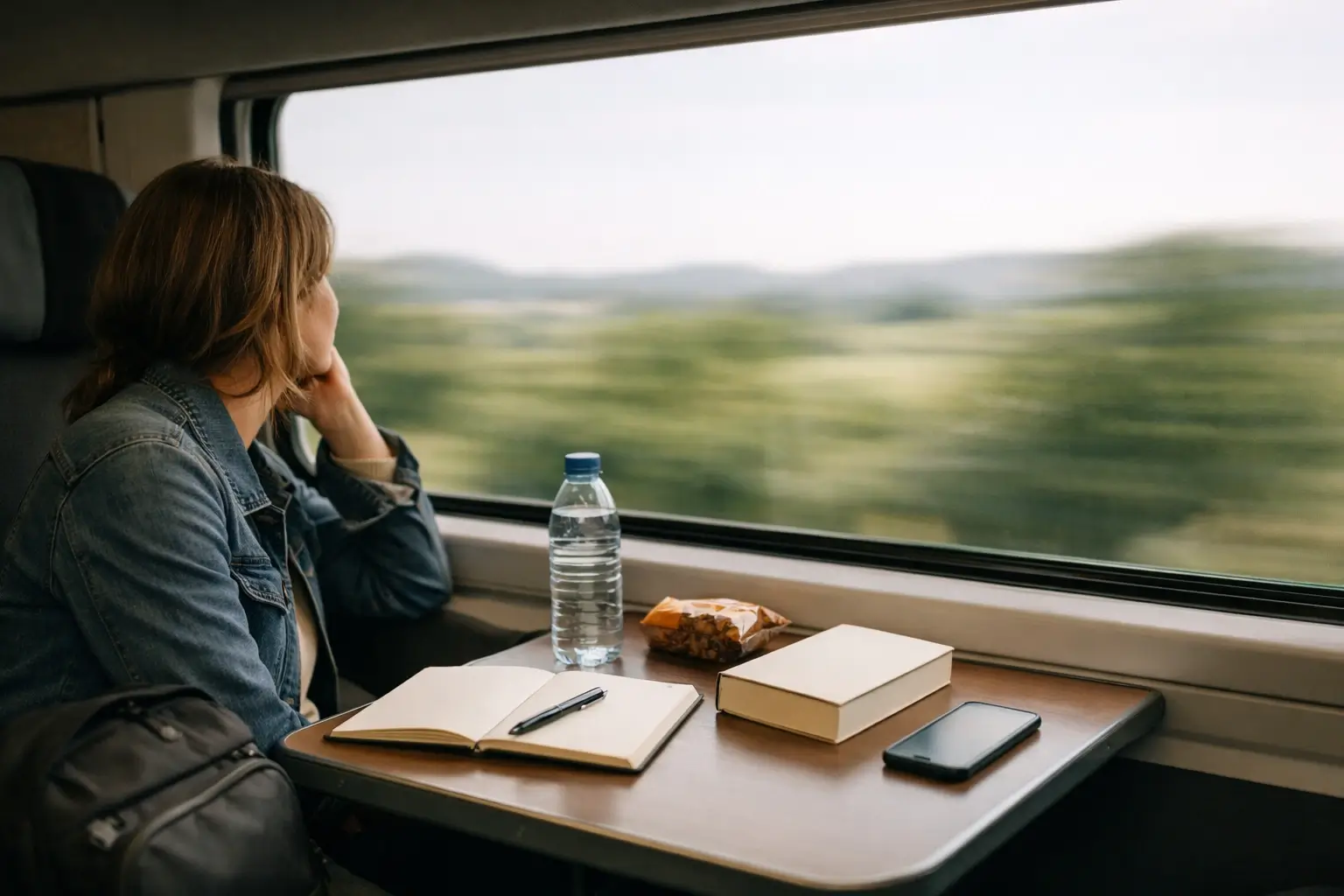
Trains are a slow travel favourite for a reason. You arrive in the middle of towns, not outside them. You can read, snack, and watch the view change.
If trains don’t fit, use buses or ferries as connectors. They’re often cheaper, and they force a calmer pace.
3) Live like a local, in a normal neighbourhood
Tourist zones can be fun, but they’re loud on your wallet. I like staying one or two stops away by metro, tram, or bus.
A local-feeling routine helps. Same bakery in the morning. Same park bench at lunch. A market shop every other day.
4) Choose depth over highlights
Slow travel works best when you stop chasing “top 10” lists. Pick one museum, not five. Pick one food street, then return twice.
Look for festivals, small galleries, community events, or local sports. These are often cheaper and less crowded than headline sights.
5) Put your phone in its place
Phones are useful. Maps and tickets matter. The problem is the endless scroll that makes you feel behind.
Try “phone checks,” not “phone time.” I do quick checks after breakfast, mid-afternoon, and early evening. The rest of the day stays open.
How do I plan a slow trip?
I plan slow travel with one base, a simple daily rhythm, and a small day-trip radius. I book only what sells out, then keep the rest flexible. I choose low-stress transport like trains and walking, and I budget like a local with groceries, free sights, and fewer paid attractions.
Here’s my repeatable system: Base + Rhythm + Radius.
Base means one main place to sleep. Rhythm means a loose pattern for your day. Radius means how far you’ll roam for day trips.
Step 1: Pick a base that makes transport easy
Start with your “non-negotiables.” Do you want beaches, museums, hiking, or food markets? Then check how you’ll get around without hiring a car.
I look for three things:
- A walkable area with shops and cafés
- A main train or bus link nearby
- At least two easy day trips under 90 minutes
Step 2: Book the right kind of stay
Slow travel needs a home base that supports normal life. Apartments and aparthotels work well because you can cook, do laundry, and spread out.
Look for weekly discounts. Many hosts price lower for 7 nights or more, which can change your whole budget.
Step 3: Build a “light structure” week
I plan one anchor each day. Just one. Everything else stays optional.
Anchors can be simple:
- A market morning
- A museum after lunch
- A local food street for dinner
- A park walk at sunset
This keeps you from overplanning, but it also stops the “what now?” feeling.
Step 4: Choose low-stress transport
If you’re travelling from the UK into Europe, Eurostar is an easy start. It drops you in a city centre, and it connects well with rail networks.
Interrail (Interrailing) can make sense if you’ll do several train legs. It’s not always cheaper, but it can be simpler. Sleeper cabins can also save a hotel night, but book in advance when dates matter.
Whatever you pick, plan for delays. Build buffer time. Slow travel and tight connections don’t mix.
Step 5: Budget like a local, not a tourist
Tourist traps cost more because they sell speed and certainty. Slow travel saves money when you swap some of that for routine.
These moves work almost everywhere:
- Cook 2 to 4 meals a week
- Pick one “paid” activity per day, max
- Use public transport passes if you’ll ride daily
- Shop at local markets for snacks and breakfast
KILROY also points out that living like a local, using homestays or apartments, and skipping tourist traps can stretch a budget.
Real-life examples you can copy
A 7-day slow city break: one city, three neighbourhoods
Pick one city and treat it like three mini trips. You get variety without luggage stress.
I like this pattern:
- Days 1 to 2: central area for big sights and orientation
- Days 3 to 5: residential neighbourhood for cafés, parks, markets
- Days 6 to 7: edge-of-city area for a day trip, beach, or hike
This also helps with crowds. You can visit popular spots early, then spend the rest of your time in quieter streets.
A 10 to 14-day rail-first plan from London
Think in “legs,” not cities. Two or three bases are enough.
A simple rhythm could be:
- Base 1: 4 nights in one major city
- Base 2: 5 nights in a smaller city or region
- Base 3: 3 nights somewhere calm to finish
Use trains for the main legs, then use local buses or short rail trips for day trips. This is where slow travel shines. You spend less time in airports and more time living normally.
A connection-first trip with real constraints: Mongolia-style pacing
Slow travel isn’t only for easy routes. It also matters in places with limited infrastructure.
Eternal Landscapes notes that slow travel is about localism and social interaction, and that real-world limits like road conditions shape pace.
The lesson is simple. Plan fewer moves. Expect transport delays. Build rest into your week. That’s not “wasted time.” That’s how the trip stays safe and calm.
Sustainability and responsible slow travel without greenwashing
The simplest carbon win is flying less, especially on short routes. Our World in Data shows huge differences by mode, including an example where Eurostar is far lower per passenger-kilometre than a short-haul flight.
You can also cut your footprint by walking, cycling, and using public transport once you arrive. These choices usually cost less too.
Supporting local businesses in a real way
I use a basic rule. Spend where locals spend, not only where visitors get funnelled.
Try this:
- Buy snacks at a neighbourhood bakery
- Eat lunch where office workers eat
- Book small-group tours run by local guides
- Choose locally owned stays when you can
This isn’t about perfection. It’s about steady choices that feel respectful.
Volunteering and voluntourism: a safety-first checklist
Volunteering can help, or it can harm. I treat it like any other safety decision.
Use this quick check:
- The organisation is transparent about money and goals
- It doesn’t replace local jobs
- It doesn’t put you with children in ways that feel forced
- It trains you, and it says “no” when you’re not suitable
- Local people lead the work, not visitors
If any of that feels off, skip it. Choose a community tourism initiative where your spending supports local work instead.

Common mistakes and how to avoid them
The biggest mistake is packing a slow trip with fast travel habits. If every day has six stops, it’s not slow travel. It’s the same stress in nicer clothes.
The second mistake is chasing FOMO. KILROY is blunt about it: FOMO leads to too many activities and stops, then you feel drained.
The third mistake is ignoring reality. Trains get delayed. Buses run late. Weather changes plans. Build buffer time and you’ll handle it with less stress.
The fourth mistake is paying the “tourist trap tax.” If a place has menus in eight languages and someone’s waving you in, pause. Walk one street over. Prices often drop and quality rises.
FAQs
What is the slow travel movement in simple terms?
It’s a travel style where you stay longer in fewer places, move around less, and focus on daily life, not checklists. You pick one base, keep plans light, and travel at your own pace. The goal is a calmer trip with deeper local moments and fewer tourist traps.
Start small if you’re new to it. Even one week in one city counts. The habit is what matters.
What’s the difference between slow travel and slow tourism?
Slow travel and slow tourism usually describe the same thing: spending more time in one place and choosing quality over quantity. Slow travel is a common phrase for personal trips, while slow tourism is often used when talking about the wider travel industry and local impacts. Both value mindful travel.
If you see both terms online, don’t overthink it. Focus on what you’ll do day to day.
Why is slow travel becoming more popular?
More people feel travel fatigue, tourist burnout, and FOMO from packed trips and social media pressure. Slow travel offers a calmer option with fewer moves, less planning stress, and often better value. It also fits the low carbon travel push, since trains and public transport can replace short flights.
If you’ve ever felt rushed on holiday, you already understand the appeal.
Is slow travel cheaper than regular travel?
It can be cheaper because you take fewer flights, pay fewer transport fees, and avoid costly tourist traps. Longer stays can unlock weekly discounts, and having a kitchen can cut food costs. You also spend less on attraction-hopping when you choose one or two paid activities, not five.
It’s not always cheaper if you pick a pricey base in peak season. But you’ll still get better value from fewer wasted days.
How do I plan a slow travel itinerary without missing out?
Pick one base, choose one “anchor” activity per day, and leave the rest open. This stops overplanning while still giving structure. Put high-demand bookings first, then keep gaps for local markets, parks, and small finds. If you feel FOMO, plan a return visit instead of cramming more in.
Missing out is normal. Slow travel simply stops it running the trip.
Is train travel really more sustainable than flying?
For many routes, yes. Data shows trains can have far lower emissions per passenger-kilometre than flights, especially on short-haul travel. Our World in Data gives an example where Eurostar is far lower than a short-haul flight per passenger-kilometre. The exact gap depends on route and load, but the pattern is clear.
If trains don’t work, buses can also be a lower-footprint option than flying for many trips.





[…] When you eat, vagal signals tell your brain you’re full. When you’re stressed, signals travel down to slow […]
[…] silence first. Less noise, fewer plans, more recovery. Slow travel: time-rich travel. Stay longer, move less, go deeper. Calmcation: a resort-style version of calm, […]
[…] Next step: show what stays true if growth slows. […]
[…] fear is no longer only about distant places. It’s about floods, heatwaves, travel disruption, and insurance costs. It’s also about how […]
[…] first-time buyers moved out of renting as mortgage affordability got a bit better. Some renters stayed at home longer to avoid the cost of renting alone. Stock levels rose, which eased market […]
[…] recovery process is more straightforward if you followed the pre-switch steps above. The fewer options you had in place, the more you’ll rely on password-based sign-in as a fallback for each […]
[…] terms, it asks whether cities, engineers, and buyers can get a lamp or solar street light that stays cleaner for longer, keeps better lumen output, and needs less manual cleaning in dusty […]