




GLP-1 Weight Loss Plateau: Why It Happens and the “It Stopped Working” Mistakes (and How to Fix Them)

You started semaglutide or tirzepatide feeling hopeful. The weight moved. Then, almost without warning, it stopped. The scale has not budged in weeks, you’re exhausted from trying, and the brain fog that crept back in is not helping. Now you’re wondering whether the medication has stopped working — or whether it ever really was.
We hear this a lot. And here is what we want you to know straight away: a GLP-1 weight loss plateau is not a sign of failure. It’s a sign that your body is doing exactly what bodies do when they lose weight. It adapts. The good news is that most plateaus have clear, fixable causes. This guide walks through the science in plain language, the specific mistakes that are most likely holding progress back, and a practical step-by-step plan to move forward with confidence.
What a GLP-1 Plateau Is (and What It Isn’t)
A Practical Definition You Can Use
A GLP-1 plateau is when your weight stays largely the same over a set period, despite continued medication use. Most definitions put that window at 3–4 weeks for a possible plateau, 8–12 weeks for a likely true plateau, and 3 months or more with less than 5% change as a confirmed clinical plateau.
The tricky part is that not every stall is a true plateau. A stall is short-term — a week or two of no movement on the scale. A plateau runs longer and shows across multiple measurements, not just one weigh-in on one bad morning.
Using weekly averages matters far more than day-to-day numbers. Weight fluctuates naturally based on water intake, hormones, sodium, and sleep. A 7-day or 14-day trend gives a much cleaner and more honest picture.
Here’s a simple way to frame it:
- 1–2 weeks of no movement: Normal fluctuation. Not a plateau.
- 3–4 weeks of no movement: Possible plateau. Run an audit (more on that below).
- 8–12 weeks, or 3 months with less than 5% change: True plateau. Time to speak to your clinician.
How to Spot “Still Losing Fat” When the Scale Stalls
The scale does not always tell the whole story. Fat loss and weight loss are not the same thing — and on GLP-1 medications like Wegovy or Zepbound, body composition often changes even when the number on the scale does not.
Check in with your tape measure. Waist and hip measurements, how your clothes fit, progress photos, and body composition data are all more reliable indicators than scale weight alone. Some people lose visible inches while the number stays flat for weeks.
This matters especially if you have added resistance training. Muscle is denser than fat. You can lose fat and build muscle at the same time — which means the scale looks stuck even as your body genuinely changes.
Why Weight Loss Slows on GLP-1s (the Science, but Readable)
Metabolic Adaptation and Adaptive Thermogenesis
Your body is very good at surviving. When you lose weight, it reduces the number of calories it burns at rest. This is called adaptive thermogenesis, and it is a normal biological response — not a malfunction, not the medication letting you down.
Your resting metabolic rate (RMR) drops as your body gets smaller. A lighter body simply needs fewer calories to function. This is true on any weight-loss approach, and GLP-1 receptor agonists are not an exception.
The result? The same calorie intake that created a deficit at your starting weight might now sit at or near maintenance. What felt like progress starts to feel like standing still.
NEAT Drops: The “Invisible Calories” Problem
Non-exercise activity thermogenesis — or NEAT — covers all the movement you do outside formal exercise. Walking to the kitchen, fidgeting at your desk, standing rather than sitting, taking the stairs. It adds up to a surprisingly large number of calories each day.
Here is the problem. As weight drops, NEAT often falls too — without you noticing. Your body naturally reduces spontaneous movement as a way to conserve energy. You may be sitting a little more and moving a little less without any conscious decision to do so.
This drop in NEAT can quietly cancel out part of your calorie deficit. Tracking your daily step count can reveal this quickly. Targeting 8,000–10,000 steps a day is a practical way to keep NEAT from silently working against your progress.
Hunger Hormones and Satiety Changes
GLP-1 medications work partly by influencing hunger and satiety hormones. But over time, the body adjusts. Leptin, the hormone that signals fullness, tends to drop with weight loss. Ghrelin, the hunger hormone, can creep back up.
Thyroid hormones, particularly T3, and cortisol also play a role in this. Chronic stress raises cortisol, which can slow fat loss and increase water retention. Poor sleep makes all of this worse — and this is where sleep really does matter to your weight-loss progress.
Peptide YY and the GLP-1 hormone itself are part of a broader satiety system that medications like semaglutide and tirzepatide target. But homeostasis — the body’s strong drive to stay stable — means these signals can partially adapt over time.
The Predictable Curve (Not a Cliff)
Clinical trial data gives useful context here. The STEP 5 trial, which followed participants on semaglutide for 104 weeks, showed that most active weight loss occurred in the first 60 weeks, with a natural plateau forming after that. Weight was maintained, but the loss phase slowed significantly during the second year.
The SURMOUNT-1 trial for tirzepatide showed similar patterns — meaningful weight loss followed by a period of stabilisation. This is a curve, not a cliff. It is built into how these medications work physiologically.
Knowing this does not make a plateau less frustrating. But it does mean it is not a red flag. It’s a predictable part of the process.

The Mistakes That Look Like “My GLP-1 Stopped Working”
This is the section most people actually need. Because often, what looks like medication failure is one or more of these very fixable issues.
Mistake #1: You’re Eating More Than You Think (“Phantom Eating”)
It’s surprisingly easy to eat more than you realise, even on GLP-1s. Reduced appetite does not mean zero appetite. Small additions — a handful of nuts here, a splash of cream there, a few bites of a partner’s meal — add up over a week.
This is sometimes called “phantom eating” or calorie creep. You’re not intentionally overeating. You’ve simply drifted gradually back toward your previous intake patterns without noticing. The thermic effect of food (TEF) also decreases as your overall intake drops, which means your body is processing fewer calories through digestion.
Tracking food intake for one to two weeks as a reset — not forever, just to identify the drift — can be genuinely informative. Apps like Cronometer or MyFitnessPal make this practical without it becoming an obsession.
Mistake #2: You Haven’t Updated Your Calories for Your New Weight
This one catches people off guard. The calorie target that created a deficit at your starting weight is not the same target you need now. A smaller body burns fewer calories at rest — that’s metabolic adaptation in action.
If you’ve lost 10–20 kg and haven’t recalculated your intake, you may already be eating at maintenance without realising it. Use a TDEE (total daily energy expenditure) calculator based on your current weight, not your starting weight.
Your protein needs change too. Recalculate every time your weight changes by around 5 kg to stay accurate.
Mistake #3: Low Protein and No Lifting Are Slowing Your Metabolism
When people lose weight quickly — as can happen in the early months on GLP-1 medications — some of that weight is muscle. Losing muscle is a real problem because muscle is metabolically active tissue. Less muscle means a slower metabolism, which makes the plateau worse over time.
Protein helps prevent this. Aiming for at least 1.2–1.6 g of protein per kg of body weight per day is a widely supported target. Prioritising protein at each meal — protein first, then everything else — helps hit that number without it feeling like a strict regime.
Resistance training 2–4 times per week does the rest. You don’t need to become a dedicated gym-goer. Bodyweight exercises, resistance bands, and free weights all count toward protecting lean mass during weight loss.
Mistake #4: Your NEAT Fell Off Without You Noticing
We covered NEAT earlier, but it’s worth revisiting as a specific, actionable mistake. Many people find their daily steps drop as they lose weight — sometimes by thousands of steps a day without any awareness.
Check your step count for the last 30 days and compare it to 3 months ago. If it’s dropped by 2,000–3,000 steps, that’s a meaningful reduction in daily calorie output. A short walk after dinner is one of the simplest and most effective ways to rebuild that movement.
Target 8,000–10,000 steps per day as a baseline. It does not all need to happen at once.
Mistake #5: Missed Doses, Storage Issues, or an Inconsistent Routine
GLP-1 medications like semaglutide (Wegovy and Ozempic) and tirzepatide (Zepbound and Mounjaro) need to be taken consistently and stored correctly. Missing doses — even occasionally — disrupts the steady blood level of active medication in your system.
Semaglutide pens should be stored in a refrigerator at 2–8 degrees Celsius before first use. After the first use, they can be kept at room temperature below 30 degrees for up to 28 days. Tirzepatide has similar storage requirements. Improper handling affects medication quality and efficacy.
Set a fixed weekly reminder for your injection. Use the same day and time each week. Dosing consistency is not a minor detail here — it is part of how the medication maintains its effect.
Mistake #6: You’re Responding to Water Retention, Not Fat Loss
The scale can go up — or stay completely flat — for reasons that have nothing to do with fat. Sodium-heavy meals, higher carbohydrate intake, hormonal fluctuations (particularly around the menstrual cycle), and starting a new exercise routine all cause temporary water retention.
This is normal and it passes. But it can look alarming when you’re checking the scale daily. A 1–2 kg fluctuation over a few days is almost always water weight, not fat gain or stalled fat loss.
Don’t make big decisions based on a single weigh-in. Use weekly averages, and weigh yourself at the same time each morning — ideally after waking and before eating — for the most consistent data.
Mistake #7: Poor Sleep and Chronic Stress Are Blocking Progress
Poor sleep and chronic stress are both directly linked to slower fat loss. Cortisol, the stress hormone, increases when sleep is poor and when life is overwhelming. High cortisol signals the body to hold onto fat — particularly around the abdomen.
Research consistently shows that people who sleep less than 7 hours per night during a calorie deficit lose less fat and more muscle compared to those sleeping 7–9 hours. Sleep is not a nice-to-have. It’s a core part of the weight-loss process, and it has a direct impact on whether your GLP-1 medication can do its job properly.
If sleep is a struggle, even small improvements count. A consistent bedtime, reducing screen time in the hour before bed, and keeping your bedroom cool and dark are practical starting points backed by basic sleep science.
How to Break a GLP-1 Plateau: Step-by-Step
The 14-Day Plateau Audit
Before changing your medication, try this 14-day reset. It’s designed to identify which specific factor is holding your progress back — rather than guessing and changing everything at once.
For 14 days, track these areas daily:
- Calorie intake — recalculated for your current body weight
- Protein intake — targeting 1.2–1.6 g per kg of body weight
- Daily steps — targeting 8,000–10,000
- Resistance training — targeting 2–4 sessions per week
- Sleep duration — targeting 7–9 hours
- Injection adherence — confirming consistent dosing, day, and storage
Review at the end of 14 days. Most people find at least one area that has quietly slipped. Fix the specific thing — not everything simultaneously.
Protein and Resistance Training: Simple Targets That Work
Protein is the single most important nutritional lever on GLP-1 medications. It preserves muscle, supports metabolism, and improves satiety. Most people on these medications are not eating enough of it during the calorie-reduced phase.
A practical starting point: aim for 25–40 g of protein per main meal. Chicken, fish, eggs, Greek yoghurt, cottage cheese, tofu, and legumes all count. If hitting targets through food alone is a struggle, a protein shake is a practical addition — not a shortcut, just a useful tool.
For resistance training, start with three sessions per week covering the major muscle groups: legs, back, chest, and arms. Progress slowly and consistently. That is what builds and protects muscle over months.
Dose and Adherence: What to Discuss with Your Provider
If the 14-day audit does not move things, a dose review is a reasonable next step. Both semaglutide and tirzepatide are titrated gradually. The maximum approved dose for semaglutide (Wegovy) for weight management is 2.4 mg weekly. For tirzepatide (Zepbound), it is 15 mg weekly.
Not everyone reaches the maximum dose — and not everyone needs to. But if you’ve been on a lower dose for several months with no progress, dose optimisation may be the right conversation to have with your prescriber.
Write down your 14-day audit data before your appointment. Bring your numbers. That gives your clinician something concrete to work with rather than a general description of a stall.
When the Right Move Is Maintenance
Sometimes a plateau is not a problem to solve. It is a new set point. After significant weight loss, the body often settles into a maintenance phase — and that is a completely valid health outcome.
The STEP 5 trial showed that people who continued semaglutide treatment maintained their weight loss even after the active loss phase slowed. The STEP 4 trial showed what happens when people stop: those who discontinued semaglutide after 20 weeks regained a meaningful portion of their lost weight over the following year. Continuing treatment during a plateau protects the progress you’ve already made.
Maintenance is not failure. Holding a clinically meaningful weight loss long-term is a real, lasting health benefit.
When to Talk to a Clinician
Some plateaus are not about lifestyle at all. Underlying medical conditions can make weight loss genuinely harder — regardless of how consistent your routine is.
Hypothyroidism is one of the most common medical barriers to weight loss. An underactive thyroid slows metabolism and can cause or worsen a plateau. Perimenopause and hormonal changes can have similar effects. Both conditions are diagnosable through a blood test and treatable.
Certain medications — sometimes called obesogenic medications — promote weight gain as a side effect. These include some antidepressants, antipsychotics, corticosteroids, and specific diabetes medications. If you’ve started a new medication in the months around your plateau, flag it with your prescriber.
If you’re using a compounded version of semaglutide or tirzepatide rather than an FDA-approved product, quality and efficacy can vary. This is worth discussing openly with your provider if results are not matching expectations.
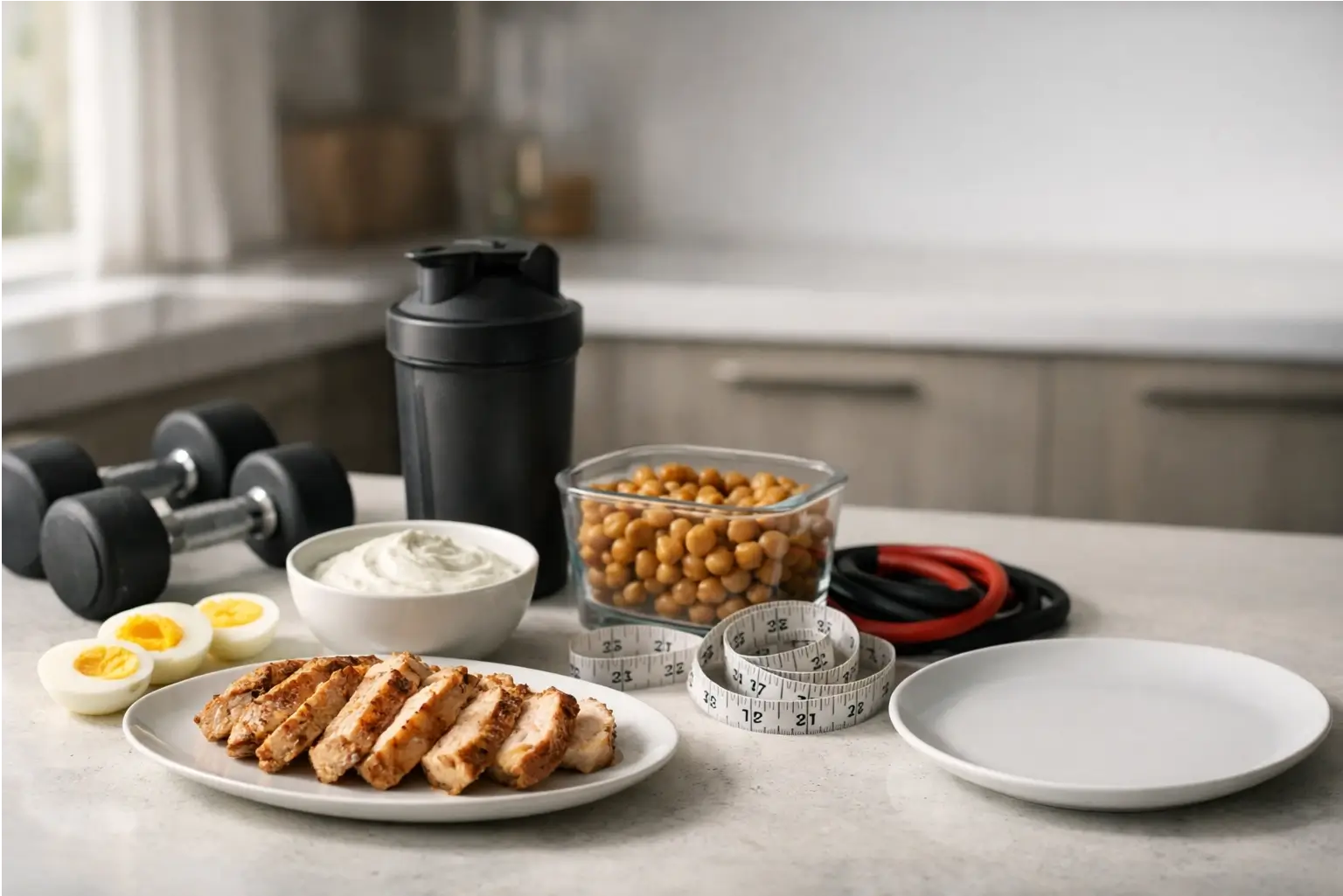
What Happens If You Stop GLP-1s During a Plateau
Stopping medication during a plateau is one of the most common — and understandable — responses to stalled progress. It’s also the response most likely to lead to regain.
The STEP 4 trial found that participants who stopped semaglutide after 20 weeks regained a large portion of the weight they’d lost over the following year. Those who continued treatment maintained their weight loss and, in many cases, continued losing. The body’s obesity and metabolic biology does not disappear because a plateau arrived.
A plateau is not a signal to stop. It’s a signal to assess, adjust, and continue. The medication is still working — even when the scale isn’t showing it right now.
Frequently Asked Questions
What is a GLP-1 weight loss plateau, medically speaking?
A GLP-1 plateau is a period where weight stays stable despite continued use of GLP-1 receptor agonist medications like semaglutide or tirzepatide. Clinically, it’s defined as less than 5% weight change over 3 months, or no meaningful change over 8–12 weeks. It’s expected physiology, not medication failure.
How long does a GLP-1 plateau typically last?
This depends largely on the cause. A plateau driven by lifestyle factors — calorie creep, low protein intake, or reduced daily steps — can resolve within 2–4 weeks once those issues are addressed. A plateau with a metabolic or medical cause often takes longer and benefits from a clinical review.
Is it normal to plateau on Wegovy, Ozempic, Zepbound, or Mounjaro?
Yes — it’s expected. Both semaglutide and tirzepatide trials showed a natural slowing of weight loss after the initial phase. STEP 5 data showed most active loss occurred before week 60, with weight maintained but not actively falling after that. A plateau is built into how these medications work over time.
How do I know if I’m still losing fat when the scale won’t move?
Check your waist and hip measurements, how your clothes fit, and progress photos taken over time. Body composition can improve — meaning fat loss alongside muscle preservation — even when scale weight stays flat. Weekly weight averages over a rolling 7–14 days are more reliable than single daily readings.
What are the top causes of a “false plateau” on GLP-1s?
Water retention from high sodium meals, increased carbohydrate intake, hormonal fluctuations (including the menstrual cycle), and starting a new exercise programme can all cause temporary scale stalls. These typically resolve within 1–2 weeks and are not true plateaus. Don’t make big medication decisions based on a few days of scale data.
What’s the most important nutrition change to help break a plateau?
Protein. Increasing intake to 1.2–1.6 g per kg of body weight per day supports muscle preservation, helps maintain resting metabolic rate, and improves satiety on a reduced-calorie intake. Most people on GLP-1 medications are eating below this target during the weight-loss phase, which contributes to lean mass loss and a slower metabolism.
Do I need to increase my GLP-1 dose to break a plateau?
Not necessarily. Many plateaus are driven by lifestyle factors rather than an insufficient dose. A 14-day audit of calories, protein, steps, sleep, and dosing adherence is a sensible first step. If lifestyle factors are addressed and progress still does not resume after 8–12 weeks, discuss dose titration with your clinician.
Can missing a dose cause a plateau?
Yes. GLP-1 medications work by maintaining a steady level of active medication in your bloodstream. Missing doses — even occasionally — interrupts that consistency and can reduce efficacy. If you’ve missed one or more doses recently, mention this to your prescriber before making other changes.
Does strength training matter on GLP-1s?
It matters a great deal. Rapid weight loss on GLP-1 medications can include lean muscle mass loss, which lowers your resting metabolic rate and worsens plateaus over time. Resistance training 2–4 times per week, combined with adequate protein intake, is one of the most evidence-supported strategies for protecting muscle and sustaining long-term weight loss results.
Why does a plateau happen even when I’m doing everything right?
Metabolic adaptation and homeostasis are the core reasons. As weight drops, the body lowers its RMR, reduces NEAT, and adjusts hunger hormones to resist continued loss. This is normal biology. The STEP 5 and SURMOUNT-1 trial data both confirm this pattern. It’s not a failure of the medication or the person — it’s how human physiology responds to sustained energy deficit.
When should I get checked for thyroid issues or other medical causes?
If you’ve addressed lifestyle factors and your plateau has lasted 8–12 weeks or longer, ask your clinician to rule out hypothyroidism, perimenopause, or any medications that may be contributing to weight gain. A basic blood test can identify thyroid issues quickly, and treatment often makes a meaningful difference to weight-loss progress.
What happens if I stop semaglutide or tirzepatide after reaching a plateau?
Based on STEP 4 trial findings, stopping semaglutide after reaching a plateau is associated with meaningful weight regain over the following months. Continued treatment, even during a maintenance phase with little active loss — protects the weight you’ve worked hard to lose. Speak to your prescriber before stopping, and understand that the plateau itself is not a reason to discontinue.








[…] Tax forms have a way of making confident people feel suddenly unsure. You installed a heat pump last year, you know there’s a credit involved, and then the software asks for something called a QMID – and you have no idea what it means or where to find it. That moment of confusion is exactly where costly mistakes happen. […]
[…] home, for example, is like fitting a high-performance engine to a car with no doors. The pump works overtime to make up for heat loss, and you get a fraction of the efficiency you paid for. Insulate first, then upgrade the HVAC […]
[…] The EPT framework gives this a name, a structure, and a set of tools that help entrepreneurs stop working against their own […]
[…] can help with fullness, which can make it easier to eat in a way that supports weight loss. It slows digestion and helps meals feel more satisfying, so you’re less likely to feel hungry […]
[…] best case is simple. You get more efficiency because people stop copying work between tools. You get better productivity because updates, files, and comments sit in one shared […]
[…] is your runway. It’s the time you buy to fix mistakes, learn the market, and hit break-even. Xero’s UK guide uses 3–6 months for a reason. It’s […]
[…] A loose rug turns into a trip hazard. A dark hallway turns into a fall risk. A “quick fix” from the internet turns into a costly mistake. […]