




8 Car Maintenance Issues You’re Probably Ignoring (And Shouldn’t)
Car advice can feel like noise. One forum says “ignore it,” an ad says “buy this,” and your dash light sits there like a smug little secret.
If you’re worried about safety, warranty, or getting pushed into the wrong repair, you’re not overthinking it. Most costly car problems start as small car maintenance issues that people brush off.
I’m going to keep this simple. Here are eight ignored car maintenance issues, what the warning signs look like, why they matter in real life, and what to do next.
The 5-Minute Checklist: What to Check Before You Drive
This is your maintenance checklist for everyday breakdown prevention. It won’t cover everything, but it catches the common car problems that turn into big repair costs.
Tyres: pressure + tread
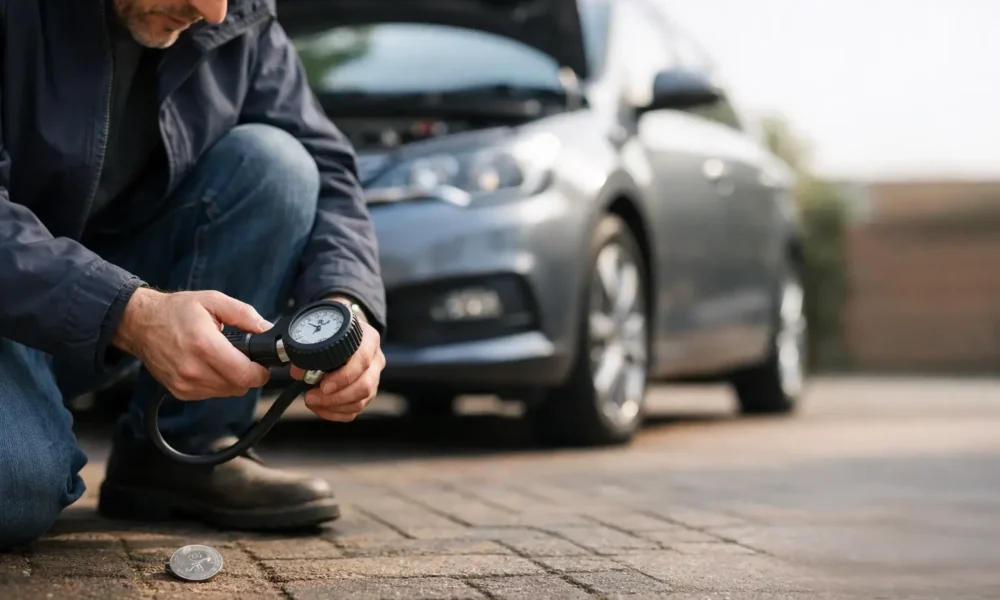
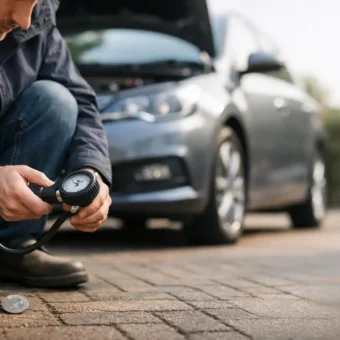
Start with the tyres. Low tyre pressure changes handling and can chew through the shoulders fast.
Use the pressure on the door sticker, not a random number online. If the car pulls or the steering feels vague, check sooner.
Fluids under the car (oil/coolant)
Look at the ground where you park. A fresh wet patch is a clue, even if the car “drives fine.”
Then pop the bonnet and do a quick scan. Low fluid levels often show up after the damage starts.
Brake feel + dashboard lights
Tap the brake pedal before you roll. A spongy pedal, a longer pedal travel, or a pedal that feels “different” counts as a warning sign.
Also check the dash. If an ABS light or brake light stays on, don’t treat it like decoration.
Wipers and visibility
Visibility is safety. If wipers smear, skip, or chatter, you’re driving with a blurred windscreen in the rain.
Top up washer fluid while you’re there. It’s a cheap habit with a high payoff.
Starting/charging signs (slow crank)
Listen when the engine starts. A slow crank, dim headlights, or random electrical glitches often point to battery or alternator trouble.
That’s the kind of “small” issue that loves to strand you at the worst moment.
A quick “spot it early” table
Prices vary by car and location, but these UK ranges show how fast small neglect turns into big bills.
| Issue | Warning signs | Safety risk | Quick check | Typical “if ignored” cost range |
|---|---|---|---|---|
| Oil + filter | noisy engine, rough running, warning light | engine damage | dipstick level + colour | engine rebuild £4,000–£10,000+ |
| Tyres | low pressure warning, uneven wear | longer stopping, blowout risk | pressure + 20p/tread check | tyres £400–£1,200 |
| Brakes | squeal/grind, spongy pedal, ABS/brake light | reduced stopping | pedal feel + listen | brake system repair £1,000–£3,000 |
| Coolant | running hot, sweet smell, brown coolant | overheating | check level + colour | head gasket £2,000–£5,000 |
| Battery/alternator | slow start, dim lights | breakdown | voltage check | battery £100–£250, alternator £500–£1,200 |
| Timing belt/chain | overdue by mileage/age | severe engine damage | check service history | engine rebuild £3,000–£8,000 |
| Gearbox fluid | rough shifts, slipping | breakdown | service history | rebuild £2,500–£6,000 |
| Wipers/washer | streaking, smearing | poor visibility | visual check | wipers £20–£50 |
1) Oil Changes You Keep Postponing (Engine Oil + Oil Filter)
Old oil doesn’t protect like fresh oil. It breaks down, the filter loads up, and wear speeds up inside the engine.
That’s how “it still runs” becomes “it’s grinding.” StartRescue flags metal-on-metal wear and even engine failure when oil changes get ignored.
What happens when oil breaks down
Oil does two jobs. It lubricates moving parts and carries heat away.
When it degrades, friction climbs. That’s when you get ticking, knocking, and rough running.
Warning signs to take seriously
Watch for a low oil level on the dipstick. Also watch for oil that looks very black and thin, or smells burnt.
If a warning light appears, treat it as “stop and check,” not “drive and hope.”
Fix now
Top-ups help, but they don’t solve the reason oil went low. If you’re topping up often, there may be a leak or the engine may be burning oil.
If you’ve missed intervals, book an oil change and oil filter change. Then stick to your owner’s manual for the next one.
Cost if ignored
StartRescue lists engine rebuild or replacement costs in the thousands when lubrication fails. That’s the ugly end of a simple routine maintenance job.
2) Tyre Pressure and Tread Depth (Safety + Fuel Economy)
Tyres are your grip. They affect braking distance, wet handling, and how stable the car feels on a fast A-road.
In the UK, the legal minimum tread depth is 1.6mm across the central three-quarters of the tyre, around the full circumference.
Low pressure: handling + fuel use
Under-inflated tyres flex more. That builds heat and wears edges fast.
Your steering can feel heavy or vague. Fuel economy can drop too, because rolling resistance goes up.
The UK threshold that matters
The legal number is 1.6mm, but don’t wait for “barely legal.” Wet grip drops before you hit the limit.
A quick tread gauge is best. A 20p coin test is a quick reminder, not a lab tool.
Rotation + alignment
Uneven tyre wear often points to alignment or worn suspension parts. StartRescue even notes how neglected suspension can speed up tyre wear.
If one tyre looks chewed on the inside edge, that’s not “normal.” Get the alignment checked.
Quick DIY cadence
Check pressure weekly if you drive a lot. Check tread every month, and before long motorway runs.
It’s basic car upkeep, but it prevents the most common roadside drama.
3) Brakes That “Still Work”… Until They Don’t (Pads, Rotors, Brake Fluid)
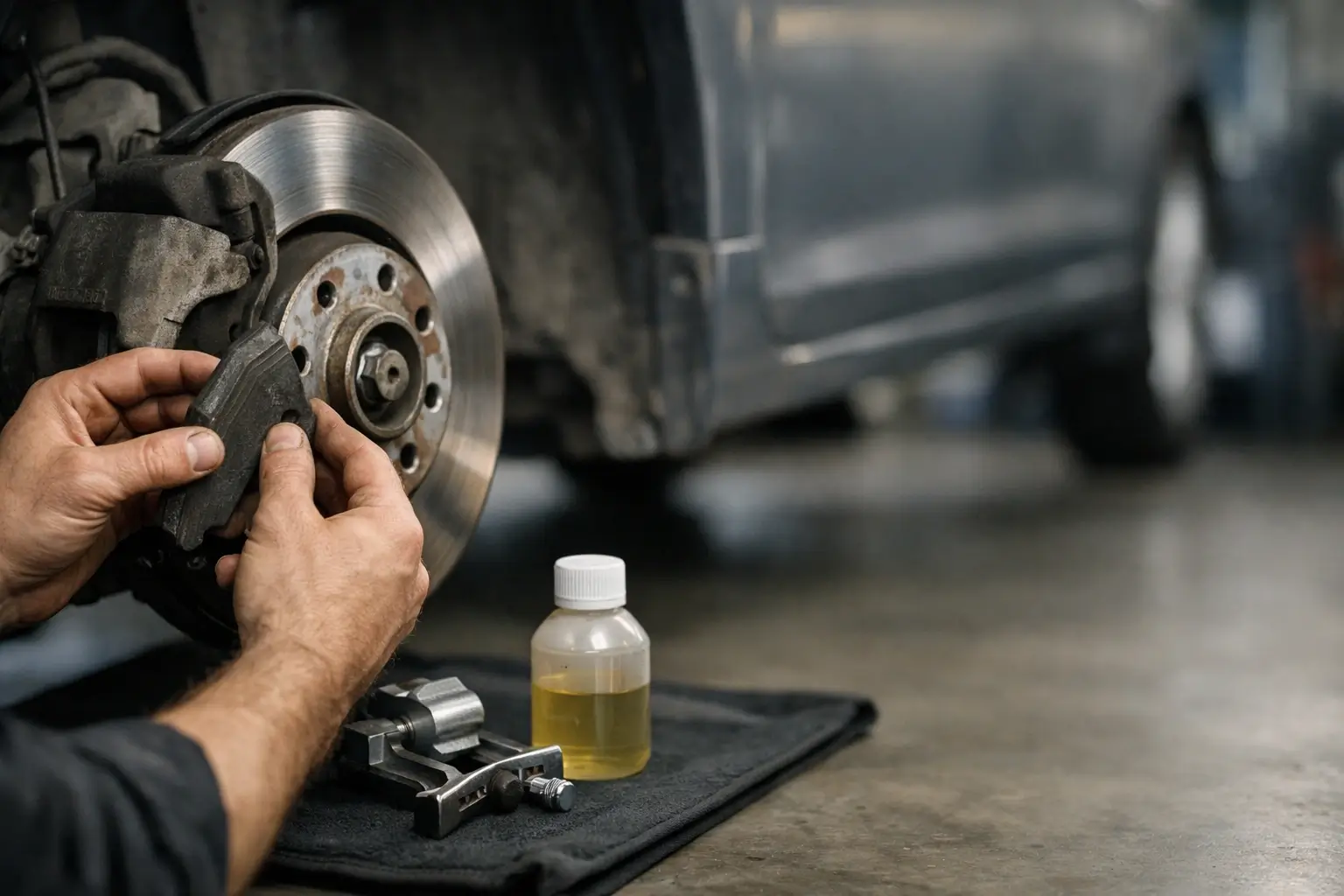
Brakes can feel “fine” right up until they don’t. Pads wear slowly, then suddenly you’re on metal and the repair cost jumps.
StartRescue calls out squealing, grinding, spongy feel, and ABS or brake lights as signs to act on.
Warning signs you shouldn’t brush off
Squealing can mean the wear indicator is doing its job. Grinding often means the pad material is gone.
A spongy pedal can point to brake fluid issues or air in the system. Either way, it’s not a wait-and-see moment.
Why “one side only” is a bad idea
Braking needs balance across the axle. The AA notes brake discs must be replaced in pairs, and pads typically get replaced along with discs when needed.
If a garage recommends paired parts, it’s usually about safety and even braking.
When to stop driving
If you hear grinding, or the car pulls hard under braking, stop driving and get help. If the brake warning light comes on with a change in pedal feel, treat it as urgent.
That’s not forum drama. That’s basic risk control.
4) Coolant and Overheating Risk (Radiator, Water Pump, Head Gasket)
Overheating can wreck an engine fast. Coolant problems often show up as small clues, then a sudden spike on the temp gauge.
StartRescue lists common signs like sweet smell, rusty brown coolant, debris, and the car running hot, plus big repair outcomes like head gasket failure.
What coolant actually does
Coolant moves heat out of the engine. It also helps stop corrosion inside the cooling system.
When it’s old or contaminated, cooling gets weaker and parts corrode.
Warning signs to spot early
If the temp gauge climbs higher than normal, don’t ignore it. If you smell something sweet, or see brown coolant, act fast.
Also watch for frequent top-ups. Coolant doesn’t “get used up” in normal driving.
Fix now
Check your owner’s manual for the change interval. StartRescue gives a common range of 30,000 to 50,000 miles or 3 to 5 years, depending on the car and use.
If the car overheats, stop safely and don’t keep driving “just to get home.” That’s when a small fix turns into a head gasket job.
5) Battery + Charging System (12V Battery, Alternator, No-Start Surprises)
Battery trouble isn’t just winter drama. A weak 12V battery can cause slow starts, glitchy electronics, and random warning lights.
StartRescue points to simple checks like corrosion and headlight brightness, and suggests a multimeter as the most accurate home check.
The simple checks I use
Look for white or green crust on the terminals. That’s corrosion and it can limit current flow.
Then check the headlights with the engine off. Very dim lights can hint at low voltage.
A basic multimeter check
A multimeter isn’t magic. It’s a £10 tool that tells you if the battery voltage looks low.
If you’re unsure, get the battery tested at a garage or parts shop. It’s cheaper than a tow.
Battery vs alternator
A battery stores power. An alternator makes power while you drive.
StartRescue lists typical battery costs and alternator costs as very different, which is why testing matters before buying parts.
6) Timing Belt/Chain: The Part You Don’t Want to Miss
This is the classic “silent deadline” job. Nothing feels wrong, then one day it goes wrong.
StartRescue notes timing belts often have replacement guidance around 60,000 to 100,000 miles, and a snapped belt on many engines can cause valves and pistons to collide.
Belt vs chain, in plain terms
A belt is rubber-reinforced and has a set service life. A chain is metal and usually lasts longer, but it still depends on clean oil.
If you skip oil changes, timing chains can suffer too.
What to check today
Check your service history. If you’ve bought the car used and there’s no clear record, assume nothing.
Call a garage with your reg number and ask what your engine uses, and what the interval is.
What to ask your garage
Ask what parts they replace with the belt. Many engines need tensioners and sometimes a water pump at the same time.
It’s not upselling when the parts share labour. It’s avoiding paying twice.
7) Transmission Fluid / Gearbox Oil (Slipping, Shuddering, Big Bills)
Gearboxes don’t like dirty fluid. Yet many drivers never think about transmission fluid or gearbox oil until shifts feel rough.
StartRescue warns that old fluid can lead to slipping gears or even total transmission failure, and points out the “sealed system” idea can make fluid changes feel harder than they are.
The warning signs
Automatic: look for delayed shifts, slipping, or shudder under light throttle. Manual: look for notchy shifts and noisy bearings.
If it’s new behaviour, treat it as a clue. Don’t wait for it to “settle.”
The “sealed for life” trap
Some gearboxes are described as sealed. That often means “no easy dipstick,” not “fluid lasts forever.”
A decent garage can still service many of these systems.
Fix now
Check your manual and service history. If you tow, do lots of stop-start driving, or carry heavy loads, servicing often matters more.
If you already feel slipping, book diagnostics. Gearbox repairs rarely get cheaper with time.
8) Windscreen Wipers + Washer Fluid (Ignored Until You Can’t See)
Wipers fail slowly. One day you’ve got a light smear, then a night drive in rain turns stressful.
Halfords says wiper blades are typically designed to last six months to a year, and the moment visibility drops, it’s time to change them.
Signs your wipers are done
Streaking, smearing, skipping, or squeaking all count. Cracked rubber on the blade is a clear sign too.
Don’t blame the glass first. Worn blades are common.
A quick fix that helps
Clean the windscreen and top up washer fluid. Then replace the blades if the wipe still looks patchy.
StartRescue lists replacement wipers as a low-cost job, which makes this one of the easiest safety wins.
If You Drive an EV or Hybrid: Maintenance Issues People Get Wrong
EVs and hybrids still need routine maintenance. The list changes, but the basics don’t vanish.
Protyre highlights common EV maintenance issues like battery-related checks, tyre wear, wipers and fluids, brake pads, and wheel alignment.
EV: tyres, brakes, 12V battery, fluids
EVs are often heavier, with strong torque. Tyres can wear faster if pressures are ignored.
Brakes can last longer due to regenerative braking, but that doesn’t mean “no brake checks.” Dick Lovett notes regen braking can reduce strain on pads and discs, yet tyres and brakes still wear with use.
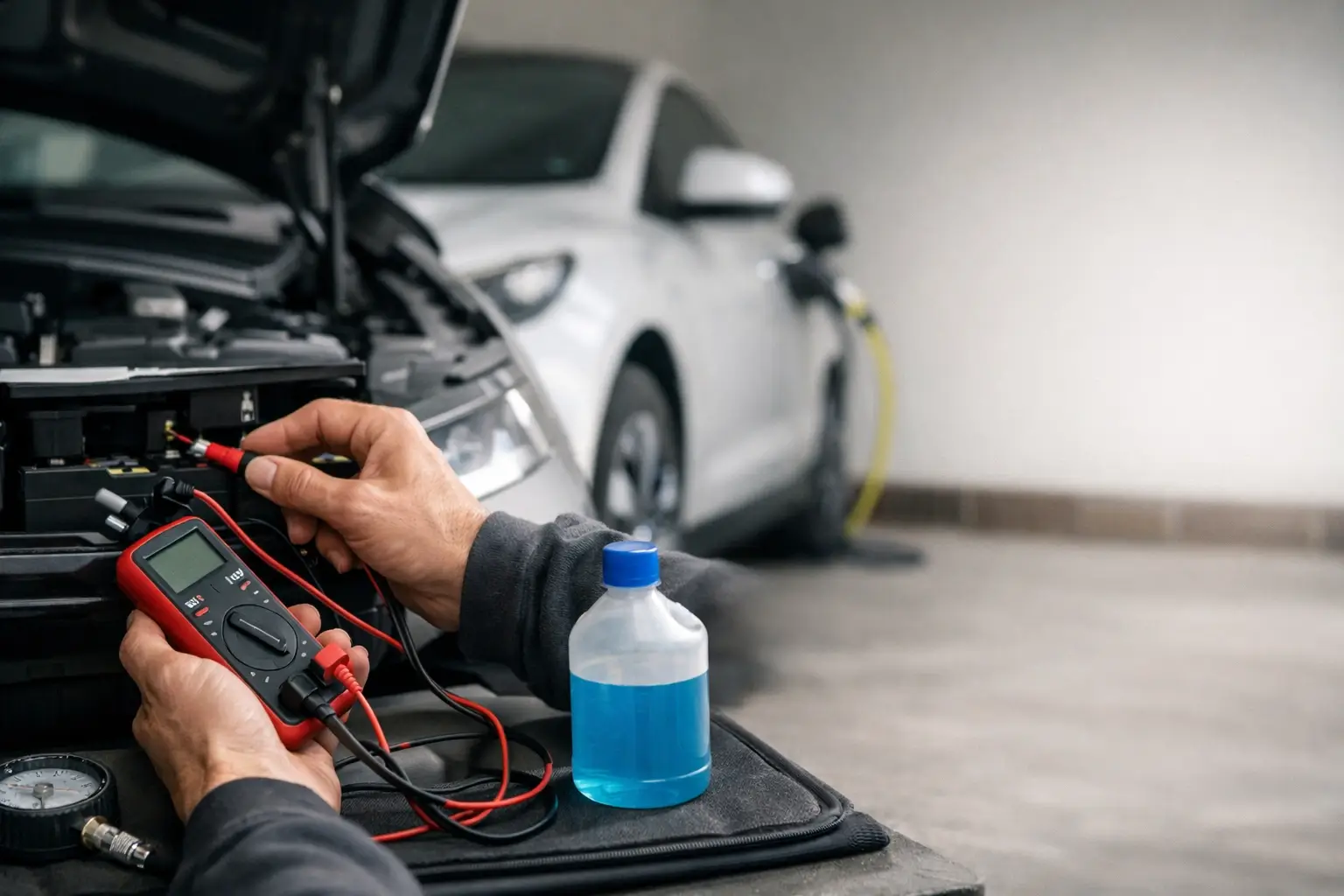
EVs also still have a 12V battery on many models. If it’s weak, you can get odd faults or a no-start situation, even with charge in the main pack.
Hybrid: battery health, fault codes, extra wear
Hybrids carry extra weight and extra systems. That can mean more tyre and brake wear, plus suspension wear if roads are rough.
Bumper lists battery degradation and hybrid system fault codes among common hybrid problems, alongside tyre, brake, and suspension wear.
A simple ICE vs EV vs Hybrid snapshot
This isn’t about which is “best.” It’s about what to check so you don’t get caught out.
Dick Lovett’s comparison puts things plainly: EVs skip oil changes, but tyres and brakes still cost real money, and total maintenance costs still exist.
What to Do Next: A Simple Maintenance Rhythm
A maintenance schedule beats a panic repair. It also helps you feel confident when a garage talks fast.
RAC says many drivers service every 12 months or 12,000 miles, and lists interim services around every 6 months or 6,000 miles, depending on mileage and the maker’s plan.
Weekly
Check tyre pressure. Top up washer fluid.
Listen for new noises. New sounds often come before new bills.
Monthly
Check engine oil level. Check coolant level when the engine’s cold.
Look at tread depth and tyre wear pattern. If it’s wearing oddly, book alignment.
Every 6 to 12 months
Follow the owner’s manual and the maker’s schedule. Use an interim service if you do high mileage, then a full service yearly if that suits your use.
Keep your invoices. If you’ve got a warranty, paperwork matters.
FAQs
What are the most common car maintenance issues people ignore first?
Most people miss the basics: tyres, oil, brakes, coolant, and wipers. These feel “small,” so they get delayed. The problem is knock-on damage. A low tyre can wear suspension parts. Old oil can speed up engine wear. Small delays often raise the cost to repair.
Start with a weekly pressure check and a monthly fluid check. That one habit covers a lot of vehicle maintenance issues.
How often should I service my car in the UK (interim vs full vs major)?
A common rule is an interim service every 6 months or 6,000 miles, then a full service every 12 months or 12,000 miles. Your owner’s manual is the real boss, though. Your annual mileage and how you drive can shorten or stretch the schedule a bit.
RAC sets out these intervals and the role of the manufacturer schedule.
What happens if I keep delaying an oil change?
Old oil breaks down and stops protecting metal parts well. Friction and heat rise, wear speeds up, and sludge can build. You might notice ticking, rough running, or a warning light. In the worst cases, the engine can seize or suffer major damage that costs thousands.
StartRescue links missed oil changes to severe engine damage and high repair bills.
What is the legal minimum tyre tread depth in the UK?
In the UK, car tyres must have at least 1.6mm of tread depth across the central three-quarters of the tyre, around the full circumference. Below that, grip drops fast in wet weather, and you risk an MOT fail and legal trouble. Check tread monthly, not yearly.
The MOT tyre guidance sets out the 1.6mm rule.
How often should you replace windscreen wipers?
Most wiper blades are designed to last about six months to a year, depending on use and weather. Replace them when visibility drops, not when it starts snowing. Streaking, skipping, squeaking, and smearing are all signs the rubber has worn or hardened.
Halfords gives the six-to-twelve-month guidance and key warning signs.
Can I replace just one set of brake pads (front left only, etc.)?
Usually, no. Brakes work as a pair across an axle, so uneven parts can cause uneven braking and odd pulling. It can also lead to noise and faster wear. A safer approach is replacing pads on both sides of the same axle, and checking discs at the same time.
The AA notes discs must be replaced in pairs and pads typically get replaced alongside discs when needed.
What are the early signs your brakes are dangerous?
Grinding is a red flag, and a spongy pedal is another. If the car pulls hard under braking, stopping distance feels longer, or the brake warning light stays on, treat it as urgent. Squealing can be an early clue too. Don’t wait for “no brakes” to learn the lesson.
StartRescue lists common brake warning signs like grinding, squealing, spongy feel, and brake or ABS lights.
How do I know if my car is overheating, and should I stop driving immediately?
If the temperature gauge climbs higher than normal, or a coolant warning appears, take it seriously. A sweet smell, steam, or repeated coolant loss also matter. Keep driving can warp parts and damage the head gasket. Safest move is to pull over, switch off, and get help.
StartRescue notes overheating signs and links neglected coolant issues to warped heads and blown head gaskets.
How long does a timing belt last, and what happens if it snaps?
Many timing belts have guidance around 60,000 to 100,000 miles, but the exact interval depends on your engine. If a belt snaps, the engine can suffer serious internal damage because moving parts collide. If you don’t have clear service history, treat it as due and confirm fast.
StartRescue gives the typical belt interval range and explains the damage risk.
Do electric cars need servicing, and what do they still need maintained?
Yes, they still need servicing. EVs skip oil changes, but tyres, brakes, suspension, wipers, and fluids still matter. Many also rely on a 12V battery for key systems. Brake wear can be lower due to regenerative braking, but inspections still count for safety and wear.
Protyre lists common EV maintenance areas, and Dick Lovett explains regen braking’s effect on brake wear.
What are the warning signs of a failing fuel pump?
Look for sputtering at speed, loss of power under load, stalling at idle, hard starting, and a new whining noise from the tank area. A check engine light can appear with fuel-pressure related codes on some cars. These signs can come and go, which tricks people into waiting.
Northwich Tyres Centre lists common symptoms and example fuel pressure codes.
Why do tyres wear unevenly even when tread looks “fine”?
Uneven wear often points to pressure issues, wheel alignment problems, or worn suspension parts. The tread depth can still look “okay” in one place while another edge goes bald. If the car pulls, vibrates, or wears tyres faster than expected, get the alignment and suspension checked soon.
StartRescue notes how neglected suspension can speed up tyre wear and links poor suspension to handling and braking issues.






[…] means you own the car (or you’re on the path to owning it). You can buy outright with cash, or use finance like PCP, HP, or a […]
[…] maintenance is software watching vehicle health and flagging issues early. Combine that with remote diagnostics, and you can spot problems before they become […]
[…] and residual value can swing the decision. If you’re buying used in 2026, you’re often shopping the car’s second owner period, where prices can be […]
[…] Make sure you’re insured for the test drive before you drive the car. Don’t assume the seller’s insurance covers […]
[…] one quick question: “What am I here for?” If you can’t answer in a sentence, you’re probably […]
[…] where this guide comes in. If you’ve searched folkevogn tiguan, you’re probably trying to work out what the car actually is, which trim levels make sense, and whether the Volkswagen Tiguan is worth your […]