




Home Weatherproofing in 2026: Climate-Resilient Upgrades That Actually Save Money
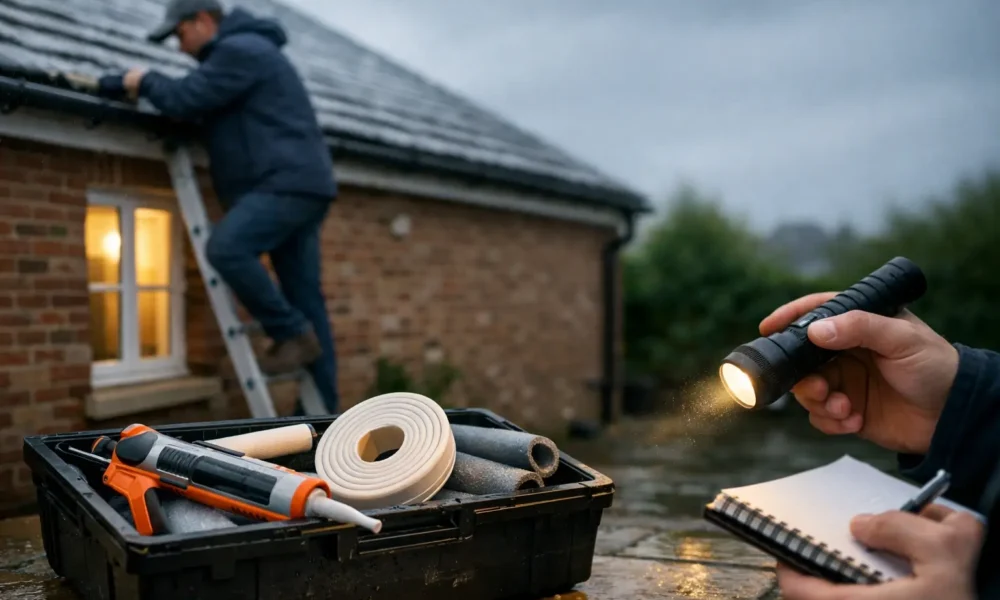
British weather doesn’t play fair. One week it’s driving rain, the next it’s a cold snap, then a sticky heatwave you didn’t plan for.
Table Of Content
- What “home weatherproofing” means (and how it’s different from waterproofing)
- Weatherproofing vs waterproofing in plain terms
- Why small leaks become big bills
- The 2026 reality check: the 3 weather risks costing homeowners the most
- Water: rain, flooding, damp
- Cold snaps: burst pipes and heat loss
- Heatwaves: overheating and humidity swings
- Start here: a 30-minute weatherproofing audit
- Outside walk-around checklist
- Inside checklist
- Red flags that mean “call a pro”
- Upgrade stack #1: Low-cost fixes with fast payback
- Draught proofing doors, windows, and floors
- Curtains, zoning, and “heat where you live”
- Pipe lagging and a sensible heating plan
- Upgrade stack #2: Envelope upgrades that cut bills long-term
- Loft and roof insulation (270mm) without the mess
- Windows and doors: what’s worth it
- Walls: cavity, solid, and moisture risk
- Upgrade stack #3: Flood resilience that prevents months of repair
- Check flood risk and sign up for warnings
- PFR basics: barriers, covers, and backflow control
- Drainage and runoff: the boring fixes that work
- Upgrade stack #4: Summer weatherproofing without expensive AC
- Shading first, always
- Ventilation that matches the day
- Don’t seal and regret
- What to do before a named storm or deep freeze
- Garden and outdoor checks
- Power cut basics
- Know your shut-off points
- Costs, savings, and “what should we do first?”
- A simple priority rule
- Typical costs and realistic savings
- Bundle work to avoid rework
- 2026 grants and support in the UK
- How to prepare without guessing eligibility
- FAQs
- What is home weatherproofing, and what does it include?
- What’s the difference between weatherproofing and waterproofing?
- What are the cheapest ways to weatherproof a house fast?
- How do we find draughts around doors and windows?
- How much money can draught proofing save in the UK?
- Is loft insulation still worth it in 2026, and how much does it cost?
- How do we prevent frozen and burst pipes?
- How do we stop condensation and mould after draught proofing?
- How do we check flood risk and get warnings?
- How can we keep a home cooler during heatwaves without AC?
Most advice doesn’t help. It’s either a winter checklist with no “why”, or a sales pitch that skips the risks.
We’re keeping this simple. We’ll cover what home weatherproofing really means, how things fail in real homes, and what fixes tend to pay back.
By the end, you’ll know what to do first, what can wait, and when to call a pro.
What “home weatherproofing” means (and how it’s different from waterproofing)
Weatherproofing means blocking everyday weather stress. Think wind-driven rain, draughts, cold air, and sun beating on the same wall year after year.
Waterproofing is narrower. It targets water getting through where it should never go, like below ground, behind render, or through failed tanking.
Most homes need both. A Victorian terrace with tired pointing can leak in a storm, even if the bathroom’s perfectly sealed.
Weatherproofing vs waterproofing in plain terms
Weatherproofing deals with air and surface water. You stop leaks at windows, doors, roof edges, gutters, and cracks in render.
Waterproofing deals with water pressure and persistent saturation. That’s basements, retaining walls, and long-term damp from ground contact.
If you mix them up, you can waste money. A masonry coating on the wrong wall can trap moisture and make mould worse.
Why small leaks become big bills
Water is patient. A drip behind a gutter can soak brickwork, rot fascia/soffits, and stain an inside wall before you notice.
Cold air is sneaky. Air leaks around a door seal can make the boiler work harder and push up energy bills.
Heat can be cruel too. High solar gain through glass can turn upstairs rooms into ovens, then drive night-time condensation as temperatures swing.
The 2026 reality check: the 3 weather risks costing homeowners the most
Three risks keep showing up. Water, cold snaps, and heatwaves.
The UK government is also pushing harder on home upgrades in 2026. The Warm Homes Plan puts bill savings and home improvement at the centre of the story.
So it’s a good time to plan. Not with hype, but with a clear order.
Water: rain, flooding, damp
Water damage rarely starts with a flood. It starts with gutters overflowing, cracked pointing, and blocked air bricks.
Flood risk matters more now. FloodReady highlights flood risk as a top priority and points to the need for property flood resilience (PFR) over time.
Cold snaps: burst pipes and heat loss
Cold snaps hit fast. The weak points are usually pipe lagging gaps, loft hatches, and draughty doors.
Burst pipes cost serious money. Everywhen reports the average frozen and burst pipe claim exceeded £17,000 in 2023.
Heatwaves: overheating and humidity swings
Heatwaves aren’t just “nice weather”. Overheating can hurt sleep, raise indoor humidity, and make mould more likely in cooler corners.
CIBSE warns overheating risk rises as homes improve winter efficiency and as outside temperatures rise, and it points to shading and natural ventilation as key passive measures.
Start here: a 30-minute weatherproofing audit
This is the fastest way to cut confusion. We check outside first, then inside.
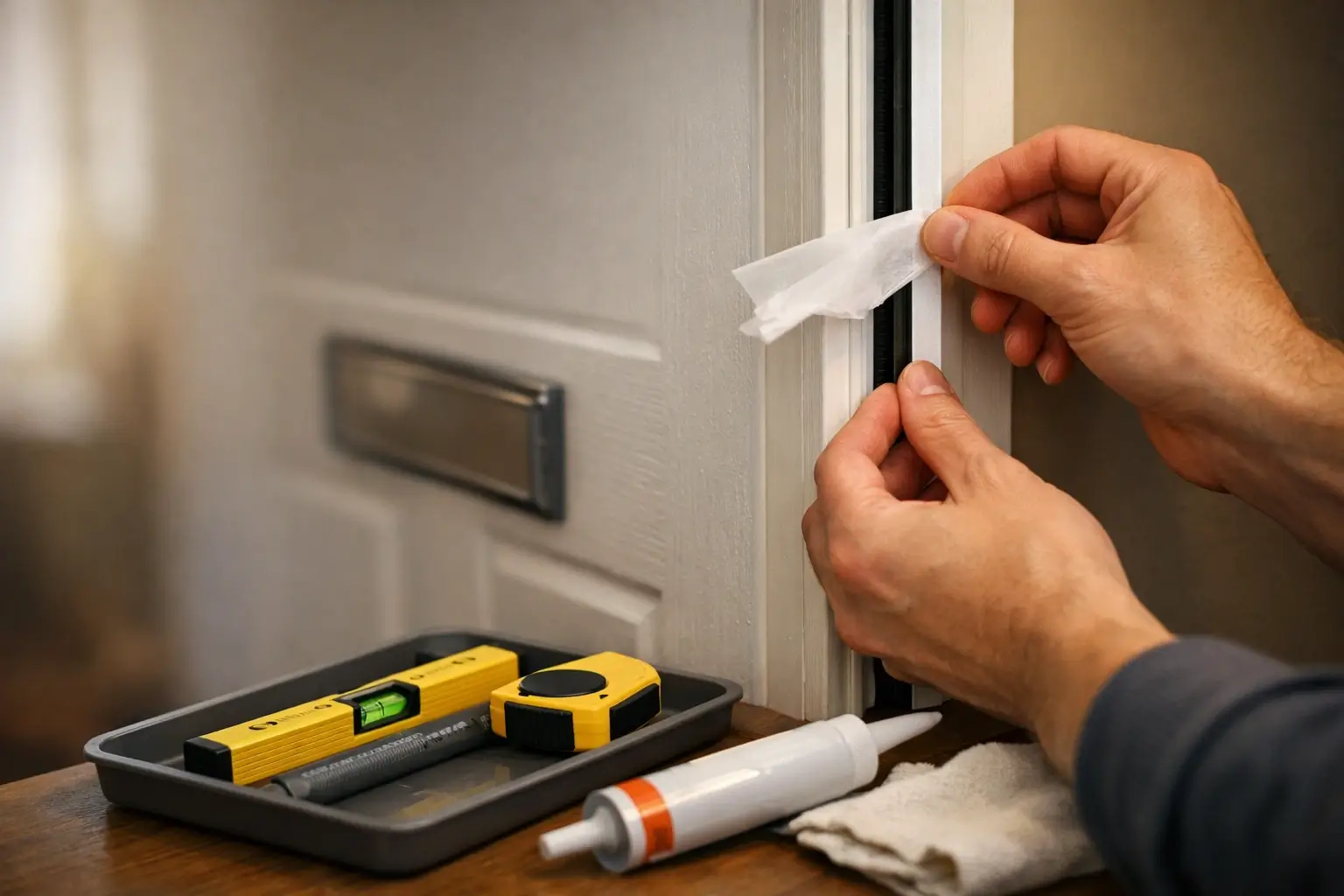
Grab a torch, a phone camera, and a notepad. If something looks wrong, take a photo and move on.
Outside walk-around checklist
Start at the roofline. Most problems begin high up.
- Check roof tiles/slates for cracks, slips, and missing corners.
- Look at flashing, especially lead flashing near a chimney stack.
- Clear gutters, downpipes, and drainpipes of leaves and silt.
- Check walls for cracks in render, spalling brick, and failed mortar joints.
- Keep air bricks clear so the subfloor can breathe.
If you’re unsure, stop there. A roof inspection by a qualified pro costs less than a soaked ceiling.
Inside checklist
Now we look for the “quiet signals”. These often show before a leak becomes a repair job.
- Feel for draughts at doors, window seals, and around sash windows.
- Check for condensation, mildew, mould, and musty smells near cold spots.
- Look at pipe lagging in the loft, garage, and under sinks.
- Check the hot water tank jacket if you’ve got a cylinder.
- Watch for peeling paint near skirting boards.
If you’re sealing lots of air leaks, plan ventilation at the same time. Energy Saving Trust warns extra draught proofing can raise poor air quality risk in some homes.
Red flags that mean “call a pro”
Some things aren’t DIY. Safety and building regs compliance matter.
Call a roofer for loose tiles, failed flashing, or damp roof timbers.
Call a heating engineer for a boiler service, odd pressure drops, or noisy pipes.
Call a qualified electrician if sockets or lights show water staining, or if you smell burning.
Upgrade stack #1: Low-cost fixes with fast payback
Start with quick wins. These lower energy bills and cut the chance of damage.
We focus on doors, windows, and pipes first. That’s where most homes leak air and lose heat.
Draught proofing doors, windows, and floors
Draught proofing is simple. You block gaps that let unwanted cold air in.
Use weatherstrips, door seals, a letterbox brush, and a keyhole cover. Use caulk/sealant for small cracks, and expanding foam only where it won’t trap moisture.
Energy Saving Trust estimates draught proofing around windows, floors, and doors can save about £85 a year in Great Britain.
Curtains, zoning, and “heat where you live”
Thermal curtains and door curtains work like a warm coat. They slow heat loss through glass and reduce drafts.
A room divider/partition can help too. It’s not fancy, but it stops you heating empty space.
Bellway makes a useful point: good insulation and simple measures help homes stay warm in winter and cooler in summer.
Pipe lagging and a sensible heating plan
Pipe lagging is cheap. It reduces freezing risk in cold spots like lofts, garages, and under-floor voids.
Don’t forget the loft hatch. A leaky hatch can dump warm air into the loft and leave pipes colder.
Met Office advice on winter readiness includes checking property basics like roof tiles, clearing gutters, and securing the home for bad weather.
Upgrade stack #2: Envelope upgrades that cut bills long-term
This is where savings become steadier. It’s also where mistakes can create damp issues.
We’ll keep it real. Not every home suits every upgrade.
Loft and roof insulation (270mm) without the mess
Loft/roof insulation is one of the best known fixes. Many homes already have some, but it’s often thin.
Energy Saving Trust notes topping up from around 120mm to 270mm can cut bills, and it treats 270mm as a minimum benchmark for new builds.
Costs matter. Energy Saving Trust puts a semi-detached loft top-up (120mm to 270mm) at around £750, and a full install in an uninsulated loft at around £900.
Windows and doors: what’s worth it
Start with sealing before replacement. New glass won’t help if the frame leaks air.
Check window seals and frames first. For sash windows, secondary glazing can be a strong option when you want less draught and noise without changing the look.
Energy Saving Trust covers options like double glazing and triple glazing, and it links better glazing to fewer draughts and lower heat loss.
Walls: cavity, solid, and moisture risk
Walls are tricky. A 1930s semi often has a cavity wall, but a Victorian terrace may have solid walls.
Solid wall homes need careful choices. Trapped moisture can show up as damp patches, mould, and cold spots from thermal bridging.
If you’re changing wall finishes, think breathable paint and sensible detailing. If you’re unsure, a professional survey can stop expensive guesswork.
Upgrade stack #3: Flood resilience that prevents months of repair
Flooding isn’t just a river problem. Surface water runoff can overwhelm drains and push water toward doors.
This stack is about two goals. Keep water out when you can, and recover faster if water gets in.
Check flood risk and sign up for warnings
Start with the basics. Met Office points people to flood risk checks for each UK nation, and it links to free flood warnings where available.
In England, Scotland, and Wales, you can sign up through the government flood warnings service, and Floodline is available by phone.
PFR basics: barriers, covers, and backflow control
PFR means property flood resilience. FloodReady describes government and the Environment Agency work to increase resilience as flood risks grow.
Flood Re’s Be Flood Smart campaign, run with the Environment Agency, aims to raise awareness of PFR and help homeowners make homes more flood resilient.
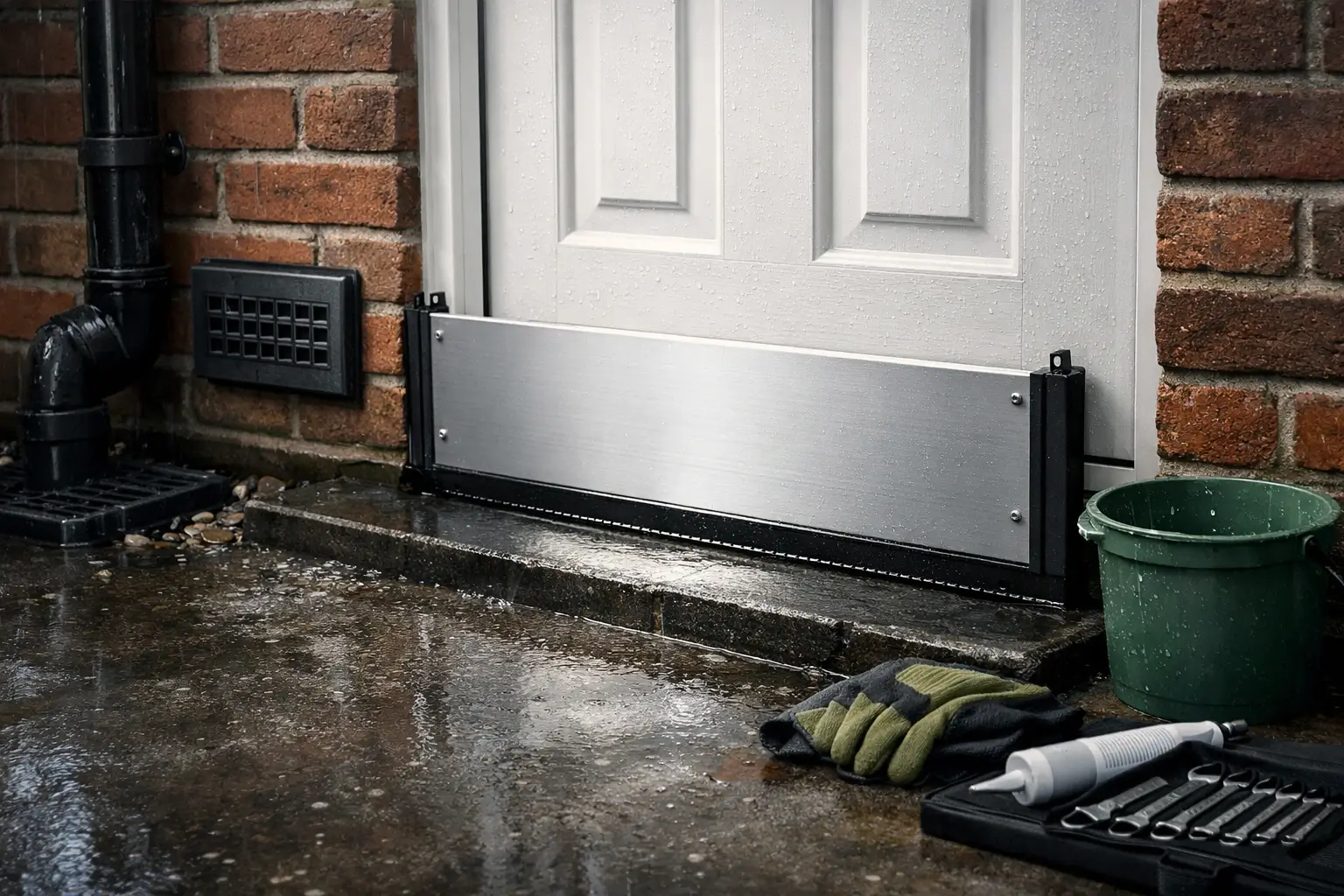
Common measures include flood barriers, flood doors, air brick covers, and non-return valves to reduce backflow. Flood resilience frameworks often group them as “resistance” (keep water out) and “recoverability” (get back to normal faster).
Drainage and runoff: the boring fixes that work
Start with gutters and downpipes. Overflow near a wall can raise damp risk and soak foundations.
Check ground levels. If paving slopes toward the house, water will follow it.
If you’ve got space, a rain garden or permeable paving can help slow surface water runoff and keep water away from doors.
Upgrade stack #4: Summer weatherproofing without expensive AC
Summer weatherproofing is real. It’s about stopping overheating and controlling moisture.
We keep the focus on shading and airflow. Both are cheaper than cooling machines.
Shading first, always
Stop heat before it enters. External shutters/blinds work well because they block sun outside the glass.
Internal blinds help too, just less. Reflective window film can cut glare and solar gain, but test a small area first to avoid a patchy look.
CIBSE points to shading as a key passive step for thermal comfort.
Ventilation that matches the day
Airflow needs timing. On a very hot day, keep windows and curtains closed on the sunny side.
When it cools outside, open up for cross-ventilation. Use night purge ventilation to flush heat, but keep security in mind for ground-floor rooms.
Don’t seal and regret
Airtightness can save money. It can also trap humidity if ventilation is poor.
GOV.UK guidance on damp and mould stresses health risks and the need to act quickly and prevent problems, which includes practical steps to reduce damp drivers.
If mould keeps returning, don’t just wipe it. Find the moisture source and fix that first.
What to do before a named storm or deep freeze
When a warning hits, speed matters. The goal is fewer “storm missiles” outside and fewer frozen pipe risks inside.
Met Office advice includes securing outdoor furniture and checking fences and roof tiles.
Garden and outdoor checks
Bring in loose garden items. Trampolines, chairs, and plant pots can smash windows.
Prune weak branches that hang near the roof. Fix fences and garden walls before wind finds the weak point.
Power cut basics
Save the number 105. It’s the free power cut number that connects to your local network operator in Great Britain.
Keep torches, batteries, a battery radio, and phone power packs ready. GOV.UK Prepare also recommends a battery or wind-up radio for updates.
Know your shut-off points
Find the water stop tap. Know how to turn it off fast.
Know where your gas and electric shut-offs are too. Henry Dannell’s storm prep tips include knowing supply shut-off points and keeping an emergency kit.
Costs, savings, and “what should we do first?”
Start with the cheapest fixes that stop damage. Then move to the upgrades that cut bills every year.
Think in layers. Air leaks first, then insulation, then bigger systems.
A simple priority rule
Use three questions.
- Will it prevent damage?
- Will it cut energy bills?
- Will it be hard to fix later?
Gutters, roof checks, and pipe lagging score high on “prevent damage”. Draught proofing often scores high on “save money”.
Typical costs and realistic savings
Energy Saving Trust puts draught proofing savings around £85 a year in Great Britain, depending on the home.
For loft insulation, it gives example costs like £750 for a top-up and around £900 for a full install in a semi.
For burst pipes, the “saving” is damage avoided, not a lower bill. The average claim figure above £17,000 shows why pipe lagging and frost planning matter.
Bundle work to avoid rework
Do messy jobs together. If you’re lifting floorboards for draught proofing, plan pipe lagging at the same time.
If you’re improving airtightness, plan ventilation checks too. It’s cheaper than fixing mould later.
Ask about guarantees/warranties for bigger works, and keep paperwork with insurance policy terms.
2026 grants and support in the UK
Schemes change. That’s why we stick to what we can say safely.
The key 2026 signal is clear. The Warm Homes Plan is framed around upgrading homes and cutting energy bills.
How to prepare without guessing eligibility
Get an up-to-date EPC if yours is old. It helps you plan and compare quotes.
Collect two or three written quotes for larger jobs. Check installer credentials and ask what standards they follow.
Keep a staged plan. Do low-cost weatherproofing first, then bigger insulation or window work when budgets allow.
FAQs
What is home weatherproofing, and what does it include?
Home weatherproofing means stopping wind, rain, and temperature swings from sneaking into your home through weak points like roofs, gutters, doors, windows, and walls. It usually includes draught proofing, checking roof tiles and flashing, clearing gutters, pipe lagging, and basic moisture control so you cut damage risk and energy bills.
Focus on the building envelope first. That’s the parts between you and the weather.
What’s the difference between weatherproofing and waterproofing?
Weatherproofing blocks everyday weather stress like draughts, wind-driven rain, and UV wear on surfaces. Waterproofing targets water getting through where it must not, often under pressure or in persistently wet areas. Mixing them up can trap moisture, cause damp patches, and make mould worse, especially in older solid-wall homes.
If you’ve got damp, don’t guess. Find the source and pick the right fix.
What are the cheapest ways to weatherproof a house fast?
Start with draught proofing around doors and windows, add door seals and weatherstrips, and fix obvious gaps with sealant. Then clear gutters and downpipes, and add pipe lagging in cold spots like lofts and garages. These cheap weatherproofing fixes often cut bills and reduce burst-pipe risk quickly.
Cheap doesn’t mean sloppy. Avoid blocking vents and air bricks.
How do we find draughts around doors and windows?
Use your hand on a windy day and feel for cold air around frames, letterboxes, and keyholes. At night, shine a torch from outside and look for light leaks around door edges. You can also hold tissue near gaps and watch it move. Fix the biggest leaks first for best results.
Draughts often hide at loft hatches, under doors, and around pipe holes.
How much money can draught proofing save in the UK?
Energy Saving Trust estimates draught proofing around windows, floors, and doors could save about £85 a year in Great Britain and £80 in Northern Ireland, depending on the home. It also warns that extra draught proofing in an already tight home can raise poor air quality risk without good ventilation.
Treat savings as “typical”, not guaranteed. Your heating type and home layout matter.
Is loft insulation still worth it in 2026, and how much does it cost?
Loft insulation is still one of the simplest bill-saving upgrades because heat rises and escapes through the roof. Energy Saving Trust gives example costs of around £900 for a full 270mm install in an uninsulated semi, or about £750 to top up from 120mm to 270mm.
Don’t squash insulation under storage. Use raised decking systems if you need boards.
How do we prevent frozen and burst pipes?
Insulate pipes with pipe lagging in cold areas like lofts, garages, and under sinks. Keep the home above freezing when away, and open cupboard doors under sinks to let warm air reach pipes. Know your stop tap location so you can shut off water fast if a pipe fails.
A burst pipe can flood rooms quickly. That’s why this sits high on the “do first” list.
How do we stop condensation and mould after draught proofing?
Condensation rises when warm, moist air hits cold surfaces, so sealing air leaks can trap humidity if ventilation is weak. Use extractor fans in kitchens and bathrooms, keep trickle vents clear, and heat key rooms steadily in cold spells. GOV.UK guidance stresses damp and mould health risks and the need for fast action.
If you’re using a dehumidifier, treat it as support, not the main fix.
How do we check flood risk and get warnings?
Start with a flood risk check for your nation, then sign up for flood warnings where available. Met Office links to risk checks for England, Northern Ireland, Scotland, and Wales, and it points to free flood warnings for England, Scotland, and Wales. GOV.UK also offers flood warnings sign-up and Floodline phone support.
Do this before winter. It’s free, and it buys time when water levels rise fast.
How can we keep a home cooler during heatwaves without AC?
Block sun before it enters using shutters or external blinds, then use cross-ventilation when outside air is cooler. Close sunny-side curtains during peak heat and ventilate at night for a heat flush. CIBSE says shading and natural ventilation can still achieve thermal comfort as part of year-round performance.
If upstairs stays hot, check loft insulation and roof ventilation too.
If you want, paste the type of home you’re writing for (Victorian terrace, 1930s semi, flat, new build). I’ll add a short “what we’d do first in this home” example with a realistic order and common failure points.







[…] the UK, start with your local council, an OT, or a Home Improvement Agency before you hire a random […]
[…] is the part that saves you money. Because foldables still ask you to give up a few […]
[…] for extras that save real money. Skip extras you wouldn’t buy on your […]
[…] more tip that saves real money. Don’t buy storage you’ll outgrow in six months. Low storage tiers can push you into cloud […]
[…] trip flight, your add-on costs are usually nights, meals, and local transport. Some travelers also save money by avoiding peak return days when they […]
[…] traps cost more because they sell speed and certainty. Slow travel saves money when you swap some of that for […]
[…] payment assistance (DPA) is money that helps cover the upfront costs of buying a home. It can come from a government agency, a […]
[…] this like a booking filter. It saves money and stress later. It also cuts tourist trap risk, because you’ll spot fuzzy promises […]
[…] Aim for walkable areas with tram links. You’ll save time and money. […]
[…] no annual dollar cap and allows carryforward of unused credits. Part II covers the energy efficient home improvement credit for upgrades like heat pumps, insulation, windows, and doors. It has strict annual caps ($3,200 maximum […]
[…] windows. It shows up as draughts, stains, and sticking openers. So we treat installation as part of home weatherproofing and storm-proofing, not an […]
[…] inspection report, and identify the most cost-effective energy efficiency improvements for your home. The report must also include estimated cost savings for each recommended improvement. An audit without a written report doesn’t […]
[…] it boring on purpose. Boring saves money and keeps warranties and safety worries […]