




Aging in Place Upgrades: 15 Home Modifications That Keep Seniors Safe and Independent
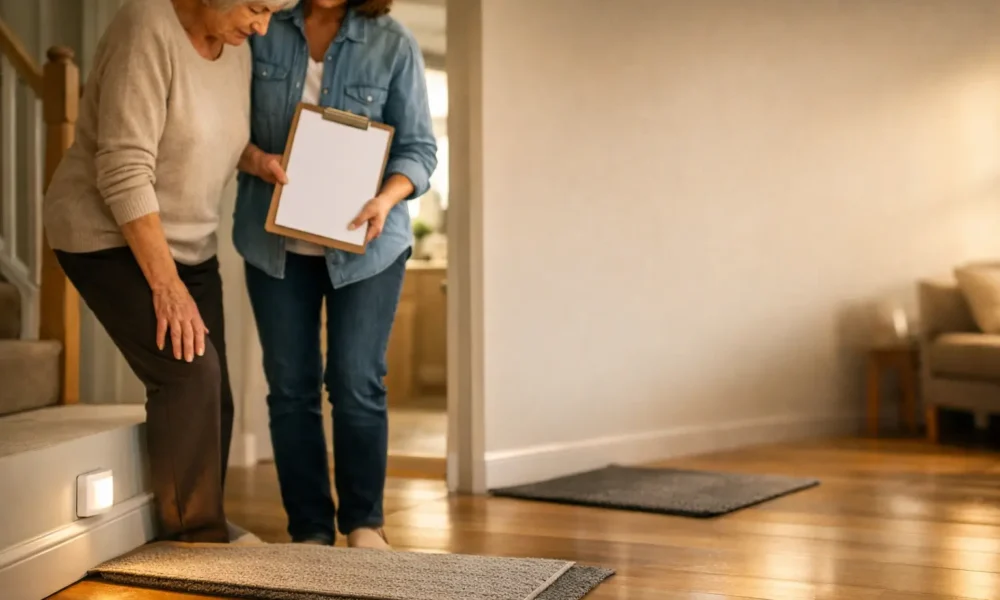
Staying at home sounds simple. Then real life shows up.
Table Of Content
- What does “aging in place” mean, and why does it matter?
- Who this guide is for
- Start with a quick home safety walk-through (15–30 minutes)
- Fix-today checklist (quick wins)
- The 15 aging-in-place upgrades, room by room
- 1) Add grab bars in key spots (bath, shower, toilet)
- 2) Put in a shower seat and a handheld shower head
- 3) Upgrade lighting to bright, non-glare and add night lights
- 4) Remove or secure throw rugs and improve traction on floors
- 5) Improve stair safety: handrails, clear steps, fix loose railings
- 6) Create step-free entry (ramp or threshold fix)
- 7) Consider a stairlift when stairs become the barrier
- 8) Move daily-use items into the “safe reach zone” (waist to shoulder)
- 9) Add a “getting dressed” seat and stable support points in the bedroom
- 10) Switch to lever-style handles and easy-grip hardware (doors and taps)
- 11) Kitchen usability: pull-outs and sliding shelves for safer access
- 12) Safer bathing remodel option: walk-in shower or low-threshold solution
- 13) If needed: small home elevator or vertical lift (high-cost tier)
- 14) Add an emergency response plan and a medical alert option
- 15) Add simple smart-home supports (voice lighting and basic monitoring)
- DIY vs pro: who installs what?
- Safety and permits: the calm way to avoid nasty surprises
- Beyond the house: services that make aging at home work
- Where to find local help
- How to pay for aging-in-place upgrades
- Universal design: the “works for everyone” mindset
- Housing and location matter more than people expect
- A short, sensible safety note
- FAQs
- What does “aging in place” mean?
- What are the most important home modifications to prevent falls?
- What are the best bathroom safety upgrades for seniors?
- How can we make stairs safer for older adults?
- How much does it cost to age in place?
- Does Medicare pay for home modifications?
- How do we find local programmes that help pay for repairs or safety updates?
- What’s the difference between aging in place and assisted living?
- What technology helps seniors live safely at home?
- When is aging in place no longer safe?
A loose rug turns into a trip hazard. A dark hallway turns into a fall risk. A “quick fix” from the internet turns into a costly mistake.
We wrote this for anyone who feels overwhelmed by home improvement choices. If you’re worried about safety, permits, or who to trust, you’re not alone.
What does “aging in place” mean, and why does it matter?
Aging in place means staying in your own home as you get older, while making changes that keep daily life safe and workable. It’s about independence, but also planning ahead, so small issues like stairs, lighting, and wet floors don’t turn into emergencies later.
It’s not all or nothing. Many people start with small home modifications, then add bigger accessibility upgrades only if needs change.
Think of it like winter prep. You don’t wait for the first freeze to check the boiler.
Who this guide is for
We wrote this for older adults, adult children, and family caregivers. It also fits anyone supporting an ageing adult who wants to live independently.
If you’re dealing with a sudden change, like a fall or hospital stay, start with the “quick walk-through” section. Then pick the upgrades that match what’s hard right now.
Start with a quick home safety walk-through (15–30 minutes)
Start where falls usually start. The route from bed to bathroom, and from sofa to kitchen.
Look for trip hazards, slip hazards, and “reach and twist” moments. Clutter, throw rugs, dim corners, and stairs safety issues stack up fast.
If you want a structured checklist, AARP publishes an aging-in-place home checklist that’s easy to scan room by room.
Fix-today checklist (quick wins)
These are the fastest wins. They also help you see what bigger work is truly needed.
- Clear pathways in halls and bedrooms.
- Add night lights for the bed-to-bathroom route.
- Move daily items into a safe reach zone (waist to shoulder).
- Remove or secure throw rugs.
- Check handrails for wobble on stairs.
- Put a non-slip mat where floors get wet.
One key stat keeps this real. Falls are a leading cause of injury-related death for adults 65 and older, and preventing falls often starts with home safety basics.
The 15 aging-in-place upgrades, room by room
Here’s how we suggest you prioritise. Start low-cost, then move up only if you need to.
Low-cost changes reduce fall risk fast. Bigger remodel-level work can wait until you’re sure it’s the right call.
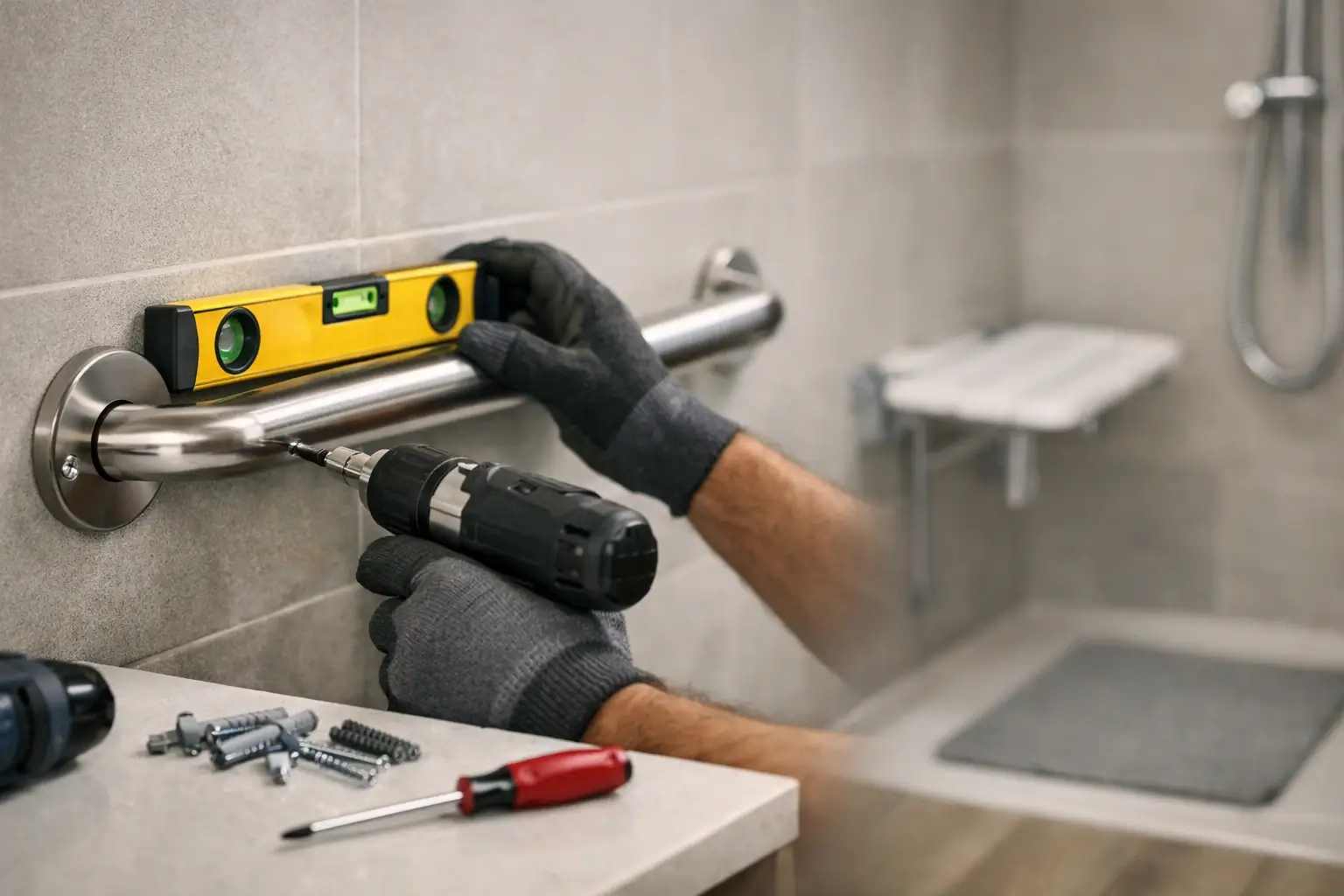
1) Add grab bars in key spots (bath, shower, toilet)
Grab bars work best where people shift weight. That usually means the shower entry, next to the toilet, and near any step or lip.
The main failure point is bad fixing. A bar screwed only into tile or plaster can pull out when it’s needed most, so use the right fixings or hire a pro.
If you also need toilet support, look at toilet safety rails or a raised toilet seat. They reduce the “stand and wobble” moment that causes many bathroom falls.
2) Put in a shower seat and a handheld shower head
A shower seat lowers the risk from wet floors and dizziness. A handheld shower head cuts the need to twist or reach.
The main mistake is picking a seat that slides, or mounting it without support. If you’re drilling into tile or waterproof boards, a professional installer is often the safer choice.
This is one of the simplest bathroom modifications that supports independent living at home.
3) Upgrade lighting to bright, non-glare and add night lights
Lighting hazards hide in plain sight. A dark landing, a shadow on the last step, a hall bulb that’s too dim.
Aim for bright, even light, not harsh glare. Put night lights on the route to the bathroom, and make sure light switches sit where you actually enter a room.
Motion-sensor or voice-controlled lighting can also help when hands are full or balance feels shaky.
4) Remove or secure throw rugs and improve traction on floors
Throw rugs are classic trip hazards. The edge curls, the pad slips, and the fall happens fast.
If you keep a rug, secure it with a proper non-slip underlay and tape the edges. Also check thresholds between rooms, because small height changes can catch toes or walker wheels.
Wet areas need extra traction. That includes kitchen sinks, bathrooms, and any back door that brings rain inside.
5) Improve stair safety: handrails, clear steps, fix loose railings
Stairs are where small defects become big risks. Loose railings, worn treads, and clutter on steps cause falls.
A solid handrail should not wobble. UK guidance commonly sets handrail height between 900mm and 1000mm, and building rules focus heavily on protection from falling.
If you notice movement in the banister, treat it like a loose tooth. Fix it early, before it fails under load.
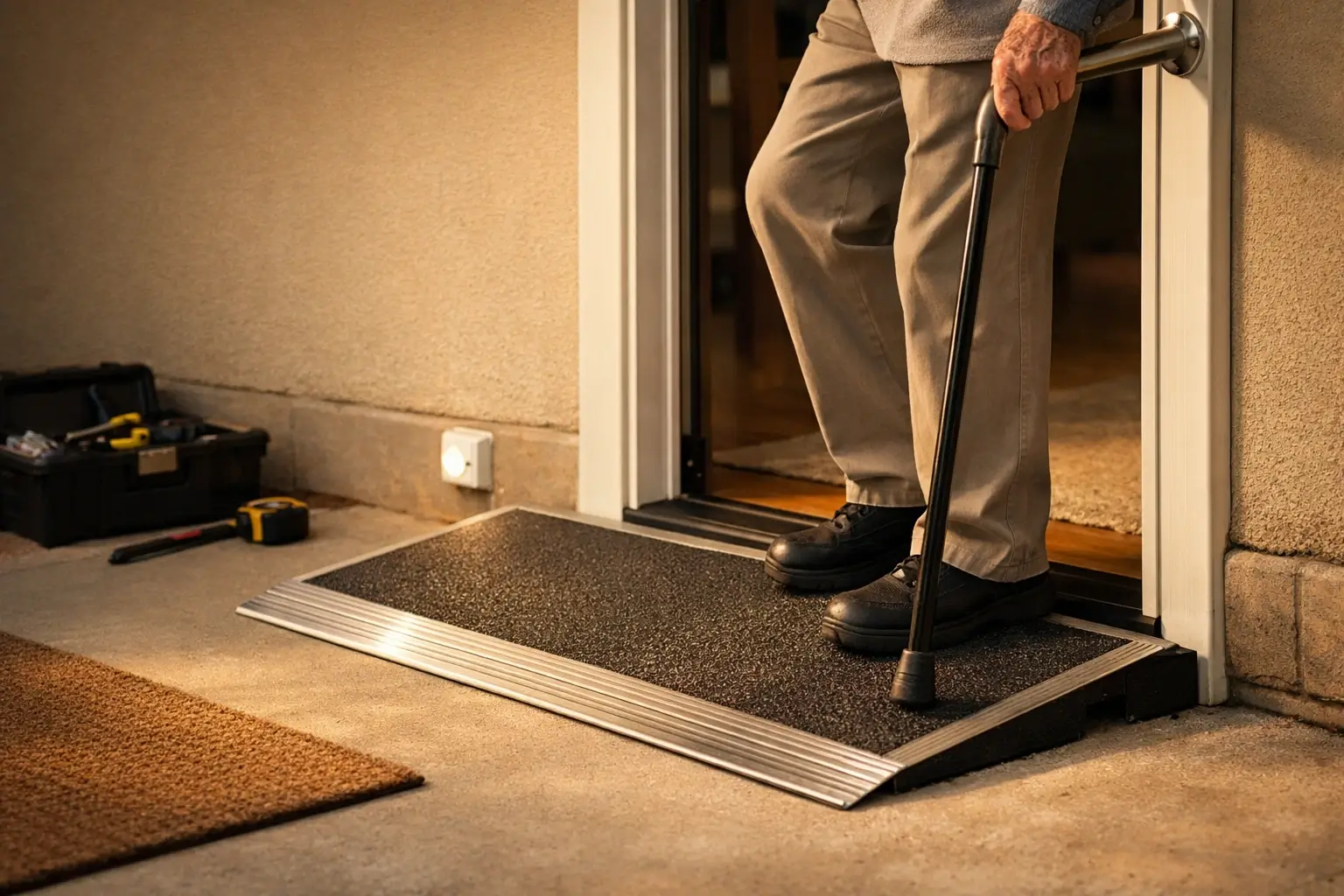
6) Create step-free entry (ramp or threshold fix)
An accessible entry makes daily life easier for walkers, canes, and wheelchairs. It also helps when carrying shopping or laundry.
Sometimes you don’t need a full ramp. A small threshold ramp or a reworked door sill can remove the “toe catch” point.
For ramped entrances, UK building guidance links to Approved Document M for access and also flags fall protection risks, so it’s smart to speak with Building Control for permanent work.
7) Consider a stairlift when stairs become the barrier
A stairlift can keep an upstairs bedroom usable. It can also reduce fall risk when stairs feel like the daily “big test.”
Costs vary by stair shape. UK reporting puts straight lifts around the low-to-mid thousands, while curved stairs tend to cost more.
Get more than one quote. And ask who handles servicing, battery backup, and emergency stop checks.
8) Move daily-use items into the “safe reach zone” (waist to shoulder)
This is one of the most effective upgrades because it costs almost nothing. It cuts the risky trio: reaching high, bending low, and climbing stools.
Put everyday plates, mugs, meds, and toiletries where hands land naturally. Keep heavier items on mid shelves, not floor level.
This change also helps caregivers. Less strain, fewer near-misses, less chaos.
9) Add a “getting dressed” seat and stable support points in the bedroom
Getting dressed is a hidden fall moment. People hop on one leg, lean forward, and lose balance.
A stable chair or bench gives a safe place to sit for socks, shoes, and trousers. Add a bedside light, and keep the floor clear of cables and baskets.
If dizziness is common, keep a phone or alert device within reach on the bedside table.
10) Switch to lever-style handles and easy-grip hardware (doors and taps)
Knobs and stiff latches punish sore hands. Lever handles need less grip and less twist.
This is a classic universal design move. It helps older adults, people with arthritis, and anyone carrying bags.
The “gotcha” is cheap hardware that loosens quickly. Pick sturdy fittings and check screws after a few weeks of use.
11) Kitchen usability: pull-outs and sliding shelves for safer access
Deep cupboards cause risky reaches. People crouch, twist, and lift heavy pans at awkward angles.
Pull-out shelves or sliding drawers bring items toward you. That reduces strain and makes the kitchen more wheelchair-friendly.
If you’re changing cabinet internals, watch for pipes and wiring at the back. A careful installer avoids punctures and leaks.
12) Safer bathing remodel option: walk-in shower or low-threshold solution
If stepping over a tub edge is the problem, a low-threshold shower solves the right issue. It’s also easier to pair with a shower seat.
Costs vary by layout and plumbing. UK trade estimates often place walk-in shower installs in the low thousands, while full wet rooms tend to cost more.
Waterproofing is the key failure point. If tanking fails, you can get leaks, mould, and rotten floors, so don’t cut corners on the prep.
13) If needed: small home elevator or vertical lift (high-cost tier)
A lift can make a multi-storey home workable when stairs are no longer safe. It’s usually a “last big step” after other options.
This work can involve structure, electrics, and fire safety rules. It often needs professional design, specialist installation, and approval steps.
If you’re considering this, start with an occupational therapist assessment and a reputable contractor who can explain loads, routes, and maintenance clearly.
14) Add an emergency response plan and a medical alert option
Gear helps, but plans save time. Decide who gets called first, how they enter the house, and where key info sits.
A medical alert system or emergency response device can help when someone can’t reach a phone. It’s also useful for caregivers who can’t be there 24/7.
Keep it simple. If it’s hard to wear or hard to charge, it won’t get used.
15) Add simple smart-home supports (voice lighting and basic monitoring)
Smart homes don’t need to be complex. Start with lighting, because seeing clearly prevents falls.
Voice-controlled lights can help when balance is poor or hands shake. Some setups also allow basic safety checks, like door sensors or “did the light turn on” routines.
Keep privacy in mind. Use only what you need, and make sure everyone agrees on what gets monitored.
DIY vs pro: who installs what?
Some jobs are safe DIY. Others carry hidden failure risks.
If drilling into tile, touching electrics, or altering structure, we suggest a trained pro.
In the UK, start with your local council, an OT, or a Home Improvement Agency before you hire a random tradesperson.
Safety and permits: the calm way to avoid nasty surprises
Most small home modifications won’t need planning permission. Bigger work might.
If you’re building a permanent ramp, changing door widths, or doing major bathroom work, check with your local authority first. If you’re unsure, contact your local planning authority before work begins.
For electrics, UK Building Regulations Part P sets legal safety requirements for domestic electrical work. Bathrooms and kitchens are higher-risk areas, so use a registered electrician where needed.
Beyond the house: services that make aging at home work
A safe home helps, but support services often make the difference between coping and thriving.
Planning usually includes home-based care, transport support, and caregiver respite. Planning ahead and knowing what support exists in your community matters.
If you’re a caregiver, don’t wait until burnout hits. Build a backup plan early.
Where to find local help
In the UK, your local council can arrange a home assessment and recommend changes, and that assessment is free.
An occupational therapist can visit, ask what’s hard day to day, and suggest the right adaptations for mobility and safety.
Home Improvement Agencies can also help, especially if paperwork and contractor sourcing feels stressful. Foundations runs a directory to find local schemes.
If you’re reading from the US, “Area Agencies on Aging” are a common starting point for local support services.
How to pay for aging-in-place upgrades
Money worries are real. Many people delay safety work because costs feel unclear.
In the UK, small adaptations and equipment can sometimes be provided free, and the NHS notes that if a disabled person needs adaptations costing less than £1,000, the local authority should pay for them.
For larger work, a Disabled Facilities Grant can help cover changes that improve access and safety. The UK government lists maximum amounts as up to £30,000 in England, £36,000 in Wales, and £25,000 in Northern Ireland, with different arrangements in Scotland.
Age UK also explains DFGs and other help, including the idea that small adaptations may be free through your council.
If you’re in the US, people often search for Medicare, Medicaid, and VA support. Coverage rules vary a lot, and most funding focuses on care and medical needs, not full building work, so check official guidance for your area.
Universal design: the “works for everyone” mindset
Universal design means the home works for a wide range of people, without special solutions for one person. That often looks like step-free entry, lever handles, better lighting, and enough space to move safely.
The “7 principles” framing comes from Center for Universal Design work and is often used as a practical guide for usable spaces.
The best part is this. Many universal design choices help kids, guests, and people with injuries too.
Housing and location matter more than people expect
Aging at home isn’t just about the house. It’s also about the area, access to services, and whether you can get help quickly.
Research on “place” and ageing highlights how neighbourhood support, housing type, and vulnerability shape what’s realistic over time.
Renters face extra limits. Always get written permission before drilling, changing doors, or altering bathrooms.
A short, sensible safety note
This page is for home improvement information, not medical advice. If someone has frequent falls, sudden weakness, or dizziness, speak with a clinician.
For structural, electrical, or waterproofing work, use qualified trades and check local rules. It’s the cheapest way to avoid a scary mistake later.
FAQs
What does “aging in place” mean?
It means living in your own home as you get older, while planning support and making changes that keep daily life safe. The goal is to stay connected and independent, but also to lower risks from falls, stairs, and bathroom hazards as needs change.
Start with small home modifications. Then review every few months, or after any fall or health change.
What are the most important home modifications to prevent falls?
Start with what stops slips and trips: better lighting, clear pathways, secure rugs, and strong handrails. Then add bathroom supports like grab bars and non-slip surfaces. Falls are a major threat for older adults, and many hazards sit right in the normal day-to-day routes at home.
If you do only three things this week, do lights, rugs, and rails.
What are the best bathroom safety upgrades for seniors?
Focus on stable support and less stepping. Grab bars near the shower and toilet help with balance. A shower seat and handheld shower head reduce twisting and standing on wet floors. If stepping over a tub is the issue, a low-threshold shower can remove that daily risk point.
Bad installs fail when weight shifts. Use the right fixings, especially on tile walls.
How can we make stairs safer for older adults?
Make the stairs predictable and grippy. Clear every step, fix loose rails, and ensure good lighting at the top and bottom. A solid handrail matters, and UK guidance commonly places handrail height around 900mm to 1000mm. If stairs remain the barrier, a stairlift may be the next step.
If someone uses a cane or walker, check turning space at landings too.
How much does it cost to age in place?
Costs range from small, low-cost fixes to major remodel work. Some minor adaptations may be provided free through local services, while bigger changes like showers or stairlifts can run into the thousands. Grants may help, so it’s worth checking local council support before paying out of pocket.
Get quotes in writing. Ask what’s included, and what might change the price.
Does Medicare pay for home modifications?
In most cases, Medicare focuses on medical care and approved services, not building work like ramps or bathroom remodels. Some people use other programmes, insurers, or veterans’ benefits, depending on eligibility and location. Rules vary, so check official guidance for your state before assuming support is available.
If you’re in the UK, start with your council and DFG checks instead.
How do we find local programmes that help pay for repairs or safety updates?
Start with your local council, because they can arrange a home assessment and point to funding routes. In the UK, Disabled Facilities Grants may help with major adaptations, and some small changes can be covered locally. Home Improvement Agencies can also support with funding steps and contractor sourcing.
Keep notes from every call. Paper trails speed things up.
What’s the difference between aging in place and assisted living?
Aging in place means staying in your own home with support and home modifications. Assisted living means moving to a setting where care and daily support are built into the place. The safest choice depends on health needs, fall risk, and how much help is available day to day.
A home can be safe, but only if support matches the person’s needs.
What technology helps seniors live safely at home?
Useful tech is simple and focused on safety. Good examples include emergency response devices, lighting controls, and basic monitoring that alerts family if something looks wrong. The best tools reduce steps, reduce confusion, and work even when hands are shaky or vision is poor.
Avoid complex setups that need constant charging and updates.
When is aging in place no longer safe?
It’s often no longer safe when falls keep happening, stairs can’t be managed even with support, or daily tasks become unsafe even after key upgrades. If medication, memory, or balance issues make emergencies likely, it may be time for more daily support or a different living setup.
This is where an OT assessment and a frank family chat can help.




[…] the car overheats, stop safely and don’t keep driving “just to get home.” That’s when a small fix turns into a head gasket […]
[…] UK government is also pushing harder on home upgrades in 2026. The Warm Homes Plan puts bill savings and home improvement at the centre of the […]
[…] a bath or walk-in bath if you strongly prefer soaking and you can keep entry/exit safe with support and clear […]
[…] humidity is often low in winter. Mayo Clinic suggests it’s ideal to keep home humidity between 30% and […]
[…] to a safe place first. If things might turn violent or you’re in immediate danger, call […]
[…] personal leisure time to a business trip, usually by arriving early or staying after work ends. You keep meetings and work duties in place, then use a few personal days for rest, local time, and sightseeing. Think “business + leisure” […]
[…] Progress should feel small. That’s what keeps it safe. […]
[…] vs optional.” 1st Formations calls out how easy it is to overspend early, and why delaying upgrades keeps cash safe. Here’s the simple rule I like. If it doesn’t help you trade, don’t buy it yet. Practical […]
[…] truck Overhead wires that block a crane boom Trees, gates, and fence lines that restrict access A place to stage modules safely (even for a few hours) A clear path to the foundation […]
[…] Keep backup codes in a safe place […]
[…] guide covers how Apple’s Shared Password Groups work, how to keep your family’s accounts safe, and most importantly, how to make sure no single phone ever becomes the only key to everything you […]
[…] For Part II, it must be your main home (primary residence) only. The improvement must have been placed in service during the 2025 tax year at a home located in the United States, and the original use of […]
[…] a real home upgrade, start with the living room. One textured wall finish behind the sofa, a lime-based plaster chimney […]