




Protein and Strength Training While on GLP-1: A Minimal Plan
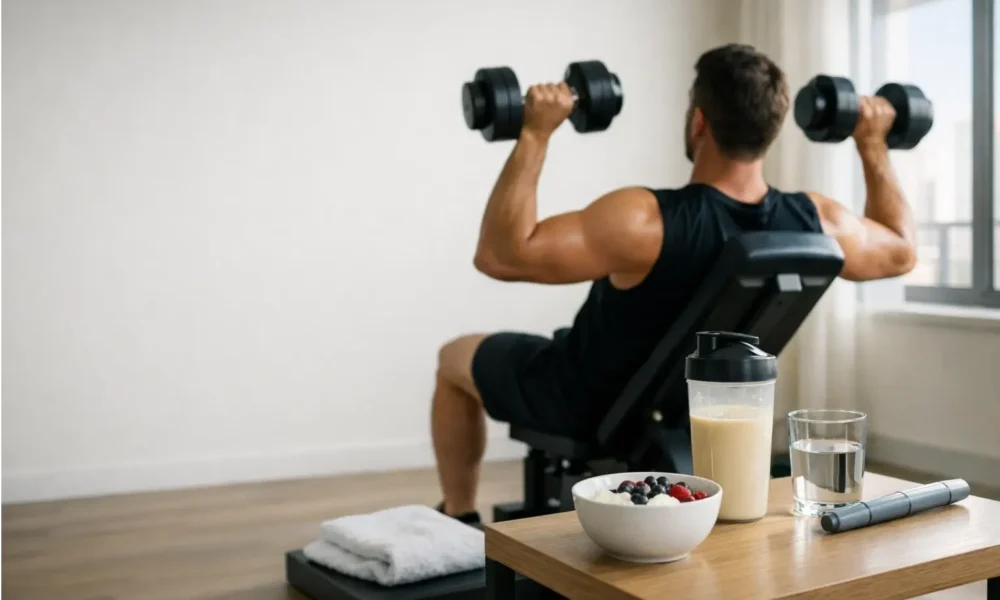
If your sleep is messy, everything feels harder. Fatigue hits early and brain fog sticks around. When a GLP-1 lowers appetite, meals can feel like a chore.
Plans fail when energy is low.
We’re keeping this minimal. We’ll protect lean mass with steady protein and two strength sessions a week. We’ll also cover circadian rhythm basics, because your body clock shapes sleep-wake patterns and recovery.
The Minimal Plan in One Screen
- Protein: 1 to 1.5 g per kg per day as a baseline
- Per meal: 20 to 30 g early in the meal
- Strength: 2 full-body sessions per week
- Walking: build toward 150 minutes per week of brisk walking or other aerobic exercise
- Hydration: aim for 2 to 3 litres a day, unless your clinician says otherwise
These targets show up in patient guidance and public health activity advice.
Why GLP-1 Users Can Lose Muscle
GLP-1 receptor agonists can lower appetite and slow digestion. That can create a calorie deficit without planning.
Common GLP-1 medications include semaglutide (Wegovy, Ozempic, Rybelsus) and tirzepatide (Mounjaro, also called Zepbound in some countries). They’re used as weight-loss medication and obesity medication, and they’re also used in type 2 diabetes care to help manage blood glucose.
When food drops, protein intake can drop too. Without enough protein and lifting weights, we can lose lean mass along with fat.
So we think “body composition,” not “scale only.”
Your Protein Target
JAMA’s patient guidance suggests 1 to 1.5 g per kg per day for many people on GLP-1 medications.
If we lift regularly, some advice goes higher, like 1.2 to 2.0 g per kg per day, if digestion and overall intake allow it.
A rough pounds version is 0.5 to 0.7 g per pound per day.
A Fast Example
At 80 kg, a baseline target is 80 to 120 g per day. If we hit 90 g most days, that’s still a win.
Then we split it. Aim for 20 to 30 g per meal, then add a snack or ready-to-drink shake if needed.
Low Appetite Protein: Small Volume Options
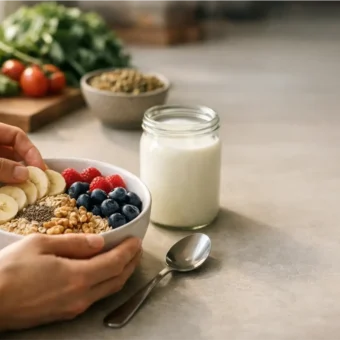
Start each meal with protein. It’s an easy way to hit grams before fullness kicks in.
Small, high-protein options help when big meals feel impossible.
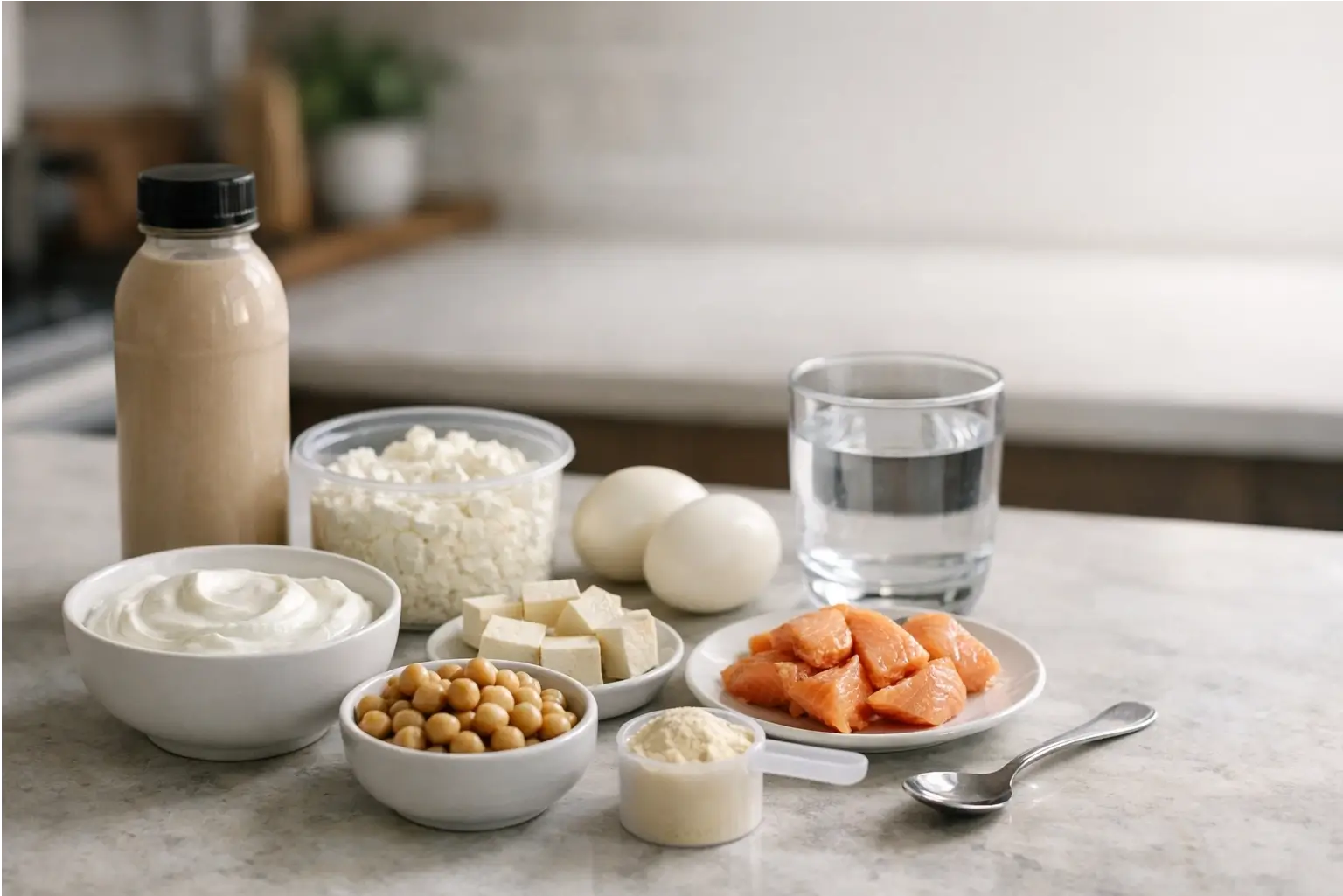
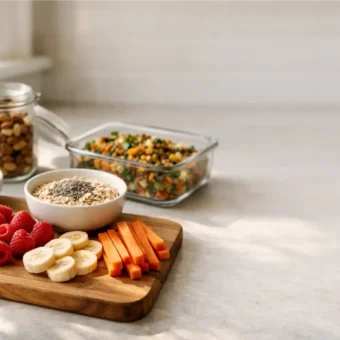
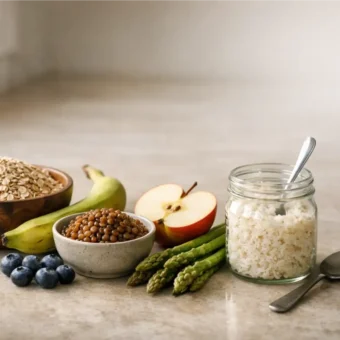
Greek yogurt, eggs, cottage cheese, fish, tofu, beans, chickpeas, and lean meats all work, and both animal and plant protein can count.
If solid food feels heavy, protein shakes can help. JAMA suggests at least 20 g protein per serving when intake is very low.
Protein powder is fine if it sits well. We just want enough total grams and decent protein quality from whole foods when we can.
The Minimal Strength Plan (2 Days Per Week)
Two sessions a week can support muscle maintenance, especially with steady protein.
We lean on compound movements and repeat the same pattern.
Day A (Full Body)
Do 2 to 3 sets of each move. Aim for 6 to 12 reps and rest 60 to 120 seconds between sets.
- Squat: goblet squat or bodyweight squat
- Hinge: Romanian deadlift or hip hinge with a band
- Push: bench press, press-ups, or dumbbell press
- Pull: row (dumbbell, cable, or band)
- Carry or core: farmer carry or plank
Day B (Full Body)
Do 2 to 3 sets again. Aim for 6 to 12 reps and rest 60 to 120 seconds.
- Single-leg: split squat or step-up
- Hinge swap: glute bridge or a deadlift variation you know well
- Overhead: overhead press or incline press
- Pull swap: lat pulldown or band pulldown
- Core: dead bug or side plank
Progress Rule
Add one rep per set until you hit the top of your range. Then add a small amount of load and go back down in reps. This is progressive overload.
If a dose change brings fatigue or nausea, cut sets by about a quarter for a week and keep the habit.
Cardio Without Losing Muscle
We keep cardio moderate. Brisk walking counts, and it’s easy to recover from.
Public health guidance supports 150 minutes per week of moderate activity, plus strengthening work.
Zone 2 means “I can talk, but I’m breathing harder.” Walking, cycling, rowing, and incline treadmill can fit.
Fuel Timing That Fits GLP-1
Don’t train on empty if it leaves you shaky. A small pre-workout snack can help.
After lifting, aim for protein within 1 to 2 hours, even if the meal is small.
If nausea flares, keep fat low and portions small.
Side Effects That Can Wreck Workouts (and Quick Fixes)
Nausea, vomiting, constipation, heartburn or reflux (GERD), and dehydration are common GLP-1 problems.
For nausea, we eat smaller meals, avoid greasy foods, and lower workout intensity on bad days.
For constipation, we add fibre slowly and drink enough fluids. Patient guidance for semaglutide also points to fluids and fibre as a first step.
For heartburn, smaller meals help, and we stay upright after eating for a while.
For fluids, many people do well aiming for 2 to 3 litres a day, mainly water.
Sleep and Circadian Rhythm: The Missing Piece
Circadian rhythms include physical and mental changes over a 24-hour cycle. Light and dark steer them most, but food intake, stress, and physical activity also matter.
When the body clock drifts, sleep gets lighter and less predictable. That can feed fatigue and brain fog.
The 3-Step Sleep Reset
First, pick a wake time we can keep most days. NHS advice for insomnia supports regular hours and steady routines.
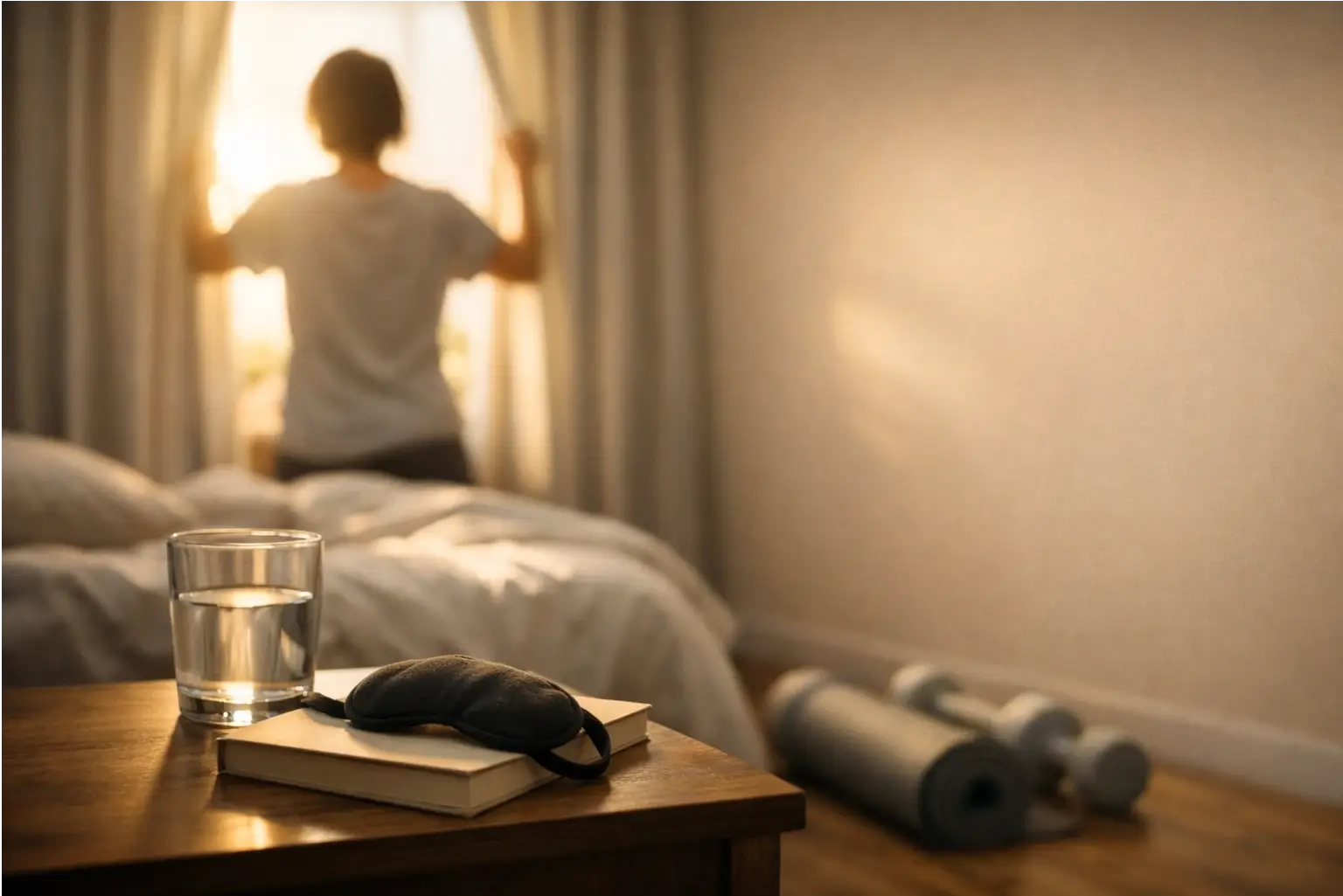
Second, get daylight soon after waking. Morning light helps your brain time melatonin later in the evening.
Third, dim light at night and cut screens close to bed. NHS guidance notes screens can make us more awake.
Tracking That Protects Muscle
The scale can bounce from water, constipation, and meal timing. That’s why we track more than weight.
Princeton Medicine suggests tracking strength, body measurements, clothes fit, and tools like DEXA or bioimpedance when available.
When to Talk to a Clinician
These are prescribed medicines. Get them through your prescriber and a licensed pharmacy, not random online sellers.
In England, Wegovy and tirzepatide (Mounjaro) are prescribed through weight management services, with eligibility based on BMI and health needs.
If we have type 2 diabetes, other glucose-lowering meds, or kidney disease, we ask for a plan that fits our risks. JAMA also warns against extreme calorie restriction with GLP-1 due to dehydration, fatigue, and kidney problems.
If vomiting, dizziness, or severe weakness shows up, we treat it as a medical check-in.
FAQs
How much protein do we need on GLP-1 to avoid muscle loss?
Most people do well with 1 to 1.5 g of protein per kg per day on GLP-1 medications. Spread it across the day and aim for 20 to 30 g early in each meal. This supports muscle maintenance during weight loss, when appetite and total intake often drop.
Is 1.5 g per kg protein safe on GLP-1? Who should be careful?
For many adults, 1.5 g per kg can be a workable upper target, especially with resistance training. Needs change with kidney function, age, and other conditions. If we have kidney disease or other kidney concerns, we should ask a clinician before going higher.
Should we use protein shakes if we can’t eat much?
Protein shakes can help when appetite is low, because liquids can feel easier than big meals. A good rule is at least 20 g protein per serving. Use shakes to fill gaps between meals, and keep an eye on sweeteners if your stomach feels sensitive.
What’s the minimum strength training schedule that works?
Two full-body sessions per week can support muscle maintenance on GLP-1, especially with steady protein. Focus on major muscle groups and repeat the same plan. Keep sessions short and track one lift, like a row or squat, so we can see progress over time.
What exercises are best while on semaglutide or tirzepatide?
Simple compound movements work best: squat, hinge, push, pull, and carry. Think squats, deadlift-style hinges, rows, presses, and overhead presses, using dumbbells, bands, or bodyweight versions if needed. The best set-up is the one we repeat weekly without skipping.
Why do workouts feel harder on GLP-1?
Workouts can feel harder because GLP-1 lowers appetite and slows digestion, so we may train with less fuel. Some people also feel fatigue during dose changes. A small pre-workout snack, steady fluids, and a lighter week when symptoms spike can keep us consistent.
Should we do cardio on GLP-1, or will it burn muscle?
Cardio supports heart health and blood glucose, and it won’t automatically cause muscle loss. Risk rises when cardio climbs but protein and lifting drop. Build toward 150 minutes a week of brisk walking, then keep strength training and protein as the main muscle protectors.
What should we eat before lifting if GLP-1 kills appetite?
Keep it small and plain. A mix of carbs plus protein supports training without feeling heavy, like yogurt and fruit, milk and crackers, or a small shake. Eat something even if it’s a few bites, and avoid greasy foods if nausea hits.
What should we eat after lifting on GLP-1?
After lifting, aim for protein within 1 to 2 hours, even if the meal is small. This supports muscle repair and helps us hit daily grams. Easy options include eggs on toast, tofu with rice, yogurt with nuts, or fish with potatoes.
How do we avoid nausea when exercising?
Adjust timing and intensity first. Train after a small snack, not a large meal, keep sessions shorter on nausea days, and choose low-fat, plain foods. Sip fluids through the day, and if vomiting or severe nausea keeps happening, speak with your clinician.
How much water should we drink on GLP-1, especially if we exercise?
Many people do well aiming for 2 to 3 litres per day, or about 8 to 12 cups, mainly from water. We may need more on hot days or longer walks. Sip across the day, and add an electrolyte drink only if it sits well and your clinician agrees.
How do we handle constipation while trying to hit protein goals?
Constipation often improves with more fluids, more fibre, and steady movement. GLP-1 can slow digestion, so we support the gut on purpose with oats, fruit, and vegetables, increasing fibre slowly if you’re not used to it. Keep water steady day to day.
Can we build muscle on GLP-1 or only maintain it?
Some people build muscle on GLP-1, but many aim for maintenance during weight loss. Muscle gain needs enough protein plus training that gets a bit harder over time. If we’re in a big calorie deficit or dealing with side effects, progress can be slower.
How do we know if we’re losing muscle?
Look at performance and fit, not just the scale. If strength drops week after week, daily tasks feel harder, and measurements shrink fast, muscle loss may be part of it. Track one or two lifts, measure weekly, and use photos monthly if you can.
What if we stop GLP-1? How do we prevent regain?
Regain is more likely when routines fade after stopping medication. The best protection is keeping strength training 2 to 3 times a week, staying active most days, and keeping protein steady. Plan meals ahead and keep walking in the day, even when motivation dips.



[…] physical output creates a higher amino acid demand. Athletes who train hard but don’t match that effort with adequate protein intake burn through their amino acid stores faster than they replenish them. Glutamine for athletes […]
[…] as a bodybuilder or fitness enthusiast. Even when the wording changes, the pattern stays the same. Strength training, muscular build, gym work, and healthy lifestyle keep coming […]