




How Foenegriek Supports Hormonal Balance Naturally
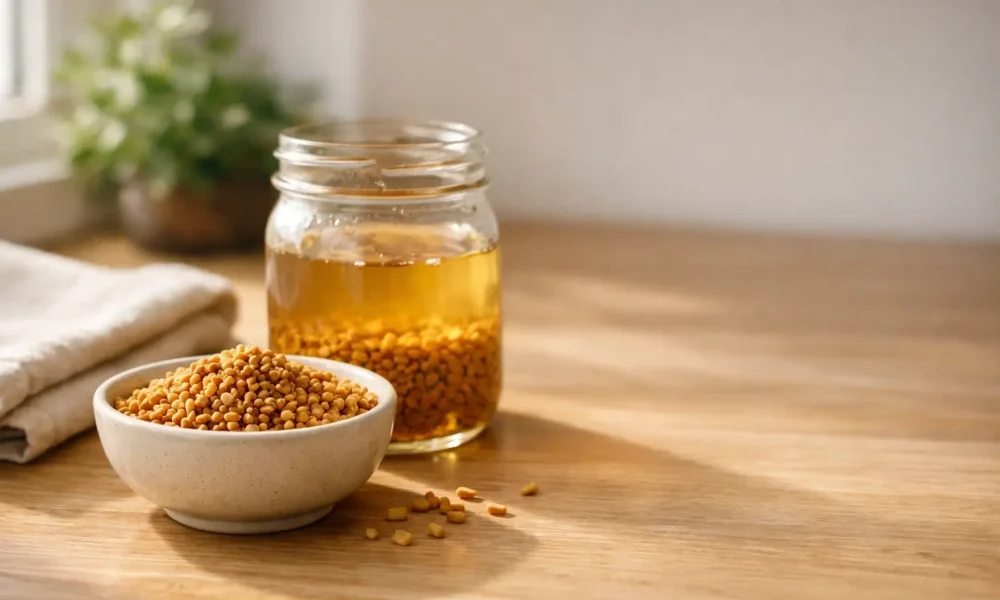
If you’ve spent any time searching your symptoms online, you’ve probably hit a wall of conflicting advice. One source says take more supplements. Another says avoid them completely. Meanwhile, you’re still waking up exhausted, pushing through brain fog, or dreading the week before your period. I’ve seen this pattern constantly in the wellness space. Foenegriek, the Dutch name for the seed-bearing herb fenugreek, has been used for centuries in Ayurvedic and traditional medicine for hormonal health. Now, science is beginning to explain why it actually works.
What Is Foenegriek?
Foenegriek, known scientifically as Trigonella foenum-graecum, is a plant in the legume family. Its golden-brown seeds carry a slightly bitter, maple-like flavour and are widely used in South Asian cooking, where the herb goes by the name methi. Beyond the kitchen, foenegriek’s active compounds have attracted serious research attention for their role in supporting the endocrine system and natural hormone balance.
The Science Behind Foenegriek and the Endocrine System
Your endocrine system is essentially the body’s chemical messaging network. It produces hormones like oestrogen, testosterone, cortisol, and prolactin, which control everything from your mood and metabolism to your reproductive health. Foenegriek contains phytoestrogens and steroidal saponins, two groups of plant compounds with real, measurable effects on this system.
Diosgenin: The Key Compound That Mimics Hormonal Activity
Diosgenin is foenegriek’s most important active compound. It’s a steroidal saponin with a molecular structure closely resembling human sex hormones. In the body, diosgenin acts as a hormone precursor, providing the building blocks your system needs to support oestrogen and testosterone activity, especially when natural levels are low or unstable.
Its oestrogenic properties do not replace your hormones. Think of diosgenin as a structural assistant, working alongside the body’s existing mechanisms rather than overriding them. This phytochemical activity is what separates foenegriek from most other culinary herbs.
How Foenegriek Interacts With Oestrogen and Testosterone
Foenegriek’s phytoestrogens bind to oestrogen receptors in the body. This can support oestrogen levels when they are declining, as in perimenopause, or help stabilise them during the hormonal swings of PMS. For testosterone, the mechanism works differently. Foenegriek appears to inhibit SHBG, or sex hormone binding globulin, the protein that locks testosterone out of active circulation. Less SHBG means more free testosterone available to the body, and that matters for both men and women.
Foenegriek for Women’s Hormonal Health
The case for foenegriek for women is one of the most well-supported applications of this herb. Whether you’re managing PCOS, dealing with monthly PMS disruption, moving through menopause, or recovering after birth, foenegriek’s phytochemical profile addresses several of these concerns at once.
Foenegriek and PCOS: Supporting Insulin-Hormone Balance
Foenegriek may support women with polycystic ovary syndrome by targeting two of the condition’s main drivers: insulin resistance and androgen excess. Its soluble fibre helps moderate blood sugar levels, while diosgenin works on the hormonal side to reduce elevated androgens that contribute to irregular cycles and other PCOS symptoms.
Clinical findings suggest that fenugreek seed extract may help reduce ovarian cysts and improve menstrual regularity in women with PCOS. It is not a cure for polycystic ovary syndrome, but the combined hormonal and metabolic support is clinically meaningful.
Relieving PMS Symptoms Naturally With Foenegriek
If the week before your period feels like a physical and emotional obstacle course, foenegriek may offer real relief. Its anti-inflammatory compounds and phytoestrogenic properties can ease dysmenorrhoea, or menstrual pain, reduce bloating, and take the edge off mood swings tied to hormonal fluctuation. Consistent daily supplementation tends to produce better results than using it reactively at the last minute.
Foenegriek and Menopause: Easing the Transition Naturally
As oestrogen levels fall during perimenopause and menopause, the body needs additional support. Foenegriek’s phytoestrogens offer a plant-based natural remedy for hot flashes, night sweats, and mood instability by partially substituting for declining oestrogen at the receptor level. Research suggests that regular supplementation may reduce the frequency and severity of these symptoms.
This is not hormone replacement therapy. It is a gentler, plant-based form of oestrogen support for women who cannot use HRT or prefer not to. Always consult a healthcare professional before starting any supplement during this stage of life.
Supporting Breast Milk Production and Postpartum Recovery
Foenegriek has long been used as a galactagogue, meaning it supports breast milk production. Research has shown that foenegriek may stimulate prolactin release, the hormone directly responsible for milk supply. Postpartum use is generally considered safe, but dosage and timing should always be reviewed with a healthcare professional first.
Foenegriek for Men: Testosterone and Vitality Support
Foenegriek for men is gaining serious traction in the natural testosterone space. Low testosterone symptoms, including fatigue, reduced libido, and declining muscle mass, affect a growing number of men. Natural testosterone support is increasingly sought after, and foenegriek has solid clinical evidence behind it.
How Foenegriek May Raise Free Testosterone Levels
Foenegriek may raise free testosterone levels by inhibiting SHBG, freeing bound testosterone for active use. A standardised fenugreek extract known as Testofen has been studied in clinical trials. Research has found that Testofen helped maintain free and total testosterone in men over an eight-week period compared to a placebo group.
Free testosterone is the portion the body actually uses. More of it in circulation means better energy, improved mood, and stronger physical capacity.
Libido, Energy, and Performance: What the Research Shows
Clinical trials on fenugreek testosterone have noted improvements in sexual function, energy levels, and strength in men taking Testofen consistently. The research on libido support is encouraging, though most studies use standardised extracts rather than raw seeds. Larger trials are still needed. What currently exists is positive, but I’d rather give you honest context than overstate it.
Clinical Evidence: What Studies Say About Foenegriek and Hormones
The scientific evidence for foenegriek and hormonal balance is growing steadily. Human clinical trials have shown testosterone support in men using Testofen over eight weeks. Other studies have linked fenugreek supplementation to improved oestrogen levels and reduced menopausal symptoms in women. Research has also shown measurable reductions in ovarian cysts after 90 days of supplementation in women with PCOS.
These are human clinical studies, which gives them real-world credibility. Sample sizes are sometimes limited, and more large-scale trials are still underway. But the evidence-based foundation for foenegriek’s role in hormone health is already stronger than most existing articles suggest.
How to Use Foenegriek for Hormonal Balance
Seeds, Capsules, Powder, or Tea: Which Form Is Best?
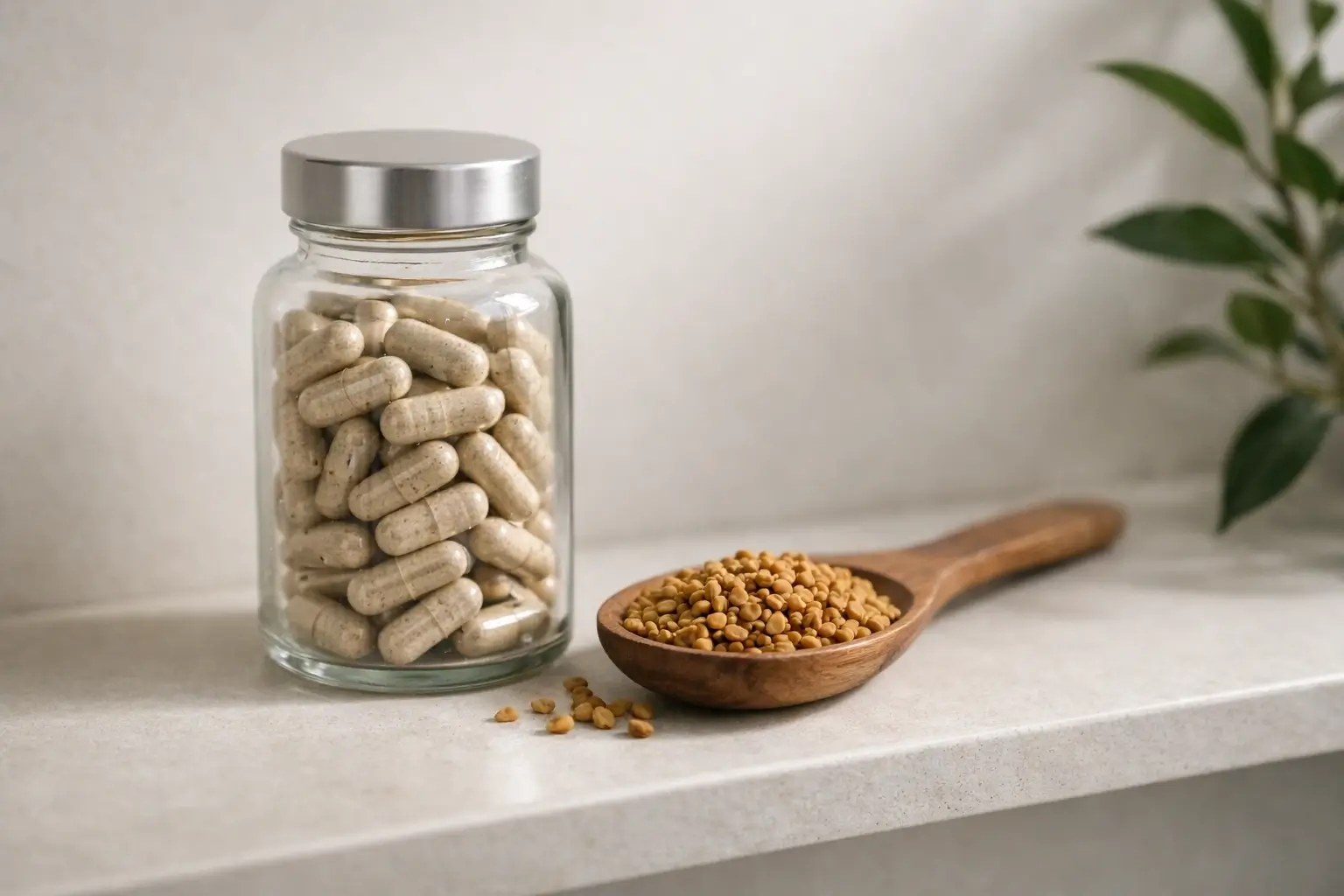
For hormonal goals, the form of foenegriek you choose matters considerably. Standardised capsule extracts offer the highest bioavailability and most reliable diosgenin content for targeted hormonal support. Fenugreek seeds and tea are useful additions to a routine, but harder to dose accurately for specific endocrine goals.
| Form | Bioavailability | Best For |
|---|---|---|
| Standardised capsules (Testofen) | Highest | Hormonal goals, precision dosing |
| Soaked fenugreek seeds | Moderate | Daily routine, blood sugar support |
| Fenugreek powder | Moderate | Cooking, smoothies |
| Fenugreek tea | Lowest | Gentle daily support |
Recommended Dosage Ranges for Hormonal Goals
For women targeting PMS, PCOS, or menopausal support, studies typically use 500 to 600 mg of standardised fenugreek extract per day. For men focused on testosterone support, the same range applies, with the Testofen form being the most researched. For lactation support, doses of 1,700 to 2,600 mg three times daily have been used in clinical settings. Always consult a healthcare professional before starting foenegriek supplementation, especially if you take any medication.
How Long Does Foenegriek Take to Affect Hormones?
Most people see measurable hormonal effects from foenegriek after four to eight weeks of consistent daily use. This timeline applies to testosterone support in men and oestrogen-related benefits in women. Sporadic use produces little result. Consistent use over a sustained period is what allows the active compounds to influence hormonal activity.
Think of it less like a quick fix and more like a slow, steady investment in your endocrine health.
Foenegriek vs Other Hormonal Herbs
| Herb | Primary Effect | Best For | Key Mechanism |
|---|---|---|---|
| Foenegriek | Oestrogen + Testosterone | Women + Men | Diosgenin, SHBG inhibition |
| Ashwagandha | Cortisol + Testosterone | Stress, fatigue, adrenal health | Adaptogen, cortisol regulation |
| Maca | Oestrogen + Libido | Menopause, energy, libido | Glucosinolates, endocrine support |
| Vitex (Chasteberry) | Progesterone + LH | PMS, cycle regulation | Dopaminergic activity |
| Evening Primrose Oil | Oestrogen (indirect) | PMS, perimenopause | Gamma-linolenic acid (GLA) |
Foenegriek is unusual among hormonal herbs because it supports both male and female hormone pathways. Most adaptogen herbs are more narrowly targeted. That dual-action profile is what makes it stand out in the herbal hormone support comparison.
Safety Guide: Side Effects, Interactions, and Who Should Avoid Foenegriek
Foenegriek is generally well tolerated at standard doses. Common fenugreek side effects include digestive discomfort, loose stools, and a harmless maple syrup-like body odour. People with a legume allergy should approach it carefully, since foenegriek sits in the same plant family as peanuts and chickpeas.
Known Drug Interactions to Be Aware Of
Foenegriek may increase the effects of blood thinners like warfarin, which raises bleeding risk. Those taking blood sugar medication or metformin for insulin resistance should monitor glucose levels closely, as foenegriek also lowers blood sugar. Its oestrogenic properties mean it may interact with HRT and oral contraceptives. If you take any of these medications, consult a healthcare professional before adding foenegriek to your routine.
Pregnancy, Fertility, and Foenegriek: What You Need to Know
Foenegriek is a known uterine stimulant and is not safe during pregnancy. High doses have been associated with uterine contractions, which makes this a firm caution. Postpartum use for lactation support is considered safer, but should always happen under professional guidance. If you’re trying to conceive, speak to your doctor before adding any herbal supplement to your daily routine.
Practical Tips for Adding Foenegriek to Your Wellness Routine
The simplest starting point is soaked fenugreek seeds in morning water. Soak a teaspoon overnight, then drink the water and eat the seeds before breakfast. For more targeted hormonal support, a standardised fenugreek capsule taken with food is the more reliable option. Pair it with stress management and a consistent sleep schedule, since elevated cortisol directly disrupts hormonal balance. Holistic hormonal health works better as a whole system than as a single supplement taken in isolation.
Final Thoughts: Is Foenegriek Right for Your Hormonal Health?
Foenegriek is not a miracle herb. But it is one of the few plant-based options with real clinical support for both male and female hormone health. Whether you’re managing PCOS, moving through menopause, supporting lactation, or simply trying to keep your hormonal balance on track, the evidence-based case for foenegriek is genuinely solid. As with any supplement that directly affects the endocrine system, consult a healthcare professional before you start. The science is there. The practical tools are in this article. The rest is your call.
FAQs
How does foenegriek help with hormonal balance?
Foenegriek contains diosgenin, a steroidal saponin with a structure resembling human sex hormones. It supports oestrogen levels through phytoestrogenic activity and may raise free testosterone by inhibiting SHBG. It also plays a supporting role in cortisol regulation, making it useful across multiple hormonal pathways.
Can foenegriek increase oestrogen levels naturally?
Yes, within a physiological range. Foenegriek’s phytoestrogens bind to oestrogen receptors and support natural oestrogen activity, which is particularly relevant during perimenopause and PMS. It is not equivalent to medical oestrogen therapy. Always consult a healthcare professional for guidance tailored to your situation.
Does foenegriek boost testosterone in men?
Research suggests yes. Standardised fenugreek extract, especially Testofen, has been shown in randomised controlled trials to support free testosterone levels by inhibiting SHBG. Effects are typically seen after four to eight weeks of consistent use at 500 to 600 mg daily.
Is foenegriek safe alongside hormonal contraceptives or HRT?
Not necessarily, without professional guidance. Foenegriek’s oestrogenic properties and potential drug interactions mean it could interfere with HRT or oral contraceptives. Always consult a healthcare professional before combining foenegriek supplementation with any hormone-based medication.
Can foenegriek help with PCOS symptoms?
Clinical evidence suggests it can. Foenegriek targets both insulin resistance and androgen excess, two core drivers of polycystic ovary syndrome. Studies show improvements in menstrual regularity and reductions in ovarian cysts with consistent, daily use.
Is it safe to take foenegriek while breastfeeding?
Generally yes, with professional guidance. Foenegriek is a well-established galactagogue that stimulates prolactin and supports breast milk production. Dosage matters here, so discuss use with your midwife or healthcare professional before starting.
How much foenegriek should I take daily for hormonal balance?
For most hormonal goals, 500 to 600 mg of standardised extract daily is the range most studied. Women and men use similar doses for different outcomes. Because individual needs vary, always consult a healthcare professional for personalised dosage guidance.








No Comment! Be the first one.