




Winter Dehydration Is Real: Why Cold Air Wrecks Your Skin and Lips
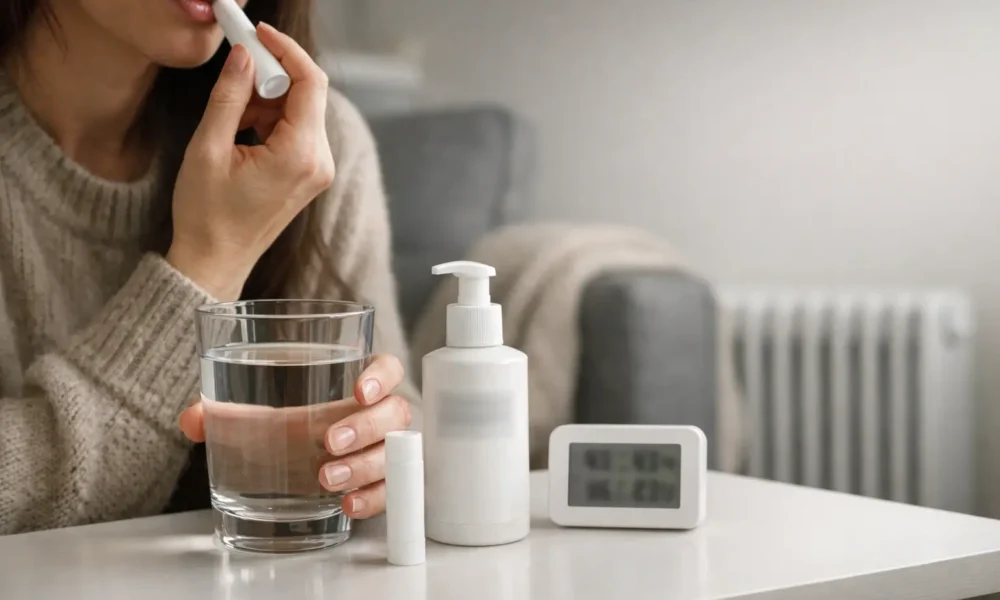
Your lips crack in winter. Your skin feels tight by lunch. You might think it’s just “dry weather” and nothing else.
Here’s the tricky part. You can be low on fluids in cold weather without feeling thirsty, and dry indoor air can pull moisture from your skin and even from your breath. That mix can leave you tired, foggy, and stuck in a loop of chapped lips and sore skin.
Can you really get dehydrated in winter?
Yes, you can get dehydrated in winter because your thirst signal often feels weaker, while your body still loses water through breathing, peeing, and daily activity. Add indoor heating and low humidity, and it can creep up without obvious sweating or heat.
Winter dehydration (sometimes called “hidden dehydration”) doesn’t always feel dramatic. For many people, it looks like dry mouth, chapped lips, a dull headache, or a flat “winter energy slump.”
Online advice can make this harder. Some posts push you to drink huge amounts. Others say winter dehydration isn’t real. Most people just want a simple way to know what matters.
Why you don’t feel thirsty in the cold
Thirst isn’t a perfect alarm. In cold weather, you may feel “fine” and still need fluids. The American Heart Association notes that thirst isn’t the best sign to rely on, even when you aren’t sweating much.
There’s also a simple behaviour piece. In winter, many of us sip less because we don’t carry water as often, and we swap in more hot drinks “when we think of it.” That routine change adds up.
Why winter steals water anyway
You still lose water every day. You lose it in urine, through your skin, and through breathing.
Indoor heating matters here. Central heating can make indoor air drier in winter, and that can increase water loss from breathing.
Why you might pee more (cold diuresis)
Cold diuresis is a real thing. It means you can pee more in the cold, even if you aren’t drinking more.
Researchers have described cold-induced diuresis as part of how the body handles fluid balance in cold conditions. More fluid loss through urine can make it easier to fall behind on hydration.
The skin + lip damage explained
Dry winter air doesn’t just “feel harsh.” It changes how your skin holds onto water.
Dermatologists point out that cold weather and low humidity make it harder for skin to retain moisture, which can lead to itchy, dry skin and cracked lips.
Dry winter air + central heating = moisture loss
Humidity is simply the amount of water vapour in the air. Cold air tends to hold less moisture, and indoor heating can drop the relative humidity even more.
Now add a key term you might see online: transepidermal water loss (TEWL). TEWL is the water that escapes from your skin into the air. In low humidity, that “leak” can increase.
One study on winter indoor exposure found TEWL increased after time spent in a winter indoor environment. That lines up with what many people feel: skin gets rougher, tighter, and more reactive indoors.
Why lips get wrecked first
Lips dry out fast. They’re exposed to wind, cold, and mouth breathing, and the skin there is quick to split.
Then there’s the licking trap. It feels like quick relief, but the NHS warns that licking dry or cracked lips can make them sore.
Signs you’re dehydrated
Winter symptoms can look like “normal tiredness.” That’s why people miss them.
The NHS lists common dehydration symptoms like dark yellow, strong-smelling pee, peeing less often, feeling dizzy, feeling tired, and a dry mouth, lips, and tongue.
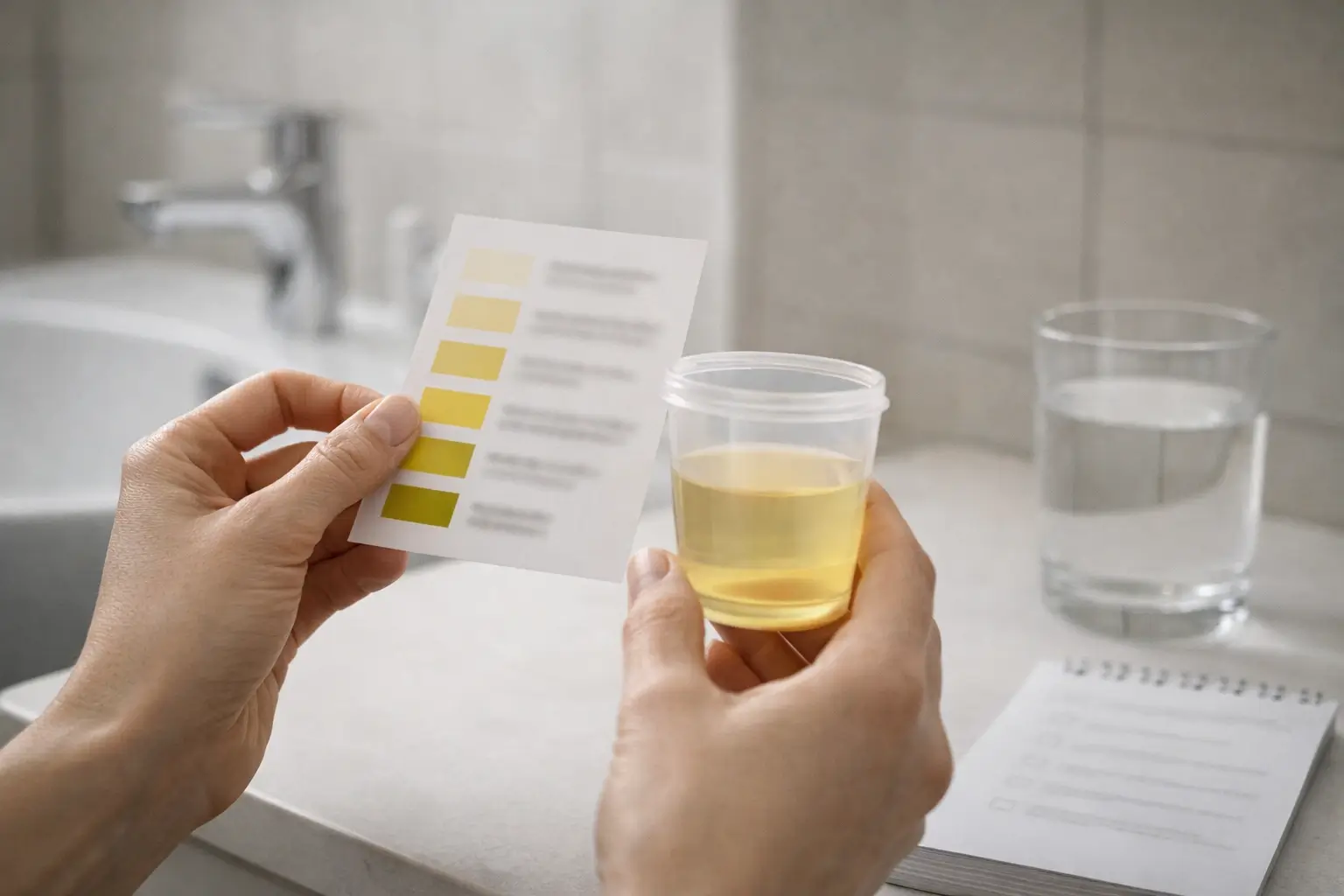
The easiest self-check: urine colour
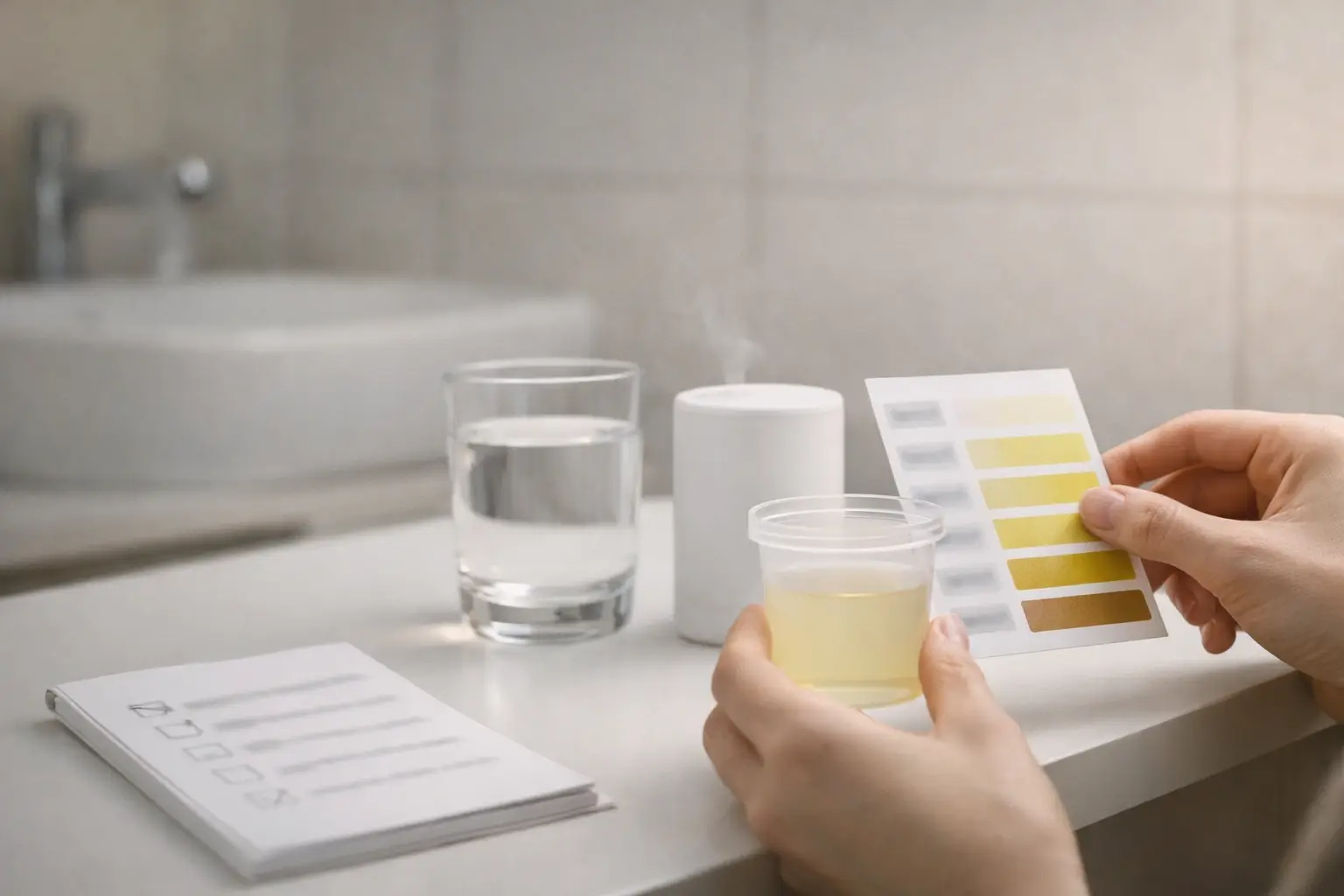
Urine colour is a simple clue. The NHS suggests aiming for pee that’s a clear pale yellow.
This isn’t about obsessing. It’s about a quick check that cuts through noise.
1-minute winter hydration check
- Your pee is darker than pale yellow.
- Your lips feel dry even after balm.
- You’ve had a headache or felt foggy today.
- The heating has been on for hours.
If two or more hit, it’s a good day to drink a bit more and support your skin barrier.
How to fix winter dehydration without overthinking it
You don’t need a complicated plan. You need a steady baseline and a few easy upgrades.
Think “sip, don’t chug.” Small amounts through the day are often easier than a big bottle you never finish.
Your baseline hydration target (UK-friendly)
The NHS guidance is a helpful anchor. Many people should aim for 6 to 8 cups or glasses of fluid a day, and then adjust if they’re active, unwell, or in a hot environment.
That’s not a rule for everyone. It’s a starting point that keeps things practical.
Warm drinks and water-rich foods that help
Warm drinks can make hydration feel doable. Tea, hot water, or a decaf option can all help you sip more often.
Food counts too. Soups, stews, fruit, and veg bring fluid along with a bit of comfort, which helps on days when plain water feels unappealing.
Caffeine and alcohol: what to watch
You don’t have to fear tea or coffee. But if your day is mostly coffee and very little water, you may feel more dry.
Alcohol can also leave you feeling more dehydrated the next day. If you drink, balance it with water and don’t let alcohol be your main fluid.
When electrolytes matter
Electrolytes are salts and minerals that help your body manage fluid balance. They matter more if you’ve had heavy sweating, vomiting, diarrhoea, or long endurance exercise.
For most day-to-day winter life, steady fluids and normal meals are often enough. If you’re unsure, the safest default is to follow standard hydration guidance and watch your symptoms.
The winter skin + lips rescue plan
This is the part most people want. “What do I do tonight that actually helps?”
The goal is simple: reduce water loss and support the skin barrier (your skin’s protective outer layer).
Indoor humidity: your secret weapon
Indoor humidity is often low in winter. Mayo Clinic suggests it’s ideal to keep home humidity between 30% and 50%.
A humidifier can help, but only if you keep it clean. Mayo Clinic also warns that humidifiers can cause problems if they aren’t maintained, so follow the cleaning instructions and change the water often.
If you don’t own a humidifier, you still have options. Ventilate rooms for short bursts, avoid overheating the home, and keep a simple moisture routine for skin.
Moisturiser strategy (simple rules)
Moisturiser works best with good timing. Dermatologists recommend short warm showers (not long hot ones), then patting skin dry rather than rubbing.
Then moisturise soon after washing. This helps trap water in the skin when it’s most ready to hold it.
If ingredient labels confuse you, here’s the plain version:
- Humectants (like glycerin or hyaluronic acid) pull water into the top layer of skin.
- Emollients smooth rough patches.
- Occlusives (like petrolatum) sit on top and slow water loss.
You don’t need to hunt for a perfect product. A fragrance-free, gentle moisturiser that you’ll use often is usually the best pick.
Lip routine that actually works
Start with what not to do. Don’t lick, bite, or pick at flaky lip skin, because it can slow healing and keep lips sore.
Then protect the surface. The American Academy of Dermatology recommends a non-irritating lip balm with SPF 30 or higher before going outdoors, even in winter, and reapplying while outside.
At home, go thicker at night. A simple occlusive layer can stop overnight water loss when the heating is on and your mouth is dry.
A simple AM/PM routine
- Morning: lip balm with SPF before you go out.
- Day: reapply after eating, and when you feel dryness.
- Night: a thicker layer to seal in moisture.
Who’s most at risk in winter?
People at higher risk include older adults (thirst can be less obvious), office workers in heated buildings, and anyone exercising outdoors or sweating under layers. Kids can also slip into dehydration faster than adults, so small signs matter.
Heated offices are a big one. You sit still, the air is dry, and hours pass without a drink.
Older adults also deserve a mention. Some NHS guidance notes confusion can show up with dehydration, and this can be harder to spot in people who already have memory problems.
When to get medical help
Most mild dehydration improves with fluids and rest. But some signs need urgent attention.
NHS and NHS inform advise urgent help if you feel unusually tired or drowsy, confused and disoriented, dizzy when standing and it doesn’t settle, or if you have dark yellow pee and are peeing less than normal.
If symptoms feel severe or you’re worried, it’s fine to ask for help. It’s better to be cautious than to push through.
Key takeaways you can use today
Winter dehydration is often quiet. Dry indoor air, weaker thirst cues, and daily fluid loss can add up.
Start with two anchors: drink steadily, and aim for clear pale yellow urine. Then protect your skin barrier with short warm showers, quick moisturising, and a lip balm routine that includes SPF.
This article is general information, not personalised advice. Details can change depending on context, and what works for one person may not work for another.
FAQs
Can you get dehydrated even when it’s cold?
Yes. Cold weather can make thirst feel weaker, but your body still loses water through breathing, peeing, and daily activity. Dry indoor heating can add to water loss, so you can fall behind without feeling sweaty or overheated.
If you feel “fine” but your lips keep cracking, treat it as a clue, not a mystery.
Why don’t I feel thirsty in winter?
In winter, thirst can be a poor signal. You may drink less because you don’t feel hot, and your routine shifts indoors. Health guidance also warns that thirst isn’t the best indicator of hydration needs, even when you aren’t sweating much.
Use habits and urine colour as your guide instead.
Does indoor heating dehydrate you?
Indoor heating can dry the air, and drier air can increase water loss through breathing. That doesn’t mean heating is “bad,” but it can make dehydration and dry skin more likely if you don’t drink regularly and support your skin with moisturiser.
If your home feels stuffy and your skin feels tight, check humidity and fluids.
Why does cold air make my skin so dry?
Cold weather often comes with low humidity, which makes it harder for skin to hold moisture. Dermatologists link winter dryness to the drop in temperature and lack of humidity, and research shows winter indoor conditions can increase TEWL, meaning more water escapes through skin.
Moisturising after washing and keeping showers short can help a lot.
Why do my lips keep cracking in winter?
Lips are exposed and lose moisture quickly, especially in cold wind and dry indoor air. Many people also lick their lips for quick relief, but the NHS warns that licking dry or cracked lips can make them sore, which can worsen the cycle.
A thick balm at night and SPF balm outdoors is a strong combo.
Does licking your lips make chapping worse?
Yes. Licking can feel soothing for a moment, but it often leaves lips drier after the saliva evaporates. The NHS specifically advises not to keep licking dry or cracked lips because it can make them sore and slow healing.
Try swapping the habit for a plain, non-irritating balm instead.
How much should I drink per day in winter (UK)?
A practical baseline is the NHS guidance: many people should aim for 6 to 8 cups or glasses of fluid a day. Needs can rise if you’re active, unwell, or in a warm environment, so it’s a starting point, not a fixed rule.
If you’re unsure, check urine colour and how you feel.
What colour should my urine be if I’m hydrated?
The NHS suggests aiming for pee that’s a clear pale yellow. Darker, strong-smelling urine can be a sign you need more fluids. This check is quick, free, and useful when thirst cues feel unreliable in winter.
One odd day is normal. A pattern is what matters.
Why do I pee more in cold weather?
Cold-induced diuresis can make you pee more when you’re cold. It’s linked to how the body manages fluid balance in cold conditions, and it can increase urine output even when you aren’t drinking extra. More peeing can make it easier to drift into dehydration.
If you notice this, don’t “solve” it by drinking less. Sip steadily instead.
Will a humidifier help dry skin and lips?
A humidifier can help if your indoor air is very dry. Mayo Clinic says it’s ideal to keep home humidity between 30% and 50%, and adding moisture to the air can ease dryness. The key is safe use, including regular cleaning and fresh water.
If you get condensation on windows, humidity may already be high. Dial it back.








[…] can be cold in winter and clammy in […]
[…] means blocking everyday weather stress. Think wind-driven rain, draughts, cold air, and sun beating on the same wall year after […]