




Hybrid vs Electric: Which Should You Actually Buy in 2026?

You’re not choosing between “good” and “bad”. You’re choosing between two ways of owning a car. One depends on plugging in. The other depends on petrol, with a battery doing some of the work.
If forums and ads have you doubting everything, I get it. You’re worried about range, charging queues, warranty fine print, and buying the wrong thing. I’m David Wright, writing for BuzzyTimes.co.uk, and this page is built to cut the noise and give you a clear call.
On this page
- The 60-second answer
- What hybrids and EVs really are
- Costs in 2026 (price, finance, running costs)
- Charging reality in the UK
- Range, winter, motorway miles, towing
- UK rules that change the maths
- Common buying mistakes
- FAQs + FAQ schema
The 60-second answer (decision shortcuts)
Buy an EV if…
If you can charge at home or work most days, an electric car (EV) tends to feel simple. You wake up with “a full tank” and you stop caring about petrol stations. Your biggest win is predictable running costs when you’re charging on a cheaper tariff.
EVs are battery electric vehicles (BEVs). That means no tailpipe emissions while driving, and no internal combustion engine (ICE) under the bonnet.
Buy a full hybrid if…
If you can’t plug in, a full hybrid (often called a self-charging hybrid or HEV) makes life easy. It saves fuel in stop-start traffic because the electric motor helps at low speeds. You still refill like a normal petrol car, so there’s no charger stress.
A HEV is often the least “behaviour-dependent” choice. You don’t have to change habits much to get the benefit.
Buy a PHEV if…
If you do lots of short trips plus regular long-distance travel, a plug-in hybrid (PHEV) can fit. It can do local miles on the battery, then fall back to petrol on long motorway runs. It’s the “backup engine safety net” option, but only if you actually plug it in.
If you won’t charge most days, a PHEV can cost you twice. You paid for a bigger battery pack, then you burn fuel hauling it around.
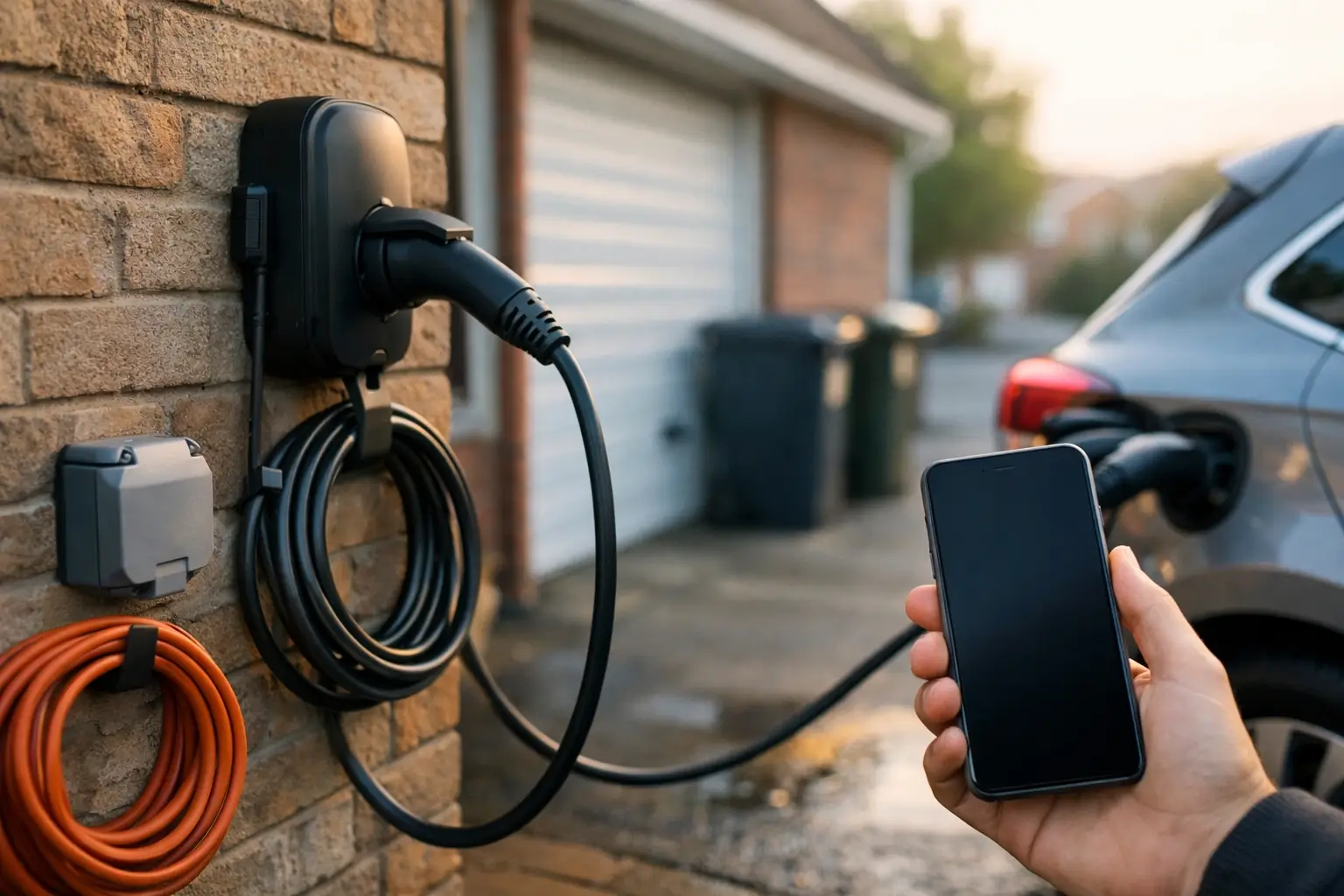
Hybrid vs electric: what’s the difference (without the fluff)
How hybrids work (MHEV vs HEV vs PHEV)
A hybrid car mixes an internal combustion engine (ICE) with an electric motor and a battery pack. The big question is how much electric help you get, and whether you can plug in.
Mild hybrid (MHEV)
A mild hybrid uses a small battery and a motor-generator to support the engine. It can smooth stop-start and assist acceleration, but it can’t drive as an electric car on its own.
Full hybrid / self-charging hybrid (HEV)
A full hybrid can run on electric power for short, low-speed bursts. It recharges through regenerative braking and by using the engine to top up the battery pack. You don’t plug it in.
Plug-in hybrid (PHEV)
A PHEV has a bigger battery pack you can charge from the grid. That’s what gives you meaningful electric-only range for commutes and short trips. Public charging can work too, but cost per mile varies a lot.
How EVs work (BEV basics)
A BEV is simpler in layout. A battery pack feeds an electric motor, and you recharge by plugging in. There’s no oil changes for an engine because there’s no engine.
Charging speeds matter more than people expect. UK stats group chargers by power, with categories such as slow, fast, rapid and ultra-rapid. Those categories are used in official reporting and are based on power output (kW).
Costs in 2026 (what you’ll pay, not what you’ll “feel”)
Upfront price + finance
On price, EVs often cost more up front than a similar petrol or hybrid. That’s why PCP and lease deals matter. Monthly payments can look close, even when list prices don’t.
Depreciation and residual value can swing the decision. If you’re buying used in 2026, you’re often shopping the car’s second owner period, where prices can be sharper.
Running costs per mile
Home charging is where EVs can look strong. One consumer example shows roughly £500 to drive 8,000 miles on electricity at home for a typical EV, versus around £1,000 in petrol for the same distance (using an example petrol price).
Public charging is the wild card. Prices vary by network and speed, and the same guide notes some rapid charging can be far more expensive per kWh than home charging.
Here’s the tax wrinkle many buyers miss. Public charging is treated as standard-rated VAT, while domestic energy can be at the reduced rate. That difference can push up public charging costs.
A quick cost-per-mile check you can do in 2 minutes
Take your annual miles. Multiply by your best guess cost per mile. That’s your “fuel” budget for the year.
Example method:
- EV home charging: (pence per kWh ÷ miles per kWh) = pence per mile
- Petrol hybrid: (pence per litre ÷ miles per litre) = pence per mile
If you’ve got no driveway and you’ll rely on public chargers, use a public kWh price for the EV side. That one change can flip the result.
Maintenance + reliability
EVs have fewer moving parts in the powertrain, but that doesn’t mean “no maintenance”. Tyres, brakes, suspension, and coolant still exist. The big ownership comfort point is battery warranty and battery health.
Hybrids sit in the middle. You’ve still got an engine and a gearbox, plus a hybrid system. That can mean more systems to service, but it’s familiar to most garages.
Insurance + tyres
Insurance can be higher on some EVs, partly due to repair costs and parts supply. Tyres can also cost more, and wear can rise if you use instant torque hard.
This is why I push test drives and quotes early. Don’t wait until the last week of a deal.
Charging reality check (this is where EV decisions are made)
Do you have home charging? (driveway vs on-street vs flat)
If you can charge at home or work, an EV usually feels easy day to day. If you can’t, you’re relying on public chargers, and that’s where cost, time, and reliability can annoy you. A full hybrid avoids that. A PHEV only works if you plug in most days.
If you have a driveway, a dedicated home charger is the tidy setup. A 3-pin plug can work for occasional top-ups, but it’s slow and shouldn’t be your forever plan.
If you’re on-street or in a flat, treat charging like a weekly task. Look at nearby chargers, your usual parking spots, and how often you can leave the car for a few hours.
Public charging in the UK: what’s improved and what still annoys people
The UK now has regular official reporting on public charging devices, with monthly totals and quarterly breakdowns. The official collection includes a monthly dataset and supporting notes, and it’s updated frequently.
Those official stats use data sourced from Zapmap and follow defined speed categories. That matters because it stops networks using “marketing numbers” that don’t match real charging power.
What still annoys people is simple. A charger can be busy, broken, blocked, or priced like an airport sandwich. That’s why home charging stays the main “stress reducer” for EV ownership.
Charging time vs refuelling time (how to think about it)
Refuelling is always “5 minutes now”. Charging is usually “time you’re already parked”.
At home, slow charging overnight can cover most daily driving. On a long trip, rapid charging becomes your tool, and the time depends on your car and the charger speed. One consumer guide gives a plain example: slow, fast, rapid, and ultra-rapid can mean very different times for the same battery size.

Range, long trips, and “I drive like a human”
Real-world range vs WLTP (and what reduces range)
WLTP range is a lab-style test figure. It’s useful for comparing cars, but it won’t match every day driving. Real range drops with cold weather, high speeds, hills (topography), heavy loads, and heating use.
If range anxiety is your main worry, don’t buy on the biggest number. Buy on your worst day: winter, motorway, fully loaded, heater on.
Motorway miles and winter driving
Motorway driving is the hard mode for EV efficiency. Speed pushes energy use up, and winter takes more power for heating and battery conditioning.
This doesn’t mean EVs can’t do long-distance travel. It means your charging plan matters, like planning a short stop every couple of hours.
Towing and heavy loads
Towing changes everything. Many EVs can tow, but range can drop a lot once you add a caravan or trailer.
Hybrids also feel the hit, but refuelling is quicker and towing ratings are often familiar. If towing is weekly life, check the exact tow limit on the model you want before you pay a deposit.
UK rules that change the decision in 2026
VED (car tax): what changed on April 1, 2025 (and what that means now)
From April 1, 2025, zero emission cars no longer sit in a “no VED” bubble in the same way. New zero emission cars registered on or after that date pay the lowest first year rate, then move to the standard rate.
There’s also the expensive car supplement rule to watch. If the list price is over the threshold, the supplement can apply even if the car is electric.
So in 2026, the VED gap between an EV and a hybrid can look smaller than older advice suggests. That doesn’t kill EV savings, but it changes the “running cost story” you’ll hear in old posts.
The ZEV mandate: what the 2026 target means for choice and deals
The UK’s ZEV mandate sets rising targets for the share of new car sales that must be zero emission. For 2026, the target is 33% for cars (and 24% for vans).
More mandated supply usually means more model choice. It can also mean sharper finance deals when brands need volume. If you’re flexible on badge and spec, 2026 can reward you.
Company car tax (BiK): the gap can be big
If you’re a company car driver, BiK can swing the decision fast. Official tables show BiK percentages by emissions band, with 0g/km listed at 3% for the 2025 to 2026 tax year.
That’s why EVs stay popular in fleets. It’s a numbers game, not a feelings game.
Which should YOU buy? (personas that match real life)
Which one fits your life best?
If you can plug in most days, an EV is usually the calmest option. If you can’t plug in at all, a full hybrid keeps costs and hassle predictable. If you can plug in and you still do frequent long trips, a PHEV can work, but only with regular charging.
City driver + no driveway
A full hybrid is often the safe pick. It deals well with stop-start traffic and you won’t be hunting chargers.
Suburban family + school run + weekend trips
If you’ve got a driveway, an EV can be a good fit. You can “fuel” at home and handle weekend miles with planned stops.
Motorway commuter (high annual mileage)
An EV can work if you’ve got reliable charging and you pick a model with strong real-world motorway range. If you can’t, a hybrid avoids the public charging cost spike.
Company car driver
Start with BiK and your workplace charging access. The tax table can make the decision for you.
Used car buyer in 2026
Ask about battery health, warranty transfer, and how you’ll charge at home. A used EV can be a strong buy if the battery is healthy and your charging plan is solid.
Mistakes that make people hate their choice (and how to avoid them)
Buying a PHEV and never charging it
This is the biggest own-goal. If you don’t recharge, you’re hauling a battery you paid for and burning more fuel than you expected.
Fix: set a simple rule. If you can’t plug in four or five days a week, choose HEV or BEV instead.
Choosing an EV with “paper range” that doesn’t fit your life
People buy the WLTP number, then panic in winter on the motorway. Cold weather, speed, and heating change the outcome.
Fix: test drive on your real route. Try a cold morning run if you can.
Ignoring tariffs and charging habits
Home charging can be cheap. Public charging can be pricey. VAT treatment and network pricing both matter.
Fix: check your home tariff, then price one local rapid charger you’d actually use. Put both into your cost-per-mile check.
FAQs (People Also Ask-style)
Is it cheaper to run a hybrid or an electric car in the UK in 2026?
Often, an EV is cheaper per mile if you charge at home on a good rate. If you mainly use public chargers, the gap can shrink or flip because kWh prices vary and public charging is standard-rated VAT. A full hybrid stays predictable because petrol pricing is simpler.
Your best move is to compare your own miles. Use one home electricity price and one local public charger price, then compare against your hybrid’s real mpg.
If I don’t have a driveway, should I avoid an EV?
Not always, but you need a plan you can stick to. If you’ll rely on public charging, check the chargers near where you park, their speeds, and their prices. EV ownership feels calm when charging is easy, and stressful when charging becomes a weekly scramble.
If you can’t see a reliable routine, a HEV is the low-stress option.
What’s the real difference between MHEV, HEV and PHEV?
MHEV helps the engine but can’t drive electric-only. HEV can run on electric power briefly and recharges itself through braking and the engine. PHEV has a larger battery you charge from the grid, so it can cover more short trips on electricity, then use petrol for longer runs.
That last step (plugging in) is the whole point of PHEV ownership.
Are plug-in hybrids worth it if I do lots of motorway miles?
They can be, but only if you also do lots of short trips you can charge. Motorway driving quickly uses up the battery portion, then you’re running mainly on petrol while carrying extra battery weight. If you rarely charge, a PHEV can disappoint on fuel economy.
PHEVs shine when your commute is electric and your long trips are petrol-backed.
How much electric range does a PHEV realistically give?
It depends on the model and conditions, but many PHEVs are built around “local miles” rather than long EV range. One UK guide puts typical electric range in a broad band, roughly around 25 to 70 miles, and that can drop with cold weather, speed, and heating use.
Treat it like “most weekdays”, not “holiday road trip”.
Do hybrids still save fuel on long trips?
They can, but the biggest gains are in stop-start driving where the electric motor supports the engine and regenerative braking recovers energy. On steady motorway runs, hybrids behave more like efficient petrol cars, and the savings can narrow compared with town driving.
If your life is mostly motorway, focus on real mpg, not tech labels.
How long does it take to charge an EV at home vs public rapid charging?
Home charging is slow but convenient because you’re parked anyway, often overnight. Public rapid charging is faster but varies a lot by charger type and the car’s charging capability. Consumer guides break chargers into slow, fast, rapid and ultra-rapid, and charging time changes hugely across those groups.
Always check the car’s max charging rate. A fast charger can still feel slow if the car can’t take the power.
Do electric cars really have lower maintenance costs?
Often they can, because there’s no engine oil system and fewer moving parts in the powertrain. But EVs still need tyres, brakes, suspension work, and coolant checks, and repair costs can rise if parts are pricey. The “easy ownership” claim is most true when you charge at home and drive within the car’s comfort zone.
Look at service schedules and tyre sizes before you buy. Those costs are real.
How does Vehicle Excise Duty affect EVs vs hybrids now?
From April 1, 2025, EV VED changed. New zero emission cars registered on or after that date pay the lowest first year rate, then the standard rate, and higher list-price cars can face the expensive car supplement. That narrows some older “EV pays no car tax” advice.
So in 2026, factor VED into total cost of ownership (TCO) for both.
Will hybrids be banned in the UK?
The UK plan is a phase-out of new cars powered solely by internal combustion engines from 2030, with a move to 100% zero emission new cars and vans by 2035. Some hybrids may be allowed during the transition, so rules can depend on the type of hybrid and the date.
Used hybrids won’t vanish overnight. The change targets new sales.
Are EVs better for air quality in cities?
At the tailpipe, yes, because an EV produces zero tailpipe emissions while driving. That can help local air quality in busy areas, especially where stop-start traffic is common. The wider climate impact depends on how electricity is generated, but city air quality benefits focus on what comes out of the exhaust.
If clean-air zones matter to you, check local rules too. They can affect older petrol and diesel more.
Is a used EV a good buy in 2026?
It can be, if you treat battery health like the “engine check” of the EV world. Ask about battery warranty, service history, charging habits, and any state-of-health report if the seller has one. Also check your home charging plan first, because that’s what makes ownership smooth.
If you can’t charge reliably, a used HEV may suit better.





No Comment! Be the first one.