




Basement Apartment Conversion: Turn Your Unused Space Into a Legal ADU Step by Step
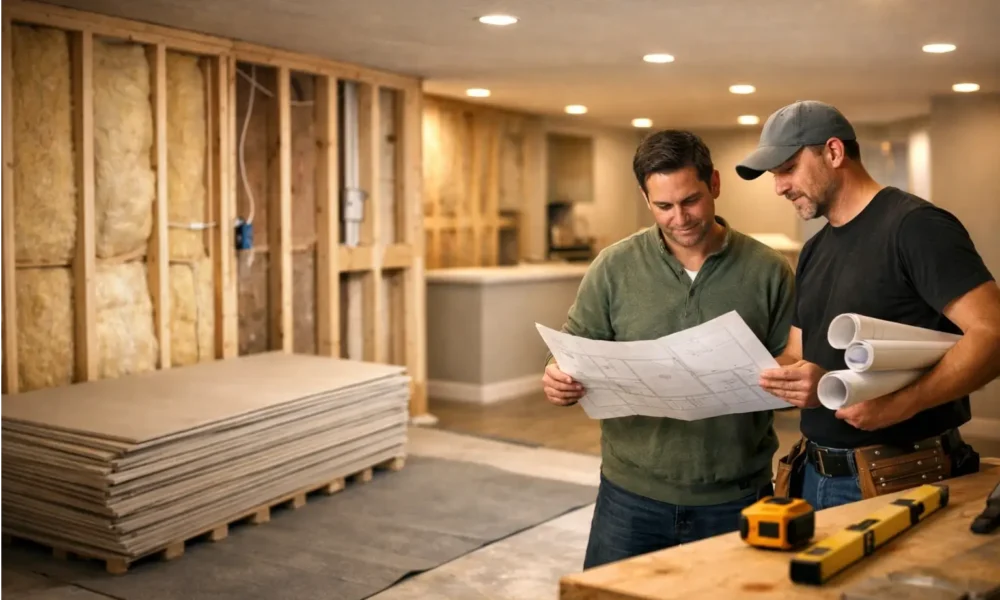
Introduction: What a Basement ADU Really Is
A basement apartment conversion is more than “finishing the basement.” You are turning part of your home into a separate living unit with its own safety needs, privacy needs, and legal requirements.
In many areas, a legal basement ADU (Accessory Dwelling Unit) means a self-contained space that can be rented out or used by family, with a kitchen area, a bathroom, safe exits, and code-compliant heating and ventilation. The hard part is not the paint or flooring. It’s making sure the space is dry, healthy to live in, and approved by your local building department.
If you go step-by-step and plan the big-ticket issues early, you can avoid the common mess-ups that cause delays, failed inspections, or expensive rework.
Rules, Feasibility, and Budget Check
Confirm Your Local ADU Rules and Zoning
Start with your city or county planning office. ADU rules are local, and they can change block by block. Some places allow basement conversions as ADUs fairly easily, while others have limits on size, parking, owner-occupancy, or whether you can rent short-term.
Many jurisdictions also require the ADU to have its own entrance, even if it’s attached to the main home. San Francisco, for example, states the ADU must have its own entrance and the tenant can’t be forced to enter through another unit.
Check Ceiling Height, Floor Area, and Headroom
Ceiling height can make or break a basement ADU.
A common rule in the U.S. code world is 7 feet minimum ceiling height for habitable space (living areas and bedrooms). Bathrooms and laundry areas can be lower in some cases. Some areas allow reduced height in existing basements, but you must confirm what your local inspector accepts.
If you’re short on height, you may be looking at costly work like lowering the slab or modifying beams and ducts. That’s why this check comes first.
Plan for Natural Light, Ventilation, and Exits
Basements feel “basement-y” when they’re dark, stale, and hard to escape from. Code tries to prevent that.
Many building codes require natural light equal to at least 8% of the room’s floor area, and openable ventilation equal to at least 4%, unless you use mechanical ventilation.
For bedrooms, don’t guess. If your plan includes a sleeping room, you typically need a legal emergency escape option (more on that below).
Look for Moisture, Flooding, and Foundation Issues
Before you build walls, figure out if the basement wants to get wet.
Look for these red flags: White powdery stains on concrete (efflorescence) Rust at the bottom of support posts Musty smell that doesn’t go away Cracks that look active or growing A sump pump that runs constantly, or no sump pump at all
If your basement has a history of water, deal with that first. FEMA’s basement flood guidance highlights practical protections like sump pumps and backup pumps, which can keep a small water problem from turning into a full cleanup job.
Build a Realistic Budget With a Buffer
A basement ADU costs more than a basic basement finish because you’re adding “whole home” systems: plumbing, a bathroom, kitchen ventilation, fire separation, and sometimes a separate entry.
As a rough reference point, finishing a basement is often priced per square foot, and kitchens/bathrooms add meaningful cost on top. But the real budget driver is what you find behind the walls: drains, electrical capacity, waterproofing needs, and whether you must cut new egress windows.
A simple way to protect yourself is to set a buffer for hidden conditions. Basements love surprises.
Design the Layout and Separate Entry
Decide on Studio vs One-Bedroom Layout
A studio layout is usually simpler because it needs fewer walls and fewer doors, and it can work with tighter basements.
A one-bedroom layout feels more “rental normal,” but it adds space pressure. The bedroom must meet egress and ventilation rules, and you need enough room for a real path to the exit, not a maze around furniture.
When the basement is small, a studio with smart storage often lives better than a cramped one-bedroom.
Plan Kitchen, Bathroom, and Laundry Space
Think like a plumber for a moment: the cheapest layout keeps the bathroom and kitchen close to existing plumbing.
If your main drain line is across the basement, moving the bathroom far away usually means more concrete cutting, more drain work, and more risk of drainage problems. It’s not impossible, just more time and cost.
Also plan your kitchen ventilation early. If you’re adding a proper cooking setup, the space needs a clean way to remove heat and moisture so you don’t grow mold.
Create a Safe, Private Entrance and Path of Travel
Privacy is a big part of what makes a basement apartment feel like a real unit.
In many cities, a separate exterior entrance is required for an ADU. Even where it’s not required, it’s usually worth doing if you plan to rent the space.
Walk the route from the entrance to the unit like a tenant would at night: Is the path lit? Is the stair run safe and solid? Does the door swing clear and lock properly? Is the route protected from slipping in rain or snow?
Add Storage and Sound Control From the Start
Basement apartments work best when they don’t feel like a “borrowed corner” of the house.
Build in a place for coats, cleaning supplies, and everyday items. Storage reduces clutter, which makes a small unit feel larger.
Sound is the other big one. Sound control is much easier before drywall goes up. Even basic steps (sealed gaps, insulated ceiling cavities, solid-core doors) can reduce footstep noise and help both households sleep.
Meet Safety and Building Code Requirements
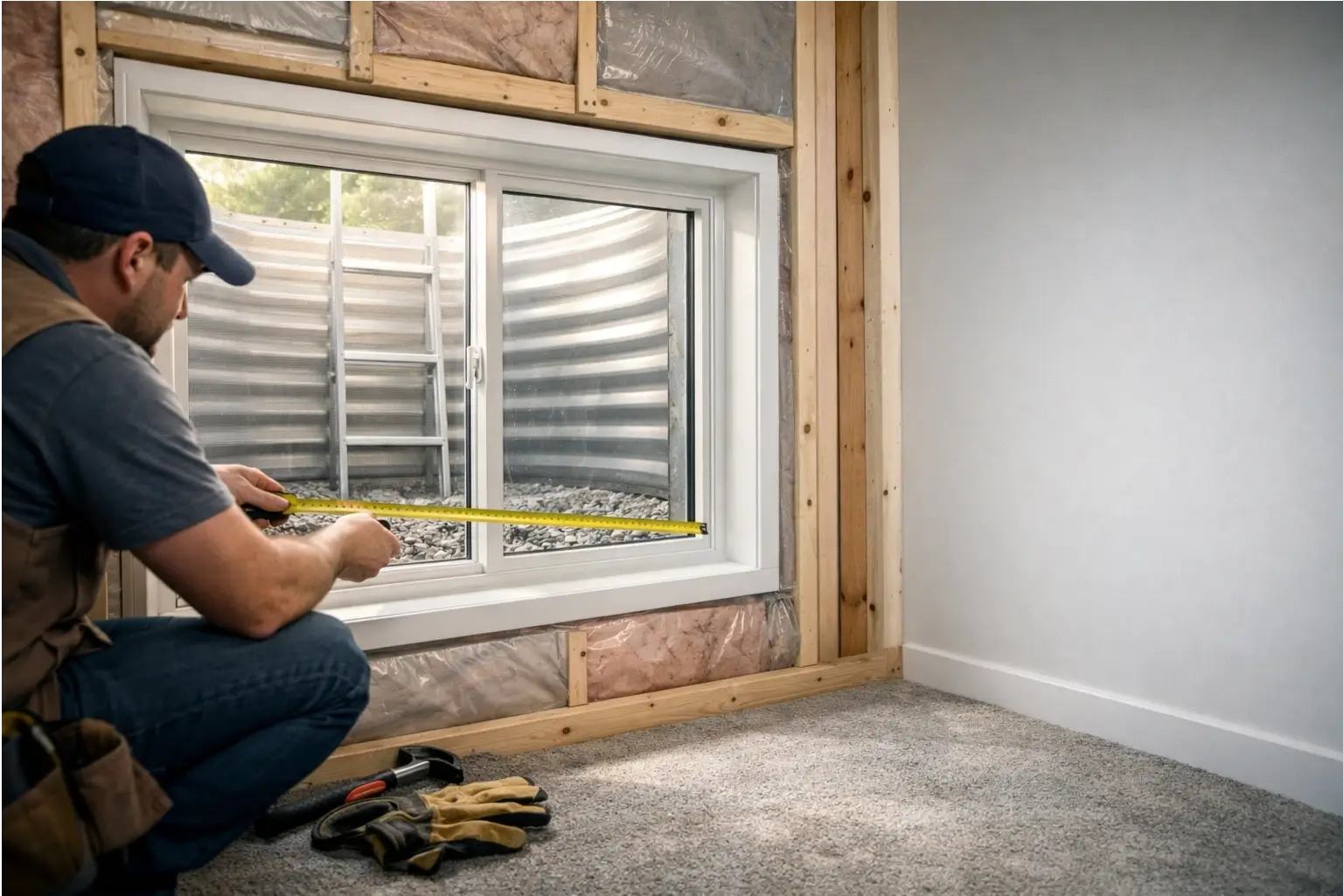
Egress Windows and Emergency Escape Options
Egress is one of the most common failure points in basement bedrooms.
In the International Residential Code (IRC), emergency escape and rescue openings generally need a net clear opening of at least 5.7 sq. ft., with minimum clear dimensions often listed as 20 inches wide and 24 inches high, and the sill typically no more than 44 inches above the floor.
If the window opens into a window well, many code guides also require enough space for a person to climb out, and deeper wells need a permanently attached ladder or steps.
This is not the place to “sort of” comply. If the bedroom can’t pass egress, it may not be allowed as a legal bedroom.
Fire Separation, Alarms, and Carbon Monoxide Safety
A basement ADU is effectively a second living unit. That means you need stronger fire protection between the units.
For two dwelling units, the IRC calls for wall and floor assemblies with at least a 1-hour fire-resistance rating between units. Your building department may also want details like drywall type, sealing around penetrations, and protected ductwork. These aren’t “nice to have.” They’re what slows fire spread and buys escape time.
Smoke alarms should be installed inside each bedroom, outside sleeping areas, and on every level, including the basement.
Carbon monoxide alarms should be placed outside sleeping areas and on every level, especially if there are fuel-burning appliances.
Heating, Ventilation, and Indoor Air Quality Basics
Basements often run cooler and more humid than the rest of the house. That can feel uncomfortable, and it can cause moisture problems if the air doesn’t move.
Bathrooms and kitchens typically need mechanical exhaust. The IRC lists local exhaust rates such as 100 cfm intermittent for kitchens and 50 cfm intermittent for bathrooms (or lower continuous rates).
If you’ve ever walked into a basement bathroom that smells damp, it’s usually a ventilation issue, not “basement smell.”
Insulation and Energy Code Upgrades
Basement insulation is not just about warmth. It’s also moisture control.
For interior basement walls, rigid foam insulation is commonly used because it can add thermal resistance while helping reduce condensation on cold concrete. The U.S. Department of Energy’s Building America guidance discusses rigid foam types and the need for careful sealing and moisture control details.
The main takeaway is simple: don’t trap moisture behind the wall where you can’t see it. If you’re not sure about the right assembly for your climate, follow a proven basement wall detail from a reputable source and your local code office.
Add Plumbing, Electrical, HVAC, and Finishes
Plumbing Lines, Drains, and Backflow Protection
Basement plumbing is all about gravity and backup risk.
If fixtures sit below the level where the sewer can surge, many codes require a backwater valve to prevent sewage from flowing back into the home. The IRC includes guidance for when backwater protection is needed.
This is also where you plan for floor drains, sump discharge, and where any pumped fixtures may be required.
Electrical Panel Capacity and New Circuits
A legal ADU usually needs more electrical work than people expect: dedicated kitchen circuits, bathroom circuits, lighting, smoke/CO alarms, and sometimes electric heat.
Before you buy a single fixture, have the panel capacity checked. If the panel is already full, you may need a subpanel or service upgrade, and that can change your timeline and permit scope fast.
Heating and Cooling That Works Below Grade
Basements can be cold in winter and clammy in summer.
The goal is stable comfort without pushing moisture into the space. Your setup might be extending existing ductwork, adding an independent zone, or using a ductless heat pump. What matters is proper airflow, safe clearances, and meeting local mechanical code rules.
Waterproofing, Radon Protection, and Humidity Control
Even a “dry” basement can have humid air. Plan for humidity control from day one.
Radon is another basement-specific issue. The EPA recommends fixing a home if radon levels are 4 pCi/L or higher, and also considers action in the 2 to 4 pCi/L range. A radon test is cheap compared to rebuilding a finished wall later.
Durable Floors, Walls, and Ceilings for Rental Use
Pick materials that can handle real life.
Basement floors take more abuse from grit and moisture than upstairs spaces. Walls need to stay cleanable. Ceilings often need access panels for shutoffs, cleanouts, or junction boxes, depending on your layout.
For rentals, durability is comfort. You want fewer call-backs and fewer repairs.
Permits, Plans, and Inspections
What Drawings and Documents You May Need
Even when you do the work yourself, the building department usually wants a clear plan set.
Many ADU submittal checklists ask for a floor plan, site plan, construction details, and basic mechanical/electrical/plumbing notes.
If you’re adding an exterior stair, cutting an egress window, or changing structure, you may also need engineered details.
Building Permits Plus Trade Permits
A basement ADU conversion typically requires a building permit, and often separate permits for electrical, plumbing, and mechanical work. Many cities are very direct about this in their ADU handouts and plan review checklists.
Skipping permits can cause problems later if you try to rent, refinance, or sell.
Key Inspections During the Project
Inspections vary, but most conversions include checkpoints like: Framing inspection (before drywall) Rough electrical and plumbing Insulation inspection (in many areas) Final inspection for approval
Think of inspections as “stop points” that keep you from covering up unsafe work.
Final Approval and Making It Legal to Rent
The goal is a signed-off final approval that shows the unit meets local rules. This matters for insurance, tenant safety, and avoiding future headaches with enforcement.
If you plan to rent, check local rules on registering ADUs, rental licensing, and whether you need separate meters or address numbers.
Common Mistakes to Avoid
Starting Work Before Permits Are Approved
This is the fastest way to waste money. If an inspector requires changes, you may have to tear out finished work. Get the paperwork moving early, because plan review can take time.
Designing the Bedroom Without Proper Egress
A bedroom that can’t pass egress rules may not be allowed as a bedroom. The window size, sill height, and window well details matter.
Underestimating Waterproofing and Drainage Needs
Finishes don’t stop water. If your gutters, grading, sump system, or drain backups are questionable, handle that first. FEMA’s basement flood guidance is a good reminder that small protections help prevent big damage.
Skipping Fire Separation Between Units
A basement ADU is a separate dwelling space, and it needs proper separation. One-hour rated assemblies are a common requirement for two units.
Forgetting Soundproofing and Privacy Details
If you can hear every footstep and chair scrape overhead, the unit feels temporary. Add sound control early, and treat privacy like a basic requirement, not a “later” upgrade.
Final Thoughts
A legal basement ADU can be one of the most practical ways to use space you already own. But it’s only worth doing if it’s safe, dry, and properly approved.
Plan your exits, moisture control, and systems first. Those are the parts that are hard to change later. Final tip: before you frame anything, walk the layout with tape on the floor and imagine everyday life in the space. It’s a simple test that catches bad room sizes early.
FAQs
Do I need a separate entrance for a legal basement ADU?
In many places, yes, or it’s strongly preferred. Some cities state clearly that an ADU must have its own entrance. Always check your local ADU rules.
Can my basement count as a legal bedroom?
It can, but only if it meets bedroom rules, especially egress. Typical code requirements include a properly sized emergency escape opening and safe window well details if the opening is below grade.
How long does a typical basement ADU conversion take?
Most basement ADUs take weeks to months, not weekends. The timeline depends on permits, inspections, and how much mechanical work you need (kitchen, bathroom, electrical upgrades, and egress changes). Plan review time alone can be a major factor in some cities.


[…] “legal dispute” detail matters mostly because it explains the shape of the conversation. Fans heard “Wyle in an ER drama” and their brains filled in the rest. The reality is simpler: […]
[…] someone uses a cane or walker, check turning space at landings […]
[…] in DMCA takedowns and privacy violation claims. The “leaked or uncensored content” space sits in a legal gray area around non-consensual distribution that no brand has any business being […]
[…] a calm, straight read on what hdtoday.cc actually is, whether it’s safe to use in 2026, the legal grey area you’re stepping into, and what your smarter options look like. No drama. Just the stuff worth […]
[…] 2: A proper annexe, not a spare room A self-contained floor or attic conversion works better when it has its own living space and a clear entrance route. Property guides often call out ancillary accommodation like this as a […]