




Fibermaxxing: Why Fiber Is 2026’s Most Important Wellness Trend (And How to Get 30g Daily)
If your stomach has been acting like a moody group chat lately, you’re not alone.
One week you’re “fine,” the next week you’re bloated after three almonds, and suddenly you’re Googling “is my gut broken” at 1 a.m. (Relatable.) A lot of us are tired, snacky, and weirdly hungry even after eating. Some of us are also… not going to the toilet like we used to. And it turns out one boring, unsexy nutrient is tied to a lot of this: fiber.
Not in a “buy this powder and become a new person” way. More in a “your lunch is missing a key piece” way.
Fibermaxxing is basically the internet’s dramatic name for a very normal idea: eating more fiber on purpose, because most of us are getting nowhere near the amount our bodies do best with. In the UK, the target for adults is 30g a day, and most people average closer to about 20g.
So let’s talk about what fibermaxxing actually means, why it’s suddenly everywhere in 2026, and how to hit 30g a day without turning your meals into a sad bowl of twigs.
Why Fibermaxxing Took Off in 2026
Wellness trends usually arrive with a lot of noise and very little substance. This one is different because it’s reacting to a real problem: we’re under-fibered.
A lot of modern eating is soft, quick, beige, and packaged. Even when it looks “healthy,” it can still be low in fiber. Think protein bars, fancy yoghurt drinks, meal deals, smoothies that are basically fruit sugar with good branding. Easy to eat, fast to digest, and not great at keeping you full.
At the same time, more people are paying attention to gut health, blood sugar swings, cravings, cholesterol, and the general feeling of “why do I feel a bit rubbish when I’m trying so hard?”
Fiber fits into that whole messy picture because it helps with all the boring background systems that make your day feel stable: digestion, appetite, energy, and regularity. The UK’s own nutrition guidance has pushed the adult fiber goal to 30g a day, and the reason isn’t just constipation. It’s linked with better long-term health outcomes, too.
So yes, fibermaxxing is a trend. But it’s also a correction.
What Fibermaxxing Really Means (And How Much Fiber You Need)
Fiber is the part of plant foods your body can’t fully break down. Instead of being absorbed like sugar or fat, it moves through your digestive system doing useful work along the way.
There are different kinds of fiber, but you don’t need to memorise them like it’s an exam. The simple version is: Some fiber helps keep things moving. Some fiber turns into a gel-like texture in your gut and slows digestion a bit. Most fiber-rich foods contain a mix, which is exactly what you want.
In the UK, the adult recommendation is around 30g of fiber a day.
If you’re currently living on 12g a day and you jump straight to 30g tomorrow, your stomach may protest. Loudly. So the goal matters, but the pace matters too.
The Benefits You Can Expect (Beyond Digestion)
Let’s get the obvious one out of the way: yes, fiber helps you go to the toilet like a functional human.
But fiber is doing more than “keeping you regular.” Higher fiber intake is linked with lower risk of heart disease, stroke, type 2 diabetes, and bowel cancer.
A big review in The Lancet found that people who eat more fiber tend to have lower rates of major chronic diseases, and clinical trials showed improvements in things like cholesterol and blood pressure when fiber intake is higher.
In daily life, what you might notice sooner is simpler: You feel full for longer after meals. You snack less out of desperation. Your energy feels steadier instead of spiking and crashing. Your digestion feels less unpredictable.
Also, fiber feeds your gut bacteria, which make helpful compounds called short-chain fatty acids. These are linked to effects in the body that go beyond the gut.
That sounds intense, but the takeaway is calm and simple: when you eat fiber regularly, your gut tends to run better.
When Fibermaxxing Can Backfire
Fiber is helpful. It is not magic. And if you treat it like a challenge, your stomach will respond like you’ve personally offended it.
Too much too fast: bloating, cramps, constipation If you suddenly double your fiber intake, your gut can get gassy, bloated, or cramped. Sometimes people even get constipated, which feels unfair but happens when fiber goes up and fluids do not.
NHS guidance on constipation and fiber is pretty clear: increase fiber gradually to reduce bloating and wind, and give your body time to adjust.
The fix is boring but effective: Go up slowly. Drink enough fluid. Keep moving your body, even if it’s just walking.
Who should go slower or check with a clinician first If you have IBS, IBD, or a history of digestive issues that flare easily, you may need a gentler approach. Some people do better with certain fiber foods than others.
Even the NHS advice for IBS-style symptoms suggests starting small with fiber additions, like seeds, and building up slowly with fluids.
Also, if you have ongoing stomach pain, sudden bowel habit changes, or symptoms that worry you, don’t play guessing games with TikTok tips. It’s worth speaking to a clinician.
How to Get 30g of Fiber a Day Without Overthinking It
This is the part everyone wants: the “how,” without the spreadsheets.
Here’s the secret that makes 30g feel doable: You don’t need a perfect day. You need a few repeatable habits.
The easiest high fiber foods to build meals around
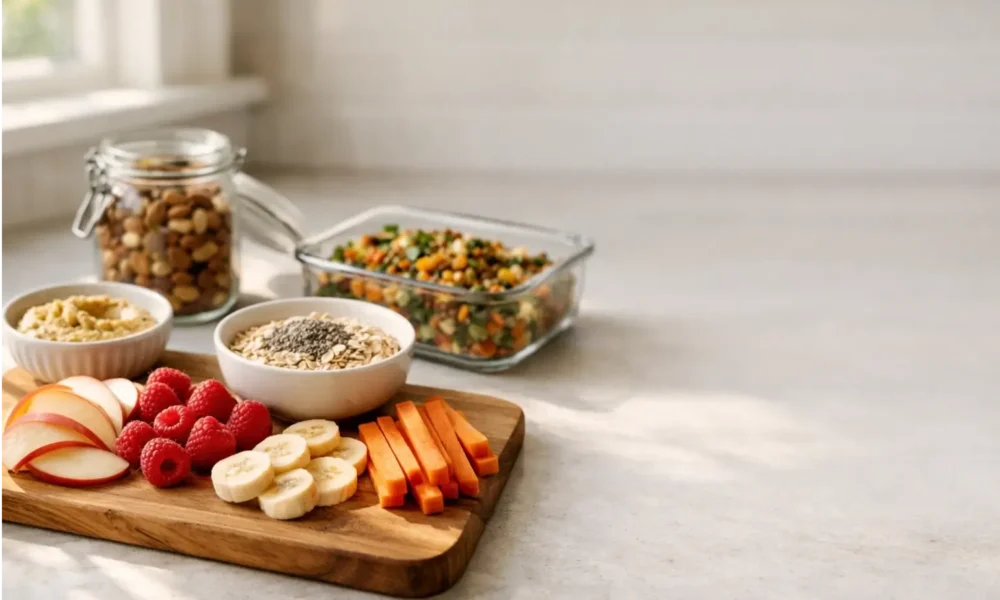
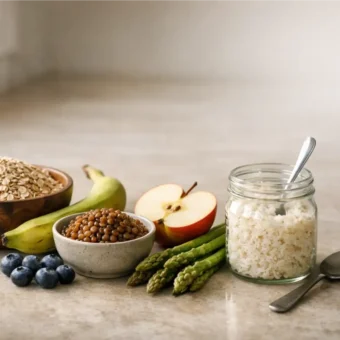
If I’m trying to raise my fiber without thinking too hard, I lean on the same categories: Whole grains like oats, wholemeal bread, brown rice, wholewheat pasta. Beans and lentils, including chickpeas and hummus. Fruit and veg with the skin left on where possible. Nuts and seeds, especially chia, flax, and mixed seeds.
The NHS also points people toward these kinds of swaps for getting closer to 30g.
Simple upgrades for breakfast, lunch, dinner, and snacks
Breakfast is the easiest place to start because it’s routine.
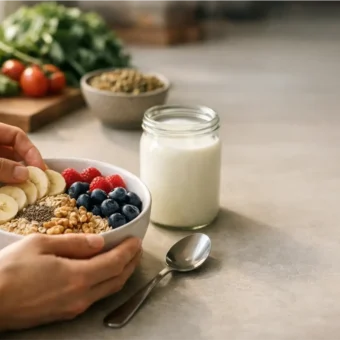
If you already eat cereal, switching to oats, shredded wheat, or a higher-fiber option helps. Adding berries, a banana, or a spoon of seeds pushes it further without changing the whole meal.
Lunch is where fiber goes missing for a lot of people, because “quick lunch” often means white bread, a pastry, or something that barely counts as a meal.
A simple fix is choosing wholemeal bread or wraps, adding beans or lentils, and making sure there’s at least one real vegetable involved.
Dinner is where you can quietly win. Add a side of roasted veg. Choose brown rice sometimes. Stir lentils into a curry or pasta sauce. Use chickpeas in a salad that actually fills you up.
Snacks can be fiber, too. Fruit, nuts, popcorn, yoghurt with berries, or even just carrots and hummus. Nothing fancy.
A realistic one day example that reaches 30g
Here’s a normal day that gets you to roughly 30g without eating like a Victorian rabbit.
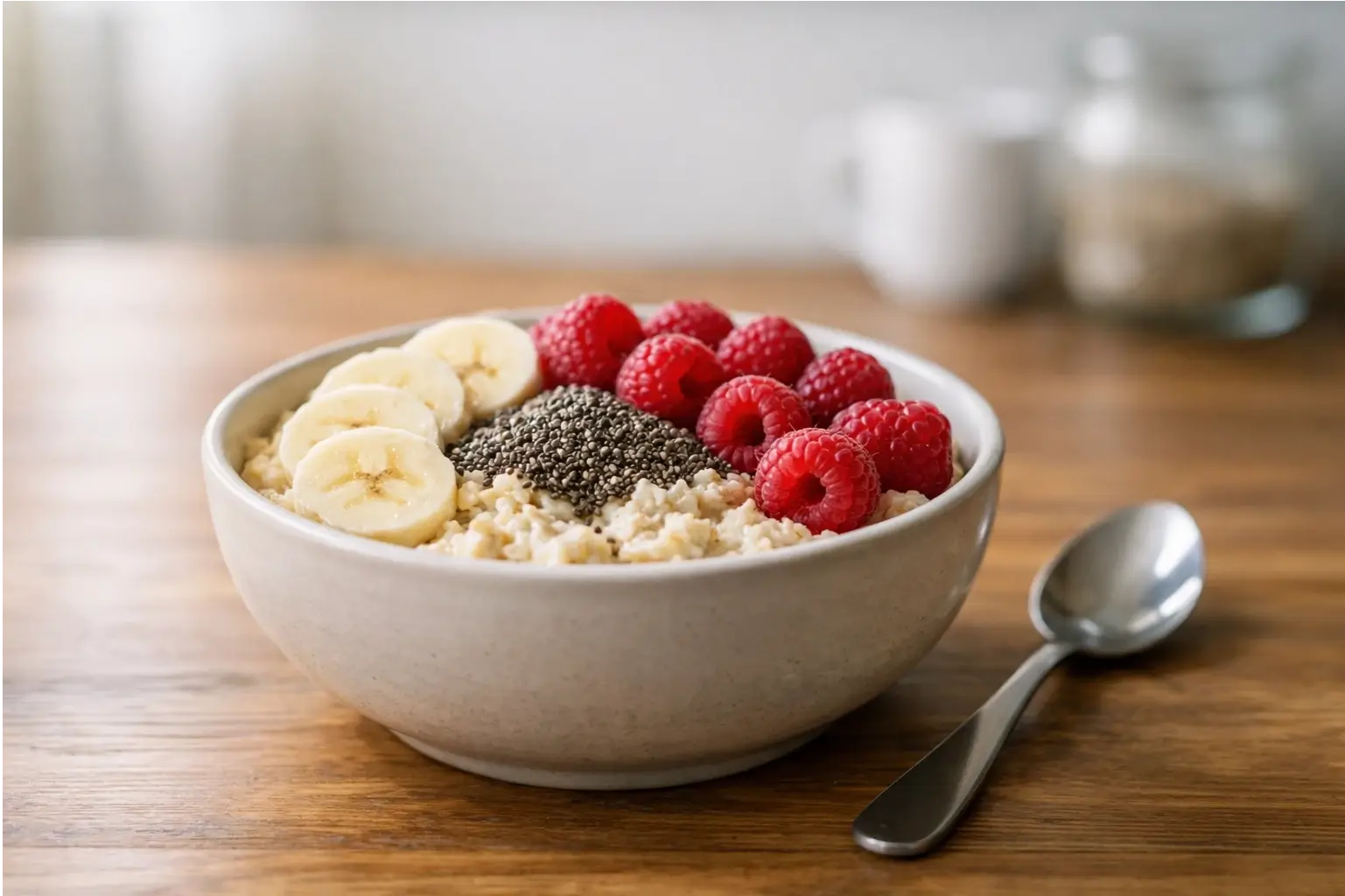
Breakfast: porridge oats with a spoon of chia seeds and a handful of raspberries. Lunch: wholemeal wrap with hummus, spinach, grated carrot, and a side of fruit. Snack: an apple and a small handful of nuts. Dinner: brown rice with a veggie-heavy stir-fry, plus a small portion of lentils mixed in.
You don’t have to hit 30g perfectly every day. The point is that the building blocks are simple, and most of them taste like real food.
Whole Foods vs Fiber Supplements
Whole foods are the best first option because they come with vitamins, minerals, and a mix of fibers that work together.
Supplements can be useful if you’re struggling, especially for constipation, but they’re not a replacement for eating plants.
Psyllium husk is one of the better-studied options for constipation support, and it can help stool frequency and consistency.
The key detail with psyllium is water. If you take it and don’t drink enough fluid, you’ll feel worse, not better.
If you’re using a supplement, keep it simple, start small, and treat it as support, not the main plan.
Common Fibermaxxing Mistakes That Make You Quit
The biggest reason people quit fibermaxxing is not lack of willpower. It’s uncomfortable.
Here’s what usually goes wrong: They increase fiber too fast, then feel bloated and blame fiber forever. They add fiber but forget fluids, then things slow down instead of speeding up. They rely on one “fiber food” and get bored or irritated. They try to be perfect, miss a day, and give up like it’s a failed personality trait.
If you take one thing from this article, take this: Fiber works best when it’s steady and boring. Slow, consistent changes beat sudden “health kicks” every time.
FAQs
Is 30g the “perfect” number for everyone?
It’s a useful target, especially in the UK where the guideline is around 30g for adults.But bodies vary. Some people feel great at 25g. Some feel best closer to 35g. If you’re increasing fiber from a low starting point, getting nearer to the target is already a win.
Can fiber help with weight loss?
Fiber can help with fullness, which can make it easier to eat in a way that supports weight loss. It slows digestion and helps meals feel more satisfying, so you’re less likely to feel hungry again in 45 minutes. Research reviews also link higher fiber intake with lower body weight and better markers of health. It’s not a weight loss trick. It’s just a solid foundation.
What if I have IBS or a sensitive stomach?
Go slowly, and pay attention to which foods suit you. Some people with IBS feel better with oats, chia, and certain fruits, while large amounts of beans or wheat can be more irritating. NHS IBS guidance often recommends building fiber up gently, and pairing it with fluids. If symptoms are intense or persistent, it’s worth speaking with a clinician or dietitian.
How fast should I increase fiber?
Think in weeks, not days. The NHS advice is to increase fiber gradually to reduce wind and bloating, and give your gut time to adjust. A simple approach is adding one fiber upgrade a day, sticking with it for a week, then adding another.
Final Thoughts
Fibermaxxing sounds dramatic, but the real version is quiet.
It’s choosing oats more often than pastries. Wholemeal bread instead of white. Adding lentils to a meal you already like. Eating fruit that still looks like fruit.
If you want a simple takeaway that actually works, here it is: Aim for 30g a day, build up slowly, and focus on repeatable meals you’ll still eat when you’re tired and busy.
That’s the whole thing. Your gut will probably thank you for it.




[…] suggest doing it consistently once or twice daily, not only in a crisis moment. Think “tiny daily routine,” not “big wellness […]