




Charger Anxiety vs Range Anxiety: The Real Problem EV Owners Face in 2026
2026 update note: what’s changed in the UK
In the United Kingdom, public charging rules now push hard on day-to-day usability: clear pricing transparency (p/kWh), contactless payment, a free 24/7 helpline, open data, roaming payment, and a 99% reliability target across rapid networks.
EV range anxiety still gets the headlines. But when I talk to drivers, the stress often sounds different now. You’re not just worried about range. You’re worried about charger reliability, confusing prices, app glitches, and whether that “available” unit will actually start.
That confusion hits hardest when you’re trying to buy wisely, protect a warranty, or avoid costly mistakes. Forums can make it worse, because one bad story can feel like a warning sign for every EV. My goal here is simple: clear explanations, real-world examples, and steps you can use.
Quick self-check: what’s really bothering you?
If you’re stuck, this usually points to the fix.
- You fear running out of battery: that’s EV range anxiety.
- You fear the charger won’t work: that’s charging anxiety, also called charger anxiety.
Key takeaways you can use
- Real-world range is usually predictable once you know the main drains.
- The bigger daily risk in 2026 is often the charging experience, not the battery.
- “Charger online” can still mean “charger useless”, so session success matters more than simple uptime.
- UK rules now target the exact pain points drivers complain about: payment, pricing, support, and reliability.
What EV Range Anxiety Really Means (and why it became famous)
Range anxiety is the fear that your EV won’t have enough battery charge to reach where you’re going. It’s the classic “what if I get stranded?” worry. It became famous because early EVs had shorter ranges and fewer charging points.
Today, range anxiety is often an expectation gap. Drivers hear one number in ads, then see a smaller number on the road. That gap is where stress starts.
The “rated range vs real-world range” expectation gap
Rated range is a lab-style figure. Real-world range is what you get on your roads, in your weather, at your speeds. Cold air, motorway speeds, and heating can pull the real number down.
That doesn’t mean the car is broken. It means the car is doing normal physics, and you’re seeing it in miles.
The New Stressor: Charger Anxiety (Charging Anxiety)
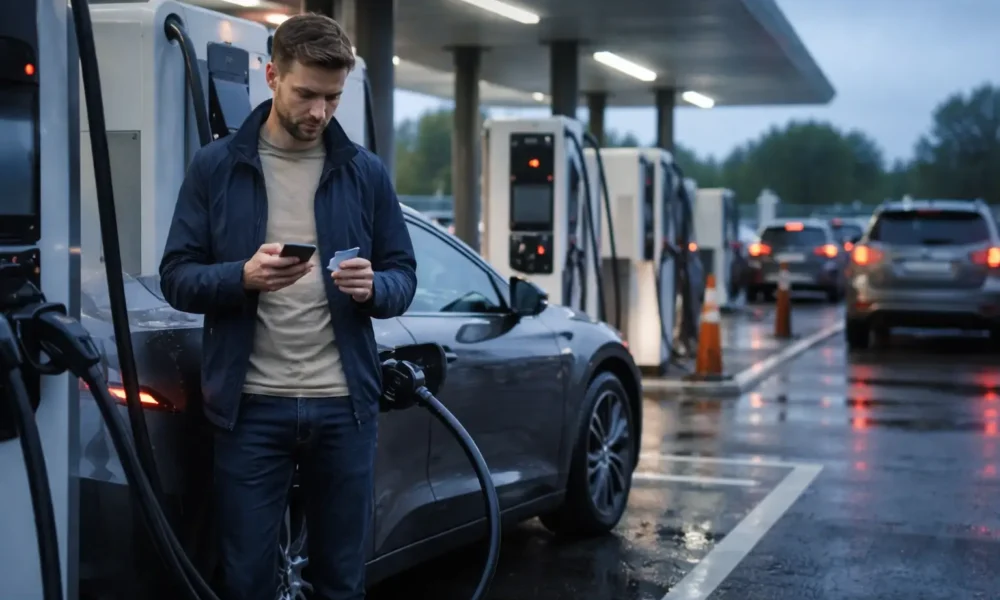
Charging anxiety is a different feeling. It’s not “will the car go far enough?” It’s “will this charger work, accept payment, and finish the session?”
In plain terms, range anxiety is about the battery. Charge anxiety is about the public charging network and everything that can go wrong in the moment.
What triggers charger anxiety in real life
Here’s what drivers describe again and again: queues, peak-time congestion, broken chargers, vandalised equipment, payment glitches, unreliable software, and bays blocked by petrol or diesel cars, often called ICEing.
It’s the same frustration you’d feel at a fuel pump if the card reader failed, the nozzle was damaged, and two cars were parked sideways across the bay. Except charging can take longer, so the delay feels bigger.
Why “uptime” doesn’t equal “it will charge my car”
Many networks talk about “uptime”. That can sound reassuring. But “online” can still mean blocked, broken, or unable to start the digital handshake between car and charger.
Researchers have shown a big gap between reported uptime and the chance of a successful charging session. In one analysis, networks could show roughly 95–98% uptime while successful charging sat far lower at about 75–83%. That “session success” gap is what drivers feel at the kerb.
What Actually Affects EV Range Day to Day
Range isn’t magic. It’s energy in and energy out. Once you know the main drains, you can build range confidence fast.
Cold weather + battery temperature
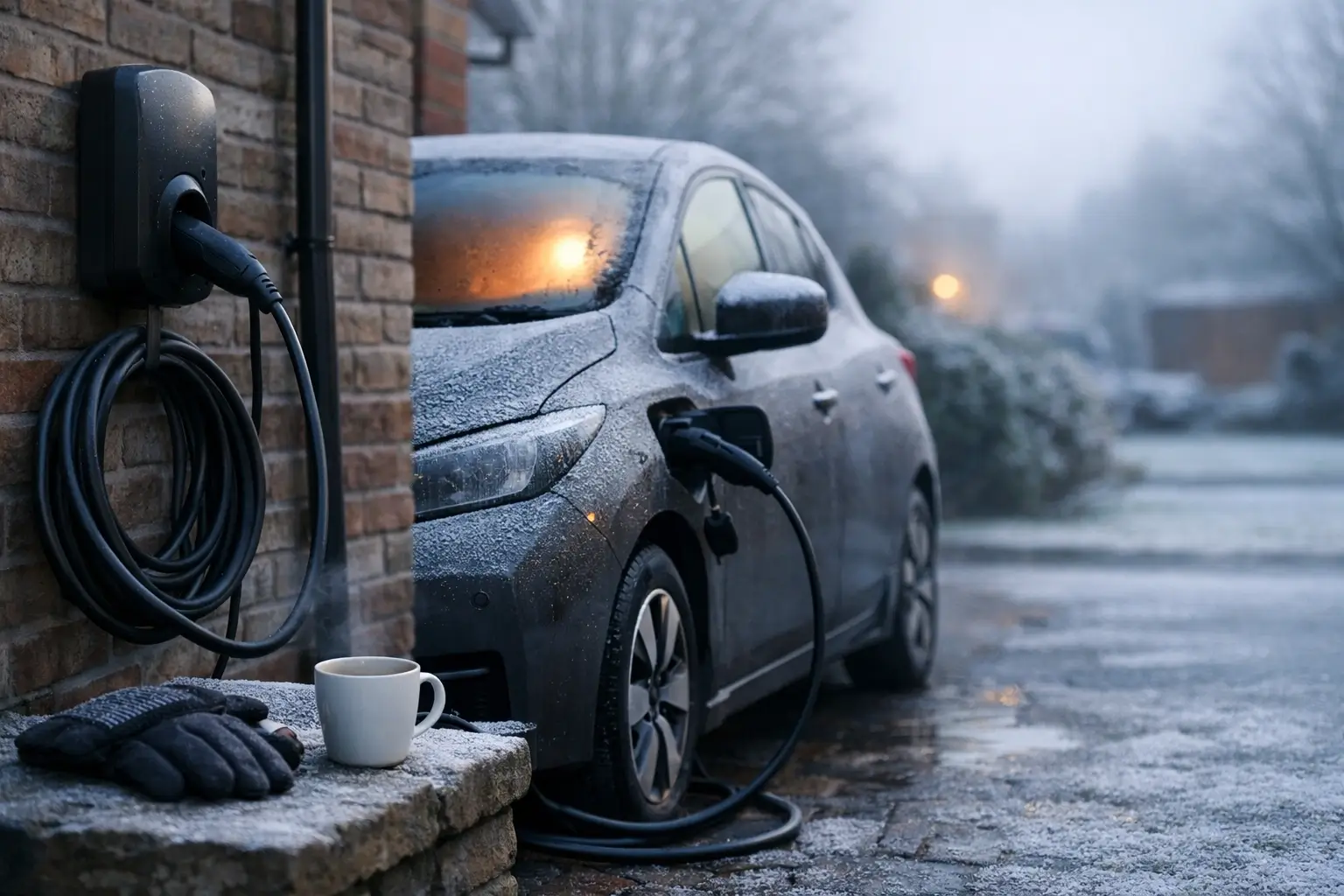
Cold weather reduces range because batteries deliver energy less efficiently when they’re cold. Heating the cabin also takes energy, and the car may spend extra power warming the battery. Charging can take longer too, because the pack needs the right temperature first.
A simple move helps: preconditioning. That means warming or cooling the car while it’s still plugged in, so you use grid power, not battery power.
Driving style, speed, and regenerative braking
Speed matters more than most people think. On motorway runs, air resistance rises fast as speed rises, so range drops. Smooth acceleration helps too.
Regenerative braking can also help, because it turns some slowing-down energy back into electricity. It won’t create free energy, but it can reduce waste in stop-start driving.
HVAC and “hidden” energy drains
HVAC is heating and air conditioning. It’s a comfort system, but it can be a range drain in extremes. Heated screens, heated seats, and constant demisting add to the load as well.
This is why two drivers in the same EV can see different real-world range. One is cosy and fast. One is steady and light on heat.
Battery health and degradation (what to expect over years)
Battery health is the pack’s ability to hold energy. Over time, capacity drops. That’s normal, and it’s usually gradual.
Large real-world datasets suggest average degradation can be modest, often around a few percent per year, though it varies by model and use.
If you use rapid chargers daily, degradation can rise. If you mostly charge at home on AC, it often stays gentler. That’s why I treat battery care like tyre care: small habits, big results over years.
Fast charging and battery care basics
Fast charging is useful. It’s also harder work for the battery, especially at high power and high heat. Many cars and brands manage this well, but habits still matter.
The easy rule is the 10–80% charging window for day-to-day use. You don’t need to baby the car, but you also don’t need 100% every night.
Tyre pressure, weight, and the boring stuff that matters
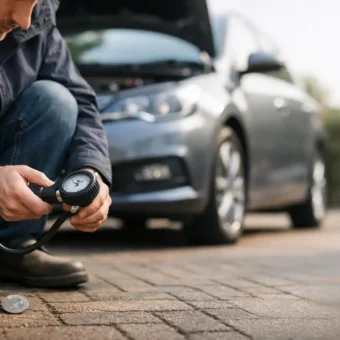
Low tyre pressure increases rolling resistance. That’s a quiet range killer. So is extra weight in the boot, roof boxes, and winter tyres.
None of this is dramatic. It’s just the stuff that decides whether you arrive with 18% state of charge (SoC) or 8%.
Who Feels EV Anxiety Most (and when it fades)
Not everyone feels this stress the same way. In my experience, it depends on how you charge and how often you do long-distance travel.
New buyers vs experienced owners
Range anxiety is often highest before someone buys their first EV. Once people live with the car, the fear tends to drop because they learn their real-world range and what “normal” looks like.
That’s why test drives and realistic weekly planning matter more than reading ten heated comment threads.
Drivers without home charging
If you can’t charge at home, you rely on public charging. That adds friction, especially if you’re renting, in an apartment, or parked on-street. UK policy explicitly calls out drivers without off-street parking as a key group that depends on the public network.
This is where charger anxiety can feel constant, because charging becomes a task you must do, not something you do while you sleep.
Rural corridors and the “single-charger risk”
In some places, the issue isn’t total charger count. It’s the risk of a single point of failure. One broken unit can wreck a plan.
Researchers describe “charging deserts” where coverage is thin, and one fault can wreck a family trip. That’s why hubs matter more than lone units on a map.
Fleets and duty cycles
Fleets think in duty cycles: miles per day, turnaround time, and where vehicles sit. A van that returns to base every evening has a different charging life than a rep doing 250 miles across regions.
For fleets, “charger online” is not enough. They need predictable session success, clear fault reporting, and quick fixes.
Practical Playbook: Reduce Range Anxiety and Charger Anxiety
This is the section I’d hand to a friend who feels overwhelmed. It’s not about hype. It’s about control.
Plan like a pilot, not a gambler
Trip planning works best when you build options. Pick a primary stop, then add a backup and a backup for the backup. Choose charging hubs over single chargers when you can, because more stalls means less “one fault ruins everything” risk.
Also plan around reality: you rarely need to charge from 0 to 100 on the road. Most drivers live in the middle of the battery.
Use the right tools
Apps reduce stress because they show what’s nearby, what’s open, and what fits your car. Two that come up a lot are Zap-Map and A Better Routeplanner.
The goal isn’t perfection. The goal is fewer surprises.
Charge when stopped, not stop to charge
This one changes everything for many drivers. If you’re already parked for food, shopping, or a walk, use destination charging. A slower top-up can reduce reliance on rapid chargers later.
It’s like topping up your phone when you’re at your desk, not waiting until 2% at the airport.
Start near full on travel days
For long-distance travel, I like a simple habit: start at 90–100% if you can. It buys options early, when traffic, weather, or a detour eats miles.
This isn’t a daily rule. It’s a travel-day rule.
Understand the charging curve and dwell time
Charging isn’t flat-speed. Most EVs charge fastest at a lower SoC, then slow down as the battery fills. That curve is why the 10–80% window often gives the best time-per-mile on rapid chargers.
Dwell time is just “how long you’ll sit there”. If you plan for 20–30 minutes and treat it like a break, the whole thing feels less annoying.
Report broken chargers and use helplines
If a charger fails, don’t just shrug and leave. Use the operator’s support/helpline and fault reporting. It helps you, and it helps the next driver.
UK rules require a free, staffed 24/7 helpline to be available and advertised at charge points within scope.
If you can, make home charging your default
Home charging vs public charging is the biggest stress divider I see. Home is simpler, and it’s often cheaper than public charging.
If you’re buying an EV and you have off-street parking, I’d factor a home charger into the plan early. It can change the whole ownership feel.

What’s Improving by 2026 (and what still isn’t)
Things are better than they were. They’re also not perfect. Both can be true at once.
UK consumer-experience rules that directly reduce charger anxiety
The UK has put real consumer protections on paper. The Public Charge Point Regulations 2023 include:
- Pricing transparency in pence per kilowatt hour (p/kWh), shown clearly.
- Contactless payment requirements for many new and rapid charge points.
- A free, staffed 24/7 helpline that must be advertised.
- A 99% reliability requirement for rapid networks, averaged across an operator’s rapid network over a calendar year.
- Open data and roaming payment requirements, which should make networks easier to compare and use.
These rules sit under the wider work of Office for Zero Emission Vehicles, Department for Transport, and Office for Product Safety and Standards.
The important detail is this: policy is now aimed at the exact stuff that causes charger anxiety, not just how many pins are in the plug.
US reliability framing: 97% uptime, but drivers still care about session success
In the US, federal standards for NEVI-funded sites include a greater than 97% average annual uptime requirement per charging port.
That’s useful, but it still doesn’t fully solve the “session success” problem. A charger can be “up” and still fail your payment, cable, or handshake in real life.
Why perception still lags reality (cost + public charging experience)
Cost is still a major adoption barrier. A large survey reported falling willingness to switch in parts of Europe, with cost as a top reason, and low satisfaction with public charging value for money.
That’s why “range anxiety is fading” can be true, while “EV buying still feels risky” is also true. For many people, it’s not one fear. It’s a stack of them.
Bottom Line: the real problem framing
Range confidence is increasingly solved for many drivers. Charger confidence is still a work-in-progress.
If you want a calmer EV life in 2026, I’d focus less on the biggest battery number and more on how you’ll charge week to week. Get that part right, and the rest gets easier.
FAQs
What is EV range anxiety?
EV range anxiety is the worry that an electric car will run out of battery charge before you reach your destination or a usable charger. It’s most common on unfamiliar routes, motorway travel, or when charging points are sparse. It’s tied to real-world range, not the brochure figure.
A good fix is learning your typical miles-per-percent in your own driving. After a few weeks, most drivers predict it well.
Is range anxiety still a problem in 2026?
Yes, but it’s changing. Many modern EVs cover typical daily mileage easily, so range anxiety often shows up on longer trips, cold days, or rural routes. For many owners, the bigger stress is less about miles and more about trusting the public charging network to work first time.
What is charger anxiety (charging anxiety) and how is it different?
Charger anxiety is the worry that a public charge point won’t work when you need it. It covers queues, broken or vandalised equipment, payment glitches, unreliable software, and bays blocked by petrol or diesel cars (ICEing). Range anxiety is about your battery. Charger anxiety is about the charging experience.
What affects real-world EV range the most?
Real-world range drops most with cold weather, high speeds, hard acceleration, and heavy heating or air conditioning use (HVAC). Tyre pressure and extra weight also matter. Regenerative braking can help in stop-start driving, but it won’t cancel out motorway speed or winter heating loads.
How much does cold weather reduce EV range?
Cold weather can reduce EV range because the battery works less efficiently when cold and the car uses energy to warm the cabin and battery. The hit varies by model, trip length, and heater use. Preconditioning while plugged in can cut the impact and also speed up charging.
Does fast charging damage the battery?
Fast charging doesn’t “ruin” a battery overnight, but heavy DC rapid use can increase battery degradation over time, especially in heat. Most cars manage charging to protect the pack. A simple habit helps: use rapid chargers when you need them, and rely on home AC charging for daily use.
How do I plan a long EV trip to avoid charging stress?
Plan the trip around charging hubs and backups, not a single stop. Start with a high state of charge (SoC), then use shorter rapid sessions in the 10–80% window for better time-per-mile. Use route planning tools, check alternatives near each stop, and charge during breaks you’d take anyway.
Are public EV chargers reliable enough now?
They’re improving, but reliability depends on what you measure. “Uptime” can look high while real drivers still hit failed starts, payment faults, blocked bays, or broken cables. The more useful measure is successful charging sessions, sometimes called session success. That’s what decides whether you leave with more charge.
What should I do if a charger is broken or won’t start?
First, try another stall if you’re at a hub, because one unit can fail while others work. If you’re stuck, call the operator’s support/helpline and report the fault. In the UK, many charge points must advertise a free, staffed 24/7 helpline, so use it. Then move to your backup location.
What’s better: charging hubs or single chargers?
Charging hubs are usually better because they reduce single-point failure risk. If one charger is broken, blocked, or slow, another may work. Single chargers can be fine for destination charging, but they’re higher stress on long trips, especially in rural corridors where the next option may be far away.
Do I need a home charger to own an EV?
No, but home charging makes EV life simpler and often cheaper than public charging. If you have off-street parking, home charging cuts charger anxiety because you start most days with predictable state of charge. If you rely on on-street charging, plan around nearby public points and check reliability patterns.
How common is range anxiety among drivers?
Range anxiety is often more common among people who don’t yet own an EV. Research suggests it tends to drop once drivers gain experience, learn real-world range, and see how their usual daily mileage fits the battery. Public charging friction can still create anxiety, even for experienced owners, on longer trips.
What does “99% reliable” mean for rapid chargers in the UK?
It means rapid charge points must meet a 99% reliability level, measured as an average across each operator’s rapid network over a calendar year. Operators must also publish compliance information and report it. It’s aimed at making rapid charging feel dependable, not like a gamble at the motorway.
Why do people say “uptime” is misleading for charger reliability?
Uptime can mean a charger is connected to the network, not that it can charge your car. A unit can be “online” while blocked, vandalised, or failing payment and communication steps. Researchers describe this gap clearly, and they argue for customer-focused measures like successful session rates, not just online status.




[…] weights change adoption speed for one reason: teams can test the model on their real problems without waiting for procurement, contracts, or long security reviews of a third-party hosted […]
[…] investor, business owner, or even a buyer waiting to complete, monthly rentals can solve a very real problem: “I need a home now, but not […]
[…] trip over their own feet. They either pick a problem nobody actually has, or they describe a real problem with all the urgency of reading tax […]
[…] are the common access methods, and it matches what owners face on […]
[…] why it trips people up. I have seen developers spend hours chasing a permissions issue when the real problem was schema drift. Here are all the causes that […]