




Sleep Quality Over Quantity: Why You Should Stop Obsessing Over Your Sleep Score
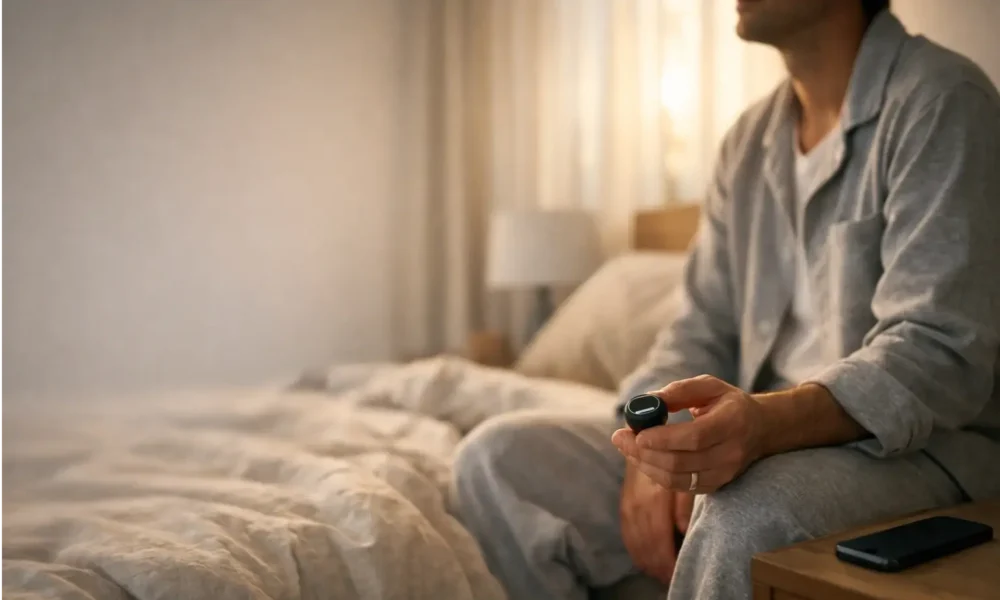
Sleep Scores: Helpful Tool or New Stressor?
I love data. I also love sleep. So when sleep trackers started handing out neat little numbers like “82” or “Great recovery!”, I thought: finally, a grown-up report card I might actually pass.
Then I realised something: a sleep score can be helpful, but it can also turn bedtime into a performance review. And sleep does not do well under pressure. The more we try to control it, the more it tends to slip away.
If your tracker gives you useful patterns, great. But if you wake up feeling fine and still spend the morning spiralling because your score was “meh,” we need to talk.
What Your Wearable Can and Can’t Know
Wearables are clever, but they are not mind readers. They are making educated guesses about your night using signals they can pick up from your wrist or finger, not from your brain.
How sleep is estimated (not directly measured)
In a sleep lab, the gold-standard test (polysomnography) uses sensors that track brain activity, eye movements, breathing, and more. Your watch does not do that.
Most consumer trackers estimate sleep using movement plus heart-related signals. That can be useful for spotting broad trends, like when your bedtime is drifting later, or how often you are up and down.
But it also means the device can confuse “very still but awake” with “asleep,” especially if you are the kind of person who lies there quietly, thinking about that one awkward thing you said in 2019.
Actigraphy research has shown this problem for years: these tools tend to detect sleep well, but they are much worse at detecting wakefulness, so they can overestimate total sleep time.
Why sleep stages and “deep sleep” numbers can be misleading
Sleep stages are real. Your tracker’s precise stage chart is the part that gets wobbly.
Studies comparing popular wearables to polysomnography generally find that devices do a decent job identifying “sleep vs wake,” but have mixed accuracy when they try to split your night into light, deep, and REM.
One study comparing an Oura Ring Gen3, Fitbit Sense 2, and Apple Watch Series 8 to polysomnography found high sensitivity for detecting sleep, but stage estimates still varied, with some devices overestimating light sleep and underestimating deep sleep.
So if your tracker says you got “only 35 minutes of deep sleep,” it might be right. It might also be wrong. Either way, treating that number like a diagnosis is a fast way to create anxiety you did not need.
Sleep Quality Over Quantity: What “Good Sleep” Looks Like
If we strip away the glossy graphs and focus on what actually matters, “good sleep” usually comes down to three things: you stay asleep reasonably well, you are asleep for most of the time you are in bed, and you feel okay the next day.
That’s it. Not perfect. Not cinematic. Just functional.
Sleep continuity (how often you wake up)
Most of us wake up briefly at points through the night. That can be part of normal sleep, especially during lighter stages or between cycles.
What matters more is whether those wake-ups are short and forgettable, or long and frustrating.
If you are lying awake for big chunks of time, that’s when sleep starts to feel “broken,” and you are more likely to notice it the next day.
Sleep efficiency (time asleep vs time in bed)
Sleep efficiency is simply the percentage of time you are actually asleep while you are in bed. In practice, healthy averages are often around 85% to 90%.
Here’s a weird truth that calmed me down: “too high” efficiency can also be a sign you are not giving yourself enough time in bed.
If you are asleep the second your head hits the pillow every night, you might be running on a sleep debt.
How you feel the next day (the most underrated signal)
This is the part trackers can’t fully capture: your lived experience.
If you wake up with decent energy, your mood is steady, and you can get through your day without feeling like a background character in a zombie film, that matters.
Sleep scientists still recommend a minimum amount of sleep for most adults, and seven hours is a good baseline.
But within that, your “best” sleep is also about how your body feels, not just what your wrist decided at 7:12 a.m.
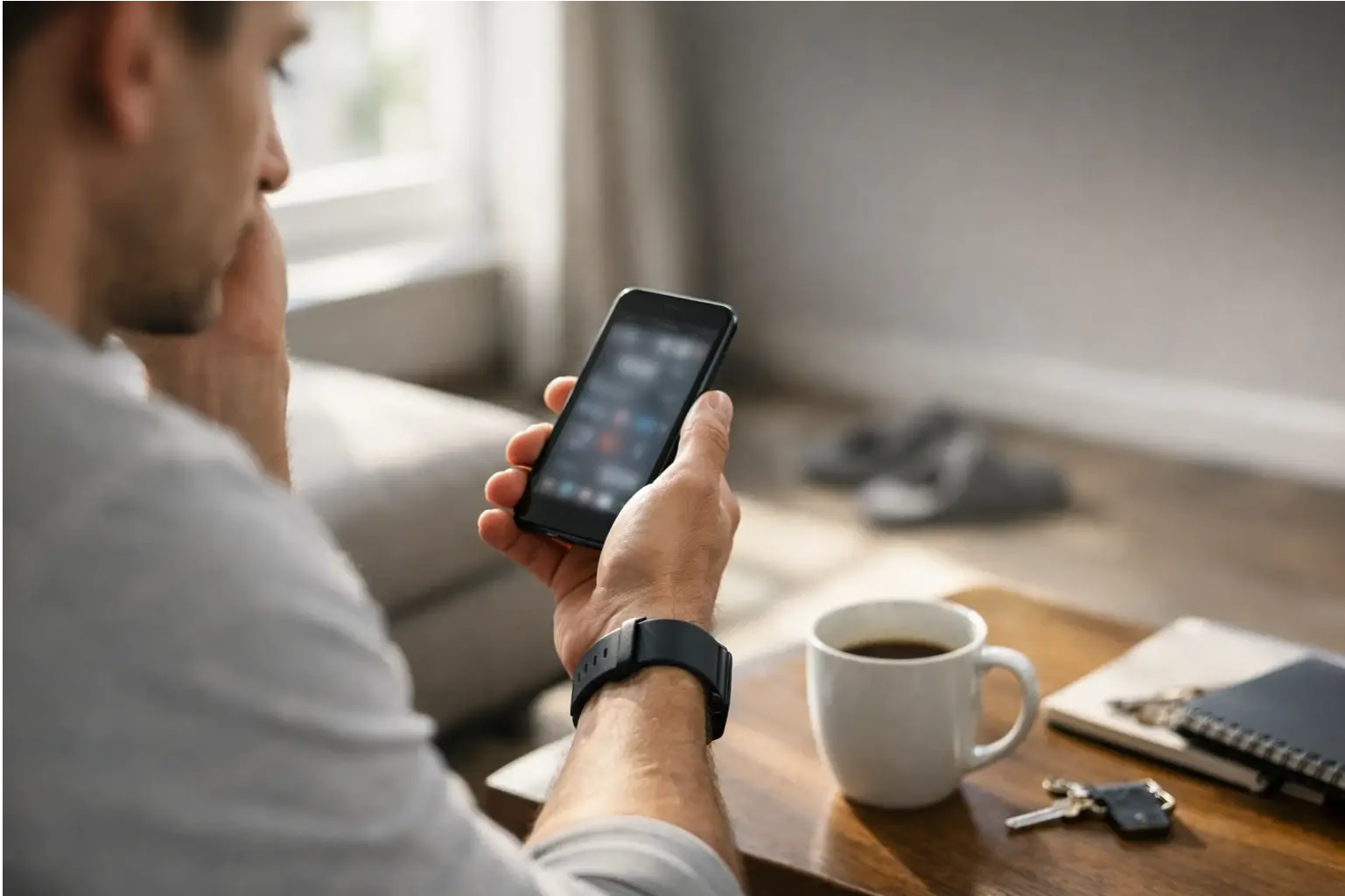
Orthosomnia: When Tracking Backfires
Orthosomnia is a term researchers coined to describe an obsession with perfect sleep, driven by tracker data, that actually makes sleep worse.
It often looks like this: you see a low score, you worry about it, you go to bed earlier to “fix” it, you spend more time awake in bed, and now you have taught your brain that bedtime equals stress. That can feed insomnia in a very tidy, annoying loop.
The tricky part is that the tracker feels like a neutral judge. But it is still a tool with limits, and the American Academy of Sleep Medicine has cautioned that consumer sleep technologies should not be used to diagnose or treat sleep disorders.
If your device is pushing you into a perfectionist mindset, it is allowed to take a step back. Your sleep is not a group project.
Practical Ways to Improve Sleep Quality (With or Without Tracking)
You do not need to throw your tracker in a drawer forever. You just need a calmer relationship with it.
Nighttime habits that make sleep smoother
Start with basics that reduce friction at bedtime.
Keep your wake time fairly steady, even on weekends. A consistent morning anchor helps your body clock line up.
Make the hour before bed feel lower-stimulation. Dim the lights, do something boring in the best way, and try not to do intense work or stressful scrolling right before you lie down.
If you wake up and can’t fall back asleep, aim to keep it low drama. Soft light, a quiet activity, and back to bed when you feel sleepy again. The goal is to avoid turning your bed into a place where you problem-solve at 2 a.m.
Also, a small but real one: keep your room cool, dark, and quiet. It is not glamorous, but it helps.
Daytime habits that set sleep up to win
Good sleep starts earlier than bedtime, even if that is annoying to hear.
Get outside in the morning if you can, even for a short walk. Daylight helps your body keep a steady rhythm.
Move your body during the day in whatever way you can tolerate. You do not need to become a gym person overnight.
Watch your caffeine timing. If coffee at 4 p.m. makes you stare at the ceiling later, that’s useful data too.
And if stress is the reason you can’t sleep, treat that like the actual problem. A short “worry list” earlier in the evening can stop your brain from saving every thought for pillow time.
When it’s time to stop self-optimizing and get help
There’s a point where “tweaks” stop helping, and you need proper support.
If you have trouble falling asleep or staying asleep most nights for months, and it’s affecting your life, it’s worth talking to a clinician. Evidence-based treatment like cognitive behavioral therapy for insomnia (CBT-I) is typically delivered over several sessions and targets the habits and thoughts that keep insomnia going.
Also seek help sooner if you have loud snoring, gasping, pauses in breathing, restless legs, or daytime sleepiness that feels dangerous. A tracker cannot rule those out.
Common Mistakes to Avoid
The goal is better sleep, not a better screenshot.
Checking your score the second you wake up. If it’s low, you can accidentally prime your whole day to feel worse.
Chasing “deep sleep” with random hacks. Stage numbers are estimates, and sleep is not a video game where you can farm points.
Spending extra time in bed to force more sleep. For many people, more time in bed can mean more time awake in bed, which is the opposite of restful.
Changing five things at once. If you are testing a new supplement, new bedtime, new meditation app, and a cold shower all in the same week, you will have no idea what helped.
Treating one night as a verdict. Look for patterns across weeks, not a single Tuesday.
Final Thoughts
Sleep scores are not the enemy. The obsession is.
If your tracker helps you notice patterns and supports better habits, it’s a tool. If it makes you tense, it’s background noise with a shiny interface.
Aim for sleep that feels steady, not perfect. More nights than not, you fall asleep, you stay asleep reasonably well, and you can function the next day. That is good sleep.
And if your score disagrees, you’re allowed to trust your body over your wrist.
FAQs
Is an “8 hour night” useless if my sleep score is low?
Not at all. Eight hours in bed is still eight hours you gave your body a chance to rest.
If you feel okay the next day, that matters. If you feel rough, the low score might be pointing to something real, like a late bedtime, alcohol, stress, or lots of awakenings. Use it as a clue, not a label.
Also, “eight hours” is a general target, not a law. Most adults do best at seven hours or more, but your exact sweet spot can vary.
Should I stop wearing my watch or ring at night?
If tracking makes you calmer and helps you notice patterns, keep it. If it makes you anxious or pushes you into perfectionism, take a break. Some people do well with “check it once a week” rules, or hiding the score screen and only looking at trends like bedtime consistency. Orthosomnia is real, and stepping back is a valid fix.
Which sleep metrics are actually worth checking?
If you track at all, stick to the boring metrics. Total sleep time, bedtime and wake time consistency, and how often you’re awake during the night tend to be more useful than obsessing over stage minutes. Wearables are generally better at sleep vs wake than fine-grained staging.
How long should I track before I trust the patterns?
A single night is noisy. A couple of weeks can show you trends. If you want something practical: track long enough to see what happens on your “normal” days, your stressful days, and your social weekends. Then use that information to make one or two small changes at a time.






[…] is a way of travelling where you stay longer in fewer places, move around less, and focus on quality over quantity. You plan a simple base, keep your days light, and travel at your own pace. It’s often called […]
[…] physical activity links to better sleep quality and energy in public health guidance. A review of studies also found exercise can improve sleep […]