




4-7-8 Breathing Technique: 60-Second Stress Relief That Actually Works
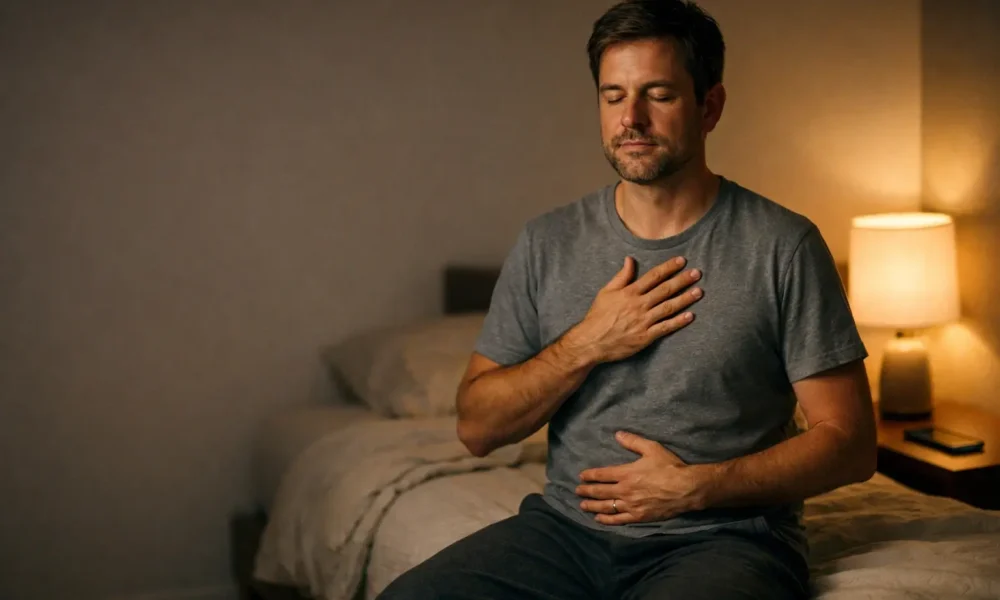
Sleep goes sideways fast.
One late night turns into three, then you’re tired all day, foggy in meetings, and wide awake at bedtime.
If you’ve tried ten different “sleep tips” and none agree, you’re not failing, you’re overloaded.
Table Of Content
- Quick start: do 4-7-8 in about a minute
- What is 4-7-8 breathing?
- Why is it called “4-7-8”?
- How to do the 4-7-8 breathing technique step by step
- The 60-second “do it with me” script
- How often should we practise?
- Why 4-7-8 breathing can feel so calming
- What research says, without overselling
- How this fits with your circadian rhythm and sleep-wake pattern
- Two common reasons the body clock gets thrown off
- Where 4-7-8 helps, and where it doesn’t
- A realistic sleep reset we can stick to
- What it may help with
- Safety, side effects, and when to be cautious
- Troubleshooting: common problems and quick fixes
- Alternatives if 4-7-8 isn’t for you
- A calm final note for real life
- FAQs
- Does 4-7-8 breathing work in 60 seconds?
- How many cycles should we do?
- Why do we feel dizzy or lightheaded?
- What if we can’t hold our breath for 7 seconds?
- Can we do 4-7-8 breathing lying down in bed?
- Can it help with anxiety or panic symptoms?
- Is it safe if we have asthma, COPD, or other breathing issues?
- What’s the difference between 4-7-8 and box breathing?
Here’s the simple truth.
When your body stays in “alert mode,” your sleep-wake pattern drifts and your circadian rhythm struggles to keep time.
The 4-7-8 breathing technique gives you a quick reset you can use in real life, even when you’re tired and impatient.
We’ll keep this practical.
We’ll do the steps, explain what’s going on in your body, and show how to use it for sleep without turning your life upside down.
Quick start: do 4-7-8 in about a minute
Time stays simple.
One breath cycle is 4 seconds in + 7 hold + 8 out, which is 19 seconds.
Four cycles take about 76 seconds, so it’s basically a one minute reset.
Safety comes first.
If you feel dizzy or lightheaded, stop and go back to normal breathing.
Try it sitting or lying down until you know how your body reacts.
What is 4-7-8 breathing?
It’s a paced breathing pattern.
We inhale for 4, hold for 7, then exhale for 8, repeating the same breathing cycle a few times.
You’ll also see it described as intentional breathwork with roots in pranayama, or yogic breathing.
Many people know it through Dr Andrew Weil.
Several health guides describe it as “4-7-8” because the counts create a steady rhythm that’s easy to copy under stress.
We don’t need to treat it like a test, we just need a repeatable pattern.
Why is it called “4-7-8”?
The ratio matters most.
Many guides note that the total seconds matter less than keeping the 4:7:8 shape of the breath.
That’s good news if you struggle with the 7 second hold.
We can scale it down.
A common starter option is 2 seconds in, 3.5 hold, 4 out, while keeping the same ratio.
Over time, many people find the longer counts feel easier.

How to do the 4-7-8 breathing technique step by step
Setup matters.
We want a comfortable sitting position, or we lie down if we’re doing it as a bedtime wind-down.
We also keep it gentle, no strain.
Here’s the classic version:
- Set your tongue. Place the tip of your tongue behind your upper front teeth, resting toward the roof of your mouth.
- Exhale fully first. Breathe out through your mouth with pursed lips, making a soft “whoosh” sound.
- Inhale for 4. Breathe in quietly through your nose for a count of 4.
- Hold for 7. Hold the breath for a count of 7, without squeezing or tensing.
- Exhale for 8. Exhale through your mouth for a count of 8, keeping that soft “whoosh.”
- Repeat 4 cycles. That’s your one minute reset.
The 60-second “do it with me” script
We’ll keep it steady.
If you’re reading this at your desk or in bed, we can do four cycles right now.
Cycle 1: exhale fully, inhale 2-3-4, hold 2-3-4-5-6-7, exhale 2-3-4-5-6-7-8.
Cycle 2: same counts, keep your shoulders relaxed.
Cycle 3: soften the breath hold if it feels tight.
Cycle 4: long exhale, then return to normal breathing.
If you can’t hold 7, we scale.
We keep the 4:7:8 ratio and shorten the numbers so you don’t strain.
How often should we practise?
Short practice beats rare effort.
Some guides suggest doing it consistently once or twice daily, not only in a crisis moment.
Think “tiny daily routine,” not “big wellness plan.”
We can link it to habits you already do.
Try it after brushing your teeth in the morning and again during your evening wind-down.
That keeps it real, even on messy days.
Why 4-7-8 breathing can feel so calming
Your nervous system has two gears.
One is the sympathetic nervous system, the fight-or-flight setting.
The other is the parasympathetic nervous system, the rest-and-digest setting.
Breathing can shift the gear.
Slow breathing with a longer exhale is linked with more parasympathetic activity through vagal pathways, which is one reason it can feel calming.
That doesn’t mean instant peace, it means your body gets a steadier signal.
What research says, without overselling
Evidence is still developing.
A 2022 study in healthy young adults found that 4-7-8 breathing control showed immediate changes in measures like heart rate variability and blood pressure, with effects varying by sleep deprivation status.
That’s promising, but it’s not a cure for every sleep problem.
We use it as a tool, not a promise.
If it helps you feel calmer, that can make bedtime easier.
If it doesn’t help right away, we adjust the counts or try another option.
How this fits with your circadian rhythm and sleep-wake pattern
Your circadian rhythm is your body clock.
It runs on a roughly 24 hour cycle and it helps you feel sleepy at night and awake in the morning.
Light and dark give that clock its strongest timing signals.
When the clock slips, you feel it.
You might get tired at odd times, struggle to fall asleep, or wake up feeling like you never fully shut off.
That’s where fatigue and brain fog start to stack up.
Two common reasons the body clock gets thrown off
Evening light is a big one.
Light at night can interfere with melatonin, a hormone your brain releases in darkness that supports circadian timing.
Screens and bright rooms can keep your brain in “day mode.”
An irregular wake time is another.
Sleep guidance often stresses a consistent sleep schedule, including waking up at the same time each day.
When wake time swings, the whole day shifts with it.
Where 4-7-8 helps, and where it doesn’t
4-7-8 is a downshift tool.
It can calm your nervous system so your brain stops chasing the day at bedtime.
That’s useful when your schedule is already messy and you need a clean ending to the day.
It won’t set your body clock by itself.
For circadian rhythm, light timing and consistent wake time do most of the heavy lifting.
So we pair breathing with two small anchors.
A realistic sleep reset we can stick to
Start with the morning anchor.
Get outdoor light soon after waking, even if it’s cloudy.
Light tells your brain, “day has started,” which supports a steadier sleep-wake cycle.
Keep afternoons simple.
Move your body a bit, and be careful with late stimulants if they affect you.
We’re aiming for stable energy, not a perfect routine.
End the day with a wind-down lane.
Insomnia advice often suggests relaxing before bed and keeping bedtime consistent where possible.
That’s where 4-7-8 fits, as a short bridge from busy brain to quieter brain.
What it may help with
Stress is the obvious one.
When stress spikes, breathing often turns shallow and quick, and your thoughts race.
A paced breathing pattern gives you something steady to follow.
Anxious body sensations can soften too.
Many people describe a loop of fast heartbeat, tight chest, and “I can’t catch my breath,” especially in panic-like moments.
Breathing slowly can interrupt that loop by changing the pace of the body.
Sleep wind-down is a common use.
People often try it before bed because the longer exhale can feel settling.
We treat it as a bedtime cue, not a sleep guarantee.

Safety, side effects, and when to be cautious
Dizziness can happen.
Some people feel lightheaded at first, which is why sitting or lying down is a smart start.
If it happens, we stop and return to normal breathing.
Certain histories need extra care.
Some wellbeing guidance suggests caution if you’ve felt lightheaded during breathing exercises or if you’ve hyperventilated when focusing on your breath.
That doesn’t mean “never,” it means “go gently.”
Respiratory conditions deserve a quick check.
If you have a respiratory condition, it can help to speak with a medical professional first.
If you have asthma or COPD, we keep the counts shorter and avoid forcing a long hold.
Troubleshooting: common problems and quick fixes
Most issues have a simple fix.
We’re usually either pushing too hard, holding too long, or breathing too big.
Use this as a calm guide, not a checklist.
| What happens | Why it happens | What we do next time |
|---|---|---|
| We can’t hold for 7 | The hold feels too long today | Shorten all counts, keep the 4:7:8 ratio |
| We feel dizzy | The change in breathing is too sharp | Stop, breathe normally, try sitting or lying down |
| Shoulders tense up | We’re breathing in the upper chest | Keep the inhale quiet, let the belly move, relax the jaw |
| We feel more anxious | The breath hold feels like “not enough air” | Reduce the hold, soften the exhale, keep it gentle |
| Mouth feels dry | Exhale is too forceful | Make the “whoosh” softer, keep lips lightly pursed |
Progress looks boring.
The goal is a smoother breath cycle, not a dramatic feeling.
If it feels neutral, that still counts.
Alternatives if 4-7-8 isn’t for you
Some people don’t like breath holds.
That’s normal, especially if anxiety has shown up around breathing before.
We can use another paced breathing style instead.
Diaphragmatic breathing is a solid option.
It focuses on slow belly breathing without strict counts.
Progressive muscle relaxation and guided imagery can also help during wind-down.
Box breathing is another choice.
It uses equal counts, which some people find steadier when they’re tense.
We’ll cover the difference in the FAQ below.
A calm final note for real life
Perfection isn’t the goal.
We’re building a steadier sleep-wake pattern, one small repeatable habit at a time.
When your day feels messy, a one minute breath routine plus a consistent wake time can be a strong start.
FAQs
Does 4-7-8 breathing work in 60 seconds?
It can feel fast because one full cycle takes 19 seconds. Four cycles take about 76 seconds, which is close to a minute. That short window often slows your breathing and pulls attention off worries, which can calm your body enough to think clearly or start winding down.
The key word is “can.”
Some days you’ll feel a shift right away, other days it’s subtle.
Either way, it’s a clean one minute habit you can repeat.
How many cycles should we do?
We can start with four cycles per session. That’s a simple entry point and it keeps the session short. If we feel steady, we can repeat later in the day. Many sources suggest practising once or twice daily, not doing long sets in one go.
If four cycles feels too much, do two.
Consistency matters more than going long.
Why do we feel dizzy or lightheaded?
Dizziness usually means we changed our breathing more than our body liked. The fix is simple: stop, breathe normally, and sit or lie down. Next time, soften the breath, shorten the counts, and keep the 4:7:8 ratio. We should never strain the breath hold.
Start smaller than you think.
Quiet inhale, soft exhale, no forcing.
What if we can’t hold our breath for 7 seconds?
We don’t need perfect seconds. The ratio matters more than the clock. If seven seconds feels too long, we speed the whole cycle up while keeping the same shape, like 2 seconds in, 3.5 hold, 4 out. With practice, the longer counts feel easier.
Think of it like learning a rhythm.
We start slow and simple, then we build comfort.
Can we do 4-7-8 breathing lying down in bed?
Yes, we can do 4-7-8 lying down, and many people prefer it at bedtime. The key is comfort and steady counting. If we feel lightheaded, sitting is safer. Keep your tongue near the roof of your mouth, exhale with a soft whoosh, and stay gentle.
Lying down helps the body get the message.
“We’re safe, we’re resting, we’re done for today.”
Pair it with a dim room and a simple wind-down routine.
Can it help with anxiety or panic symptoms?
It may help because it gives your body a slower rhythm to follow. When anxiety shows up, breathing often turns quick and shallow, which can make symptoms louder. A longer exhale can signal “safe” to the nervous system. If panic is frequent or intense, get help too.
Breathing is not a replacement for support.
If anxiety keeps showing up, speak to a GP or a qualified professional.
Use 4-7-8 as a tool you can carry, not your only plan.
Is it safe if we have asthma, COPD, or other breathing issues?
If we have asthma, COPD, or another breathing problem, we should be cautious. Breath holds can feel uncomfortable, and that can trigger more worry. Try a lighter version first, or ask a GP or clinician if breathwork is safe for you. Stop right away if symptoms flare.
We can also skip the hold.
Try a slow inhale and a longer exhale instead.
Comfort matters more than strict rules.
What’s the difference between 4-7-8 and box breathing?
Both are paced breathing, but they feel different. Box breathing uses equal counts, like 4 in, 4 hold, 4 out, 4 hold. 4-7-8 uses a longer exhale, which many people find better for winding down. We can try both and keep the one that feels steady.
Box breathing can feel better for focus.
4-7-8 often feels better for bedtime.
Your body gets the final vote.






[…] at timing, too. A single rough week after work stress, finances, or kids is not the same as “every week for months.” Long-term relationships often […]
[…] chase “cortisol detox” plans. Cedars-Sinai notes cortisol is necessary, and the better move is working on stress triggers and daily […]