




Chargeback Evidence Kit for Small Sellers (Screenshots, Logs & Delivery Proof)

Fundraising isn’t just slides. Investors watch how you handle risk. A sudden chargeback spike, messy records, and slow replies can look like a business that’s running on luck, not process.
Table Of Content
- What a “Chargeback Evidence Kit” Actually Is (and why sellers lose without one)
- The 3 parts of a winning packet
- The “One PDF Packet” Blueprint (copy/paste structure)
- Recommended packet order (best practice)
- File naming + exhibit labeling (Exhibit A, B, C…)
- What to redact (and what not to)
- Evidence Checklist (Master List)
- Proof of delivery / fulfillment (Physical goods)
- Proof of access (Digital goods)
- Proof of service performed (Services)
- Proof of product/service description & policies
- Proof of authorization & transaction details
- Evidence by Chargeback Reason (Match evidence to the dispute type)
- Fraud / Unauthorized (What to submit)
- Not received / Not provided
- Not as described / defective
- Recurring billing / subscription
- “Compelling Evidence 3.0” for Small Sellers (simple explanation)
- The CE 3.0 data points that matter
- The time window + historical transaction rule
- What to start collecting today (so you’re ready later)
- Common Mistakes That Kill a Dispute
- Downloadable Templates (Your “Kit” Offer / Lead Magnet section)
- FAQs
- What is a chargeback evidence kit?
- What evidence do I need to win a chargeback for physical products?
- What counts as proof of delivery if the buyer says “item not received”?
- What evidence works for digital products if there is no tracking number?
- Are screenshots enough for a chargeback dispute?
- What logs should I include (login logs, download logs, IP logs)?
- How do I write a strong chargeback narrative letter?
- Should I submit one PDF or multiple files?
- What is “Compelling Evidence 3.0” and do small sellers need it?
- What if I don’t have enough evidence, should I refund instead?
- What should be included for subscription / recurring billing disputes?
- Do I need to include my refund policy and terms acceptance?
- How should I redact sensitive info in screenshots and PDFs?
- Is this legal advice?
- Privacy and data handling notes
If you’re a founder or small seller, chargebacks feel personal. One cardholder claim can wipe out profit, add chargeback fees, and put account health at risk. When you’re also trying to pitch, that stress hits twice.
If you sell on Etsy, Shopify, or WooCommerce in the UK, this matters even more. Your payment processor may be Stripe, PayPal, or a local acquirer, but the reviewer still wants the same thing: clear, dated proof.
This guide shows how to build a chargeback evidence kit that you can send as a dispute response package in minutes. I’ll cover screenshots, logs, and delivery proof, plus how to turn it into one clean evidence packet and dispute evidence bundle.
What a “Chargeback Evidence Kit” Actually Is (and why sellers lose without one)
A chargeback evidence kit is a representment-ready rebuttal package. It’s a single set of supporting documents that matches the dispute reason and tells the story with proof, not opinions. The aim is to help the issuer bank reviewer see the facts fast.
Investors don’t fund “hope.” They fund repeatable systems. When you can pull chargeback documentation in ten minutes, you’re showing control over money leaks, timelines, and customer risk.
A chargeback starts when a cardholder disputes a card payment with their issuer bank. The merchant gets notified through the acquirer or payment processor and must respond before the due date with supporting evidence. Card network rules often give the cardholder a dispute window of up to 120 days from purchase, so keep records ready.
The 3 parts of a winning packet
A strong evidence packet has three parts. It starts with a case summary and timeline. It adds a short chargeback letter (narrative), then a clear evidence list and attachments checklist.
The “One PDF Packet” Blueprint (copy/paste structure)
One PDF packet keeps reviewers focused, and it frames your most compelling evidence early. It groups the narrative, an evidence table, and an attachments checklist with page numbers, which is exactly how evidence packet tools are set up.
Use this layout for a chargeback dispute response, then export to PDF:
- Cover page: merchant, transaction date, amount, card network, dispute reason, case ID.
- Timeline: dated bullets from order to delivery to support.
- Narrative: 150–250 words with exhibit callouts.
- Evidence table: Exhibit A, B, C with what it shows and date.
- Attachments checklist: every file you’re sending.
Recommended packet order (best practice)
Put your best proof first. Reviewers skim, so lead with delivery proof, access logs, or signed completion proof. Add policies accepted and customer communication after that.
File naming + exhibit labeling (Exhibit A, B, C…)
Name files so a stranger can follow them. Use CaseID_ExhibitA_Tracking.pdf or CaseID_ExhibitC_LoginLogs.png. Inside the PDF, title each page “Exhibit B: Delivery confirmation.”
What to redact (and what not to)
Redact full card numbers and private bank details. Keep names, dates, addresses, and the last four digits when they appear, because those fields link the order to the dispute. Evidence packet builders also flag that redaction rules matter, so keep it clean and permanent.
Evidence Checklist (Master List)
Think in proof buckets. Each bucket answers one question.
Splitit’s evidence guide lists required evidence like proof of delivery or proof of fulfillment, proof of purchase, product and policy screenshots, customer correspondence, and authorisation proof such as AVS/CVV match where relevant.
Proof of delivery / fulfillment (Physical goods)
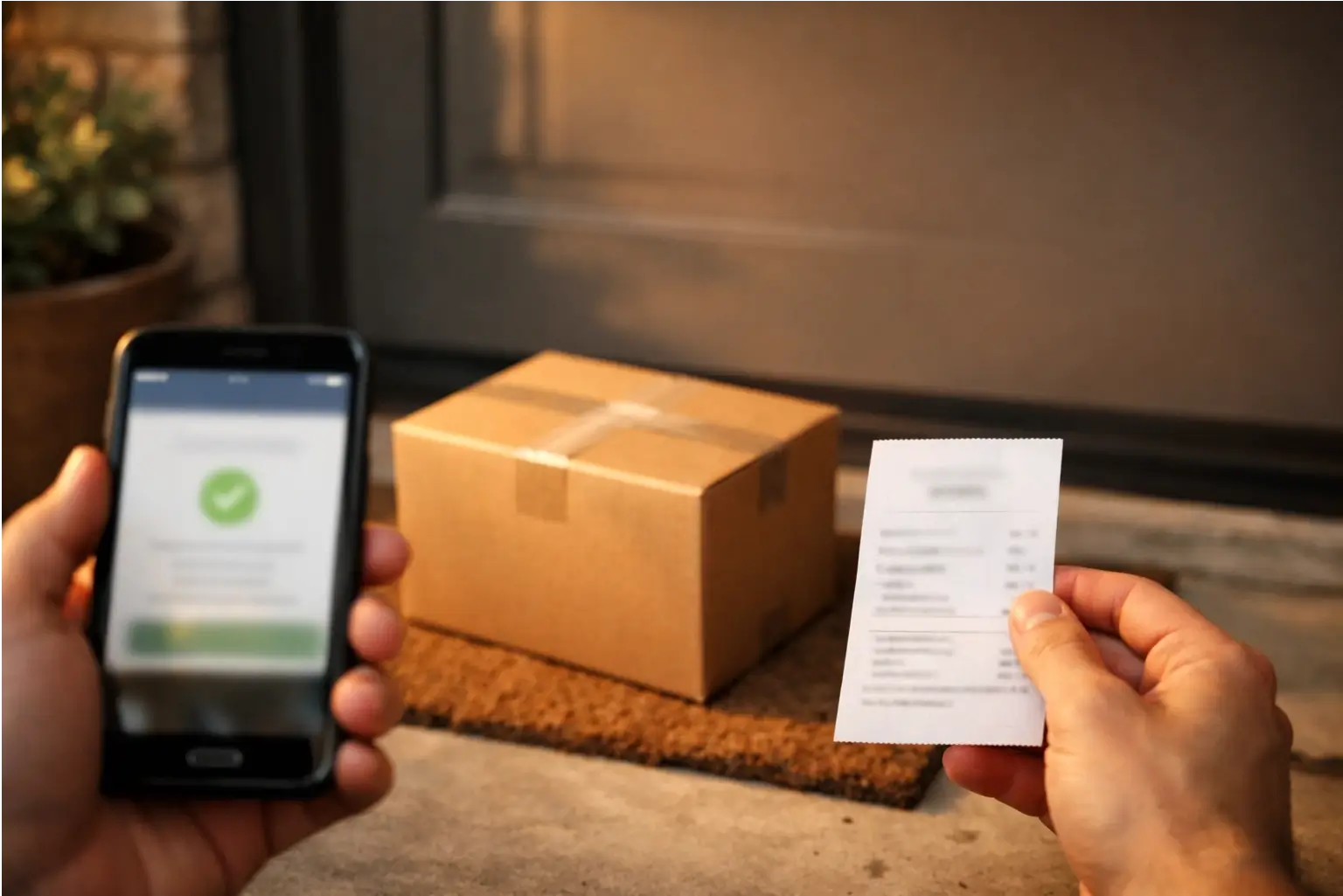
Use tracking number, carrier delivery confirmation, and a signed receipt when available. Add the shipping address, delivery address, dispatch date, and carrier name from your order record.
Proof of access (Digital goods)
Use access logs, download logs, login records, and timestamps tied to the buyer’s account. Add the delivery confirmation email, sales page screenshots, and terms of service acceptance records when you have them.
Proof of service performed (Services)
Use signed agreement, work logs, and completion confirmation. Add emails, chat logs, and support tickets that show the customer received help or updates.
Proof of product/service description & policies
Use product description screenshots and listing screenshots for each item purchased. Add refund policy and cancellation terms shown at checkout, plus proof the buyer accepted them.
Proof of authorization & transaction details
Use invoice, order details, and payment confirmation. Add AVS/CVV match and transaction logs if your processor provides them, and add 3D Secure results if you used it.
Evidence by Chargeback Reason (Match evidence to the dispute type)
Match the evidence to the reason code. Splitit maps common reasons across Visa, Mastercard, and Amex, including fraud/unauthorised, not received, not as described, and recurring billing disputes, with required evidence lists.
| Dispute reason | Required evidence | Nice-to-have boosters | Common mistakes |
|---|---|---|---|
| Fraud / unauthorised transaction | Order details, AVS/CVV match, transaction logs | IP logs, device ID/fingerprint, account history | Sending delivery proof only |
| Merchandise not received / service not provided | Delivery confirmation or completion proof, address match | Carrier photo/GPS, delivery email | No timeline, mismatched address |
| Not as described / defective | Product description screenshots, policies accepted, customer messages | Return offer proof, replacement offer proof | Missing policy proof |
| Recurring billing / subscription | Cancellation terms, renewal notice, proof of access | Login history, usage logs | No notice shown, no cancel steps |
Fraud / Unauthorized (What to submit)
Start with proof of authorisation. Add order details, AVS/CVV match, and transaction logs. Then add account and device signals like Customer Account ID, IP address, and device ID or device fingerprint when you have them.
Not received / Not provided
This is a fulfilment argument. Use carrier delivery confirmation screenshots for physical goods, signed contracts for services, and usage or login logs for digital goods, then save the most compelling evidence into one file.
Not as described / defective
This is a “what was promised” argument. Use product and listing screenshots, then show your refund policy acceptance and the support thread where you offered a fix.
Recurring billing / subscription
This is a “notice + access + cancellation” argument. Use cancellation terms, renewal notice, and proof of enrolment and access, like login history and timestamps.
“Compelling Evidence 3.0” for Small Sellers (simple explanation)
Compelling Evidence 3.0 (CE 3.0) is a Visa rule used in certain fraud disputes, often linked to friendly fraud and first-party misuse. It can block a fraud claim when you show at least two older, undisputed transactions from the same card that match key data points. Some providers pull this through Visa Order Insight, but your kit still needs clean data and logs.
The CE 3.0 data points that matter
The key data points are Customer Account ID, IP address, delivery address, device ID, and device fingerprint. You need at least two matches across the disputed and historical transactions, and one match must be IP, device ID, or device fingerprint.
The time window + historical transaction rule
The older transactions must be more than 120 days old and not more than 365 days old, measured from the disputed transaction. Those older transactions must not be disputed as fraud, and they should relate to the same card number (PAN) through your processor’s records.
What to start collecting today (so you’re ready later)
Store the data you already see at checkout: account ID, IP, delivery address, and device info where available. Chargebackhit also notes that keeping required data available for up to 365 days supports CE 3.0 readiness.

Common Mistakes That Kill a Dispute
Weak packets waste time. They also raise your dispute ratio and can harm account health.
The biggest failure is mismatch. Sellers send great delivery proof for a “not as described” reason, or send screenshots with no dates. Another common failure is fighting when evidence is thin, which Digital Queen flags as a real risk for sellers.
Downloadable Templates (Your “Kit” Offer / Lead Magnet section)
A good kit is mostly templates. You want a chargeback response template, a chargeback evidence checklist, an evidence table page, and exhibit labels you can copy fast. That mirrors how DigitalQueen and Court PDF package their tools around templates, checklists, and a single PDF packet format.
If you publish policies, link them inside your kit. Add your Refund Policy, Shipping Policy, Returns, and Terms of Service pages, because those screenshots often become exhibits.
FAQs
What is a chargeback evidence kit?
A chargeback evidence kit is a set of supporting documents and a short written summary that a merchant submits to contest a chargeback. It’s usually organised as one evidence packet or PDF packet, matched to the dispute reason, and sent through the acquirer or processor before the response deadline.
What evidence do I need to win a chargeback for physical products?
For physical goods, the core evidence is proof of delivery and proof of purchase. That means a tracking number, carrier delivery confirmation, and signed receipt when available, plus the invoice, order details, and payment confirmation. Add product description screenshots and refund policy screenshots from checkout to show what the buyer agreed to.
What counts as proof of delivery if the buyer says “item not received”?
Proof of delivery is a carrier record that shows the parcel reached the delivery address tied to the order. The strongest forms are the carrier delivery confirmation page, a signed receipt, and any carrier photo or GPS drop record. Pair the screenshot with your order page so the address match is obvious.
What evidence works for digital products if there is no tracking number?
For digital goods, evidence needs to show access and timing. Use access logs, download logs, login records, and timestamps tied to the customer account. Add the delivery confirmation email, sales page screenshots, and terms of service acceptance records. These items play the same role as tracking for physical delivery.
Are screenshots enough for a chargeback dispute?
Screenshots can be enough when they show clear facts and link to the disputed transaction. The best screenshots show delivery confirmation, product details, refund policy at checkout, and customer communication, with dates visible. Put screenshots into one PDF packet with exhibit labels, an evidence list, and an attachments checklist.
What logs should I include (login logs, download logs, IP logs)?
Include logs that prove identity, access, and timing: login records, access logs, and download logs with timestamps tied to the customer account. For fraud or unauthorized cases, add IP logs plus device ID when available to show a steady online footprint. Keep the account ID and timestamps visible in every exhibit.
How do I write a strong chargeback narrative letter?
A strong chargeback letter is a short, dated story that matches the dispute reason and points to exhibits. It states what was bought, when it was delivered or accessed, what policies were accepted, and what support you offered. It then lists the attached evidence and requests reversal of the chargeback.
Should I submit one PDF or multiple files?
One organised PDF packet is easier to review than many loose files. A single packet can include the narrative, evidence table, page numbers, and an attachments checklist, with exhibits attached in order.
What is “Compelling Evidence 3.0” and do small sellers need it?
Compelling Evidence 3.0 is a Visa rule used in certain fraud disputes that relies on older, undisputed transactions to prove cardholder participation. It needs at least two historical transactions within a 120–365 day window and matching data points like account ID, IP address, delivery address, and device ID or fingerprint.
What if I don’t have enough evidence, should I refund instead?
If evidence is thin, refunding can cost less than a failed fight. A weak dispute response often loses and still triggers chargeback fees and account risk. Digital product seller guidance warns against fighting cases you can’t support, because repeated losses can harm payment account health and raise your dispute ratio.
What should be included for subscription / recurring billing disputes?
For recurring billing disputes, include cancellation terms, proof of terms acceptance, and proof of notice around renewal. Add proof of enrolment and access, such as login history, timestamps, and usage logs. Include customer correspondence showing you gave cancellation steps or support before the chargeback.
Do I need to include my refund policy and terms acceptance?
Yes, refund policy and terms acceptance often matter because disputes hinge on expectations. Include screenshots of the refund policy and key terms at checkout, plus proof the buyer accepted them, such as a checkbox record or terms acceptance log. Evidence guides list policy screenshots and terms as required for many reason codes.
How should I redact sensitive info in screenshots and PDFs?
Redact sensitive data that isn’t needed to prove the dispute, like full card numbers or bank details, but keep the fields that connect buyer, address, and dates. Redaction should be permanent and clear, using solid boxes rather than blur. Evidence packet guidance also warns to follow local redaction requirements.
Is this legal advice?
No. This page shares general business guidance on how merchants organize a dispute response package, but it isn’t legal advice. Chargeback decisions follow card network and processor rules, and your bank or acquirer may ask for specific formats. For complex disputes, speak with a qualified professional.
Privacy and data handling notes
Keep customer data tight. Store your packet in a controlled folder, limit access, and avoid emailing raw logs.
CourtPDF notes that its tools run in the browser and focus on keeping data local. That’s a useful standard for small teams: share only what the case needs, redact carefully, and keep your evidence packet organised so you don’t overshare by mistake.








[…] all proof hits the same. Use this hierarchy so page one shows chargeback evidence for a digital goods […]
[…] page shows you how to manage small business cash flow in the UK. No fluff, just a survival plan you can use this […]