




ADUs in 2026: The Complete Guide to Adding a Backyard Home for Rental Income and Family Living
Introduction: Why homeowners are building ADUs in 2026
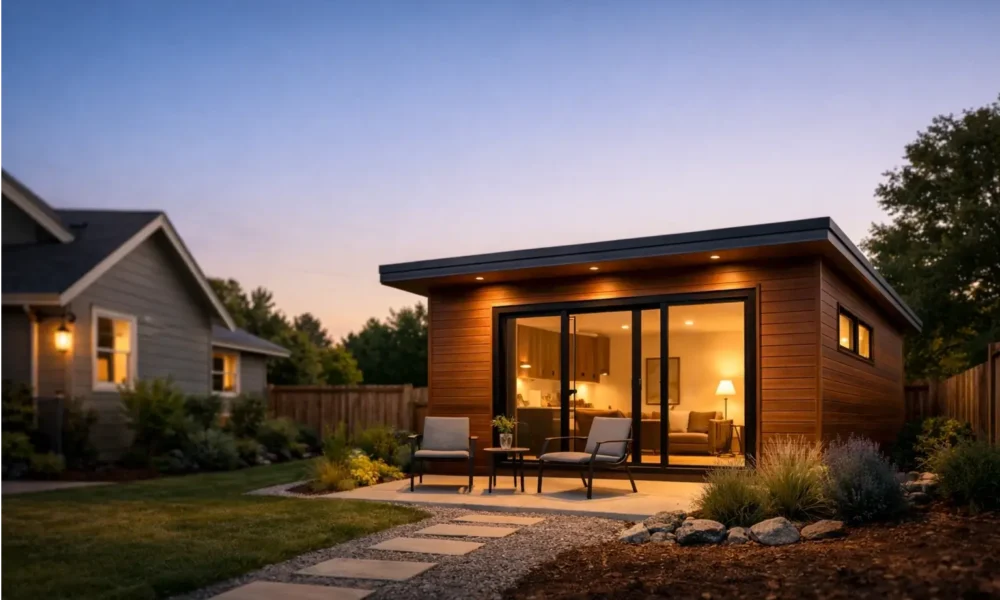
If your home feels a little tight, you’re not alone. Many homeowners want more space, but moving is expensive and stressful. An ADU can be a practical middle path. It’s a small second home on the same property, often built in a backyard, garage, or basement.
Table Of Content
- Introduction: Why homeowners are building ADUs in 2026
- What an ADU is and the main types
- Detached backyard cottage
- Attached addition
- Garage or basement conversion
- Junior ADU and small studios
- Rules and feasibility checks before you start
- Zoning and property eligibility
- Size limits, setbacks, height, and parking
- Utility connections and fire access
- Rental rules and short-term restrictions
- Cost, financing, and payback expectations
- Typical budget ranges and cost drivers
- Financing options and lender requirements
- Grants, rebates, and local incentive programs
- Rental income potential and ROI planning
- Designing for privacy, comfort, and flexibility
- Layout choices for renters and family use
- Separate entry, sound control, and outdoor space
- Accessibility and aging-friendly features
- Energy efficiency and low-maintenance materials
- Step-by-step process from plans to move in
- Site evaluation and feasibility
- Design and engineering
- Permits and plan approvals
- Construction phases and inspections
- Final sign-off and occupancy
- How to use your ADU for income or family living
- Long-term rental setup and tenant screening
- Multigenerational living and privacy planning
- Taxes, insurance, and property management basics
- Common mistakes that add cost and delays
- Underestimating site work and utility upgrades
- Choosing the wrong scope or contractor
- Designing without storage, privacy, or parking clarity
- Missing local rental compliance and tax planning
- Final thoughts
- FAQs
- How long does an ADU take from permit to completion?
- What is the cheapest type of ADU to build?
- Can ADU rental income help qualify for a mortgage?
- Will an ADU raise property taxes and insurance?
People build ADUs for two big reasons:
Rental income: A long-term tenant can help offset mortgage costs and rising bills.
Family living: An ADU can give privacy to aging parents, adult kids, or visiting relatives without forcing everyone under one roof.
In 2026, ADUs are also more common because many cities and states have made them easier to permit than they were a few years ago. California, for example, has continued reducing barriers through statewide guidance and updates.
This guide is for homeowners who want a realistic plan, not a fantasy timeline. We’ll walk through what an ADU is, how to check if your property can support one, what it costs, and what usually goes wrong.
What an ADU is and the main types
An Accessory Dwelling Unit (ADU) is a legal, self-contained living space on the same lot as a main home. Most include a kitchen, bathroom, sleeping area, and a separate entrance.
Detached backyard cottage
This is the classic “backyard home.” It sits separate from the main house and feels most independent. Detached ADUs usually offer the best privacy, but they often cost more because you’re building everything from scratch (foundation, walls, roof, utilities).
Attached addition
An attached ADU is built onto your existing home, like a side addition. It can be efficient if you already have space and access to utilities, but it still needs proper fire separation, sound control, and a layout that feels private.
Garage or basement conversion
Conversions can be the most cost-effective because the structure already exists. But they can also hide problems like moisture, poor insulation, or a slab that needs upgrades.
Budget-wise, conversions are often cheaper than new builds, but pricing can still swing widely depending on the work needed and local labor rates.
Junior ADU and small studios
A Junior ADU (JADU) is usually a very small unit created inside an existing home footprint, often with a smaller kitchen setup and shared systems. Some areas define JADUs under 500 square feet and limit where they can be built.
If you’re nervous about cost or complexity, this category can be a lower-risk starting point: less site work, fewer utility changes, and a smaller build overall.
Rules and feasibility checks before you start
ADUs are allowed in more places than they used to be, but they are not “build anywhere, any size.” Before you sketch layouts, do a basic feasibility check.
Zoning and property eligibility
Start with your local planning department website. Search your city or county name plus “ADU” and look for a homeowner handout or checklist.
In many areas, ADUs are allowed on single-family lots and sometimes multi-family lots too. But rules change by location, even within the same state.
A good first question to ask is simple: Is an ADU permitted by right, or does it require a special review?
If your area offers ministerial approval, it usually means a faster, checklist-based process (as long as you meet the standards).
Size limits, setbacks, height, and parking
Most jurisdictions cap ADU size based on livable square footage. Some also set limits on height and how close you can build to property lines (setbacks).
For example, California’s statewide framework commonly uses a 4-foot side and rear setback for certain detached ADUs, with local variation on height and design rules.
Parking is another make-or-break item. Some cities require an extra off-street space, while others waive parking when you’re near transit or converting an existing structure.
Utility connections and fire access
Utilities are where “simple projects” get expensive.
You may need upgrades for:
Electric service (panel capacity, trenching, a new meter in some cases) Water supply and sewer tie-ins Gas line sizing (if you’re using gas appliances)
Fire access is also real. If your backyard is tight, the city may require an access path or specific clearance so emergency crews can reach the unit. Even when rules are relaxed, inspections still focus on safe egress, alarms, and code-compliant construction.
Rental rules and short-term restrictions
Many homeowners dream of “Airbnb income,” but rules often push ADUs toward longer-term rentals, not short-term stays.
In California, some ADU and JADU rules restrict rentals shorter than 30 days, and JADUs specifically have strong limits on short-term rental use.
Even outside California, many cities regulate short-term rentals heavily, so do not assume you can use an ADU as a weekend rental.
Cost, financing, and payback expectations
Typical budget ranges and cost drivers
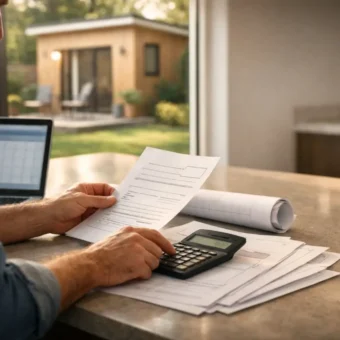
ADU costs vary a lot by region, site conditions, size, and finish level. A common planning range is $150 to $300 per square foot, with higher costs possible in major cities or premium builds.
Big cost drivers include:
Site work (grading, excavation, drainage) Utility trenching and panel upgrades Foundation type Kitchen and bathroom build-out Windows, insulation, and energy requirements Access constraints (tight yards increase labor time)
Conversions may save money because the shell is already there, but don’t underestimate what it takes to bring an older garage or basement up to code.
Financing options and lender requirements
Most homeowners fund ADUs through one of these routes:
Cash savings (fastest, but ties up funds) Home equity loan or HELOC Cash-out refinance (rate-sensitive) Renovation loan (more paperwork, but can bundle costs)
If your ADU already exists (or you’re buying a home with one), some lenders allow you to use projected or actual ADU rent to help you qualify, but there are rules.
For example, Fannie Mae notes that certain borrowers using the HomeReady program may be able to include rental income from an existing ADU for qualification.
Their underwriting guidance also places limits on how much rental income can count in some scenarios, so it’s not unlimited extra income.
Freddie Mac also provides ADU guidance, including limits and documentation requirements when using ADU rent for qualification.
Grants, rebates, and local incentive programs
Incentives vary wildly by location, but they do exist. California has had a well-known example: the CalHFA ADU Grant Program, which offers up to $40,000 to reimburse eligible pre-development and certain non-recurring closing costs for qualified homeowners.
Important note: programs can open, close, and change funding rules. Always confirm current availability on the official agency website before counting on it in your budget.
Rental income potential and ROI planning
ADU payback depends on your total cost, rent level, and ongoing expenses.
When people misjudge ROI, it’s usually because they forget:
Property taxes may rise after permitted improvements. Insurance often needs an update for a second unit. Repairs and turnover are real costs, even with “easy tenants.”
A healthier way to think about ADU returns is: Does this unit improve your monthly cash flow and your family flexibility, even if the payback takes years? If the answer is yes, it’s often still a good project.
Designing for privacy, comfort, and flexibility
Layout choices for renters and family use
A great ADU layout feels bigger than it is. Prioritize:
A simple living zone with natural light A real bedroom area (or at least a sleep zone with separation) A kitchen with enough counter space to cook daily
If family may use it later, avoid hyper-specific layouts that only work for one type of tenant.
Separate entry, sound control, and outdoor space
Privacy is a design issue, not just a rental issue.
Good ADUs usually include:
A separate walkway or clear path to the entry Window placement that avoids direct sightlines into the main house Solid-core doors and sound-rated insulation on shared walls (if attached)
Even a small patio area can make the unit feel independent.
Accessibility and aging-friendly features
If you’re building for parents or future-proofing, focus on basics:
Step-free entry where possible Wider doorways and clear hall space A bathroom layout that can handle a walker A shower that’s easy to step into (or curbless if allowed)
You don’t need a medical look. You just want easy movement.
Energy efficiency and low-maintenance materials
A comfortable ADU should heat and cool easily without huge bills. Many homeowners choose:
Heat pump mini-splits (efficient for small spaces) High-quality insulation and airtight windows Durable flooring that can handle tenants and pets
Low maintenance usually wins over trendy.
Step-by-step process from plans to move in
Site evaluation and feasibility
Walk your lot like a builder would.
Check:
Slope and drainage (where does water go in heavy rain?) Access for deliveries and construction Space for trash bins, bikes, and storage Where utilities are located now
If you’re on septic, feasibility may hinge on capacity and upgrades, so ask early.
Design and engineering
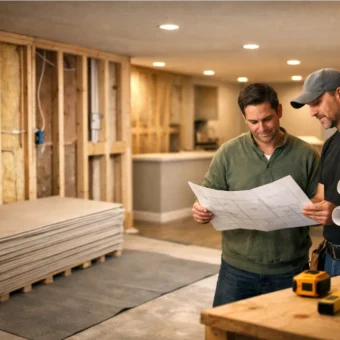
For detached builds, you’ll usually need:
A basic architectural plan set Structural engineering (especially in seismic or high-wind areas) Energy calculations where required
Even for conversions, you may need engineering if walls are moved, openings are added, or the roof structure changes.
Permits and plan approvals
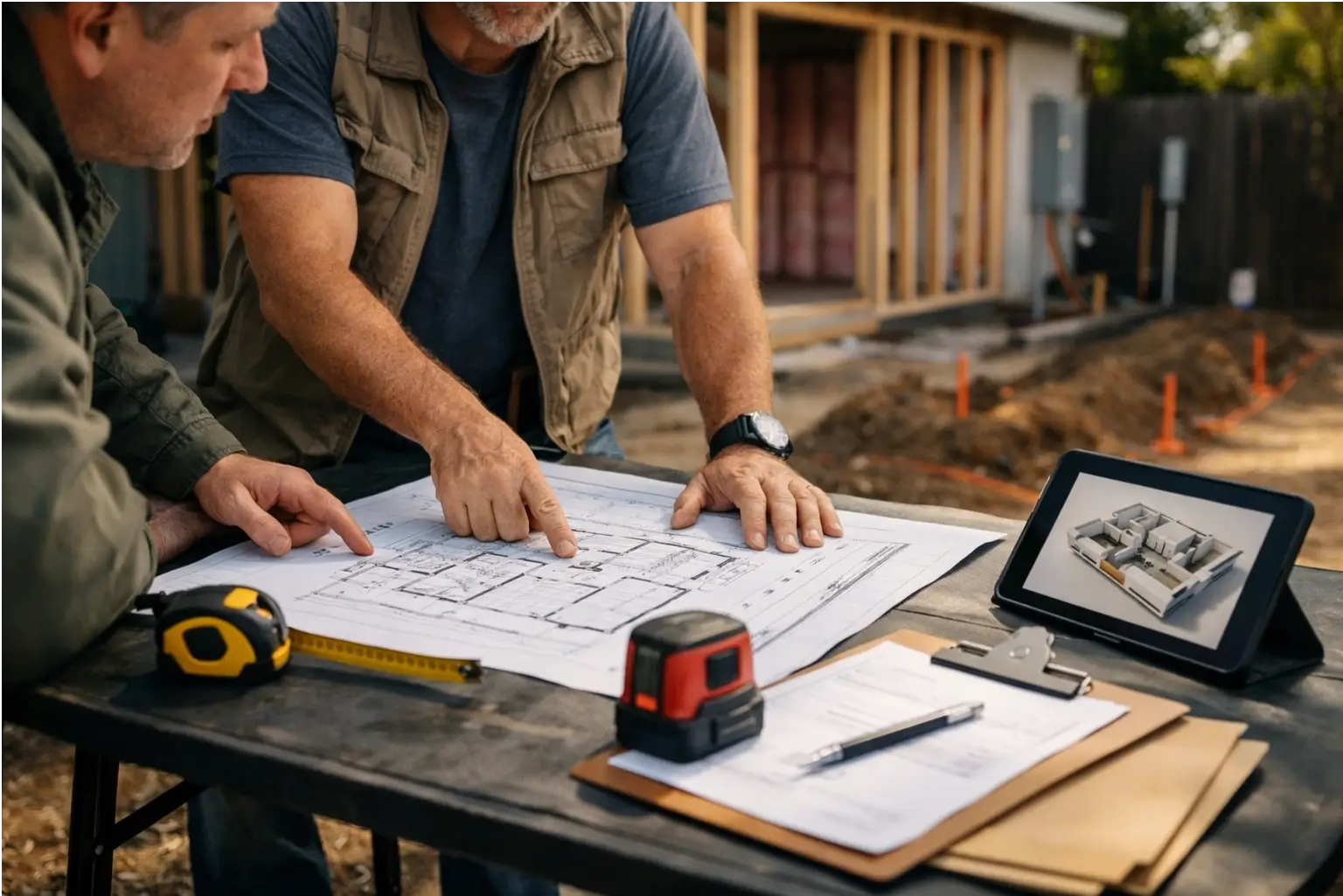
Most ADUs require permits, inspections, and approved plans. In areas with streamlined processes, review can be faster, but you still need complete drawings and code compliance. California’s state-level framework is one example of structured guidance and timelines.
This is where homeowners often lose months by submitting incomplete plans or skipping key documents.
Construction phases and inspections
A typical build sequence looks like this:
Site prep and trenching Foundation (or slab upgrades for conversions) Framing and roof Rough plumbing, electrical, HVAC Insulation and drywall Cabinets, tile, fixtures, flooring Final electrical and plumbing hookups Final inspection
Safety tips (do not skip): trenching and electrical work are common hazard zones. Wear eye protection, use hearing protection for cutting and drilling, and treat any old wiring or unknown materials with caution. If the home is older, ask about asbestos risk before demolition.
Final sign-off and occupancy
Your city will typically issue a final approval (sometimes called a certificate of occupancy) after passing inspections. Only then is the ADU legally ready for tenants or family move-in.
How to use your ADU for income or family living
Long-term rental setup and tenant screening
Long-term rentals are usually simpler and more stable than short-term stays.
Basic setup steps include:
A clear lease agreement A realistic maintenance plan Safe entry lighting and secure locks A screening process that follows local rules
Keep it professional and consistent.
Multigenerational living and privacy planning
If family is the main use, plan boundaries early:
Who pays utilities? Shared laundry or separate? Quiet hours and visitor expectations?
The build matters, but the house rules matter too.
Taxes, insurance, and property management basics
An ADU may affect:
Property tax assessments Homeowners insurance coverage Rental income reporting
Even if you self-manage, it helps to set aside money monthly for repairs so surprises do not become emergencies.
Common mistakes that add cost and delays
Underestimating site work and utility upgrades
This is the #1 budget breaker.
A clean floor plan on paper can still fail if you need:
A bigger electrical panel Longer trenching runs than expected Drainage correction Retaining walls on sloped lots
Budget extra for unknowns, especially with older homes.
Choosing the wrong scope or contractor
The cheapest bid often becomes the most expensive when change orders start piling up.
You want someone who understands:
ADU-specific inspections Working in tight residential sites Scheduling trades in the correct order
Even if you act as your own project manager, you’ll still need skilled help for major systems.
Designing without storage, privacy, or parking clarity
A unit can meet code and still feel uncomfortable.
Common design misses:
No closet space Kitchen with nowhere to prep food Bedroom too small for real furniture Entry that forces renters to walk past your main living room window
Fix these on paper, not after drywall.
Missing local rental compliance and tax planning
Rental rules can be stricter than building rules, especially around short-term stays. Many places restrict rentals under 30 days for ADUs or JADUs.
Before you build for vacation rental money, confirm the legal use first.
Final thoughts
An ADU can be one of the most useful upgrades you’ll ever make, but it’s not a weekend project. The smartest builds start with feasibility: zoning, access, utilities, and a budget that includes surprises.
If you’re unsure where to start, here’s the best first move: get a simple site feasibility check and confirm your local rules before you spend money on design. That one step can save you months.
FAQs
How long does an ADU take from permit to completion?
Many ADUs take several months from permit submission to move-in. A smoother project might run faster, while complex builds can take longer due to plan review, utility upgrades, and inspection scheduling. If your area offers streamlined approvals, that can help, but construction time still depends on scope and site conditions.
What is the cheapest type of ADU to build?
In many cases, a garage conversion or basement conversion is cheaper than building a brand-new detached unit, because the main structure already exists. Costs still vary, especially if you need major upgrades to insulation, plumbing, or electrical.
Can ADU rental income help qualify for a mortgage?
Sometimes, yes. Some loan programs allow ADU rental income to be used for qualification, but there are documentation requirements and limits on how much income can count. Fannie Mae and Freddie Mac both publish guidance on ADUs and rental income use.
Will an ADU raise property taxes and insurance?
It often can. Adding a permitted living unit typically increases the property’s assessed value, and your insurer may require updated coverage for the additional structure and liability. It’s worth checking with your local assessor’s office and your insurance provider early, so you’re not surprised later.




[…] This is one of the simplest bathroom modifications that supports independent living at home. […]
[…] frames this as deliberate. It’s about mobility, fewer maintenance burdens, and living in a way that fits modern work and family […]
[…] from Part II. Pure investment properties don’t qualify for Part I either – though a home used partly as a rental may qualify for Part I on a proportional basis depending on […]
[…] rental income is part of your plan, keep it legal. Some mortgage programs only allow rental income from an […]