




Voice cloning & AI impersonation: can someone legally copy your voice if it’s “non-commercial”?
Hearing your voice in a clip can feel like losing control of your identity. People swing between “no money, no problem” and “you’re doomed.”
We keep it simple. We explain voice cloning and what usually matters in the UK, EU, and US: consent, deception, and harm.
What voice cloning is
Voice cloning (AI voice cloning) is when software creates a synthetic voice that matches a real person. It’s used for voiceovers, podcast narration, dubbing, and other speech tools.
A voice replica isn’t a copied recording. It’s a voice model trained on voice samples (training data) in a voice dataset, then used to generate new speech.
How it works and what it needs
Most systems use text-to-speech (TTS), also called speech synthesis or neural TTS. The model learns cadence, prosody, pitch, speaking rate, accents, and emotional tone.
If voice data is used to uniquely identify someone, it can fall into “biometric” territory under UK guidance.
Audio requirements vary. One provider says cloning may work with about 1–5 minutes of audio, while higher quality training may need 30+ minutes of clean recordings. For higher accuracy, some documentation says 30 minutes is a bare minimum and suggests closer to 2–3 hours.
The “non-commercial” myth
“No ads” and “no monetization” don’t settle the legal question. Many rules focus on consent, deception, and harm.
Platform policies back that up. Some voice tools ban unauthorized, deceptive, or harmful impersonation, including replicating another person’s voice without consent or legal right, or in a way meant to deceive people about AI use.
A fast scenario read:
- A “parody” clip can still mislead if it isn’t clearly labelled.
- A fake confession audio sent to a boss is built on deception.
- A scam call is fraud, even if the caller never posts an ad.
- A political robocall can draw regulator action.
Commercial use can add extra claims. US “sound-alike” disputes often involve ads and theories like voice misappropriation or false endorsement, including the Waits v. Frito-Lay case.
Legal landscape by region (plain English)
United States
US rules often depend on state law, including “right of publicity”. Robocalls are separate: in February 2024, the FCC said calls using AI-generated voices count as “artificial” under the TCPA, bringing them under robocall limits that often require consent.
European Union
GDPR defines biometric data as data from technical processing of traits that can allow unique identification. Article 9 adds stricter rules for biometric data used to uniquely identify a person. The EU AI Act adds transparency duties for some synthetic or manipulated content under Article 50.
United Kingdom
The UK has no single law that covers every deepfake. Many UK discussions describe a patchwork, using areas like data protection, defamation, malicious falsehood, and fraud depending on the harm.
If someone cloned your voice: what to do next
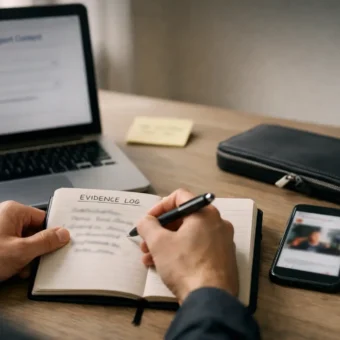
Don’t repost the clip. Save evidence first, then report it using the platform’s impersonation, fraud, or harassment route.
Keep a simple evidence pack: links, usernames, screenshots, dates, and any messages that show threats or intent. If money or threats are involved, treat it as urgent. Consumer warnings note scammers can clone a loved one’s voice from a short clip and run “family emergency” scams.
Ethical voice cloning (how to do it safely)
Get explicit consent
Start with explicit consent. Make it specific: who can use the voice model, for what purpose, for how long, and where it can be shared.
Some providers require verifiable consent, including an audio consent statement alongside training data so identity can be confirmed.
Add disclosure and guardrails
Add disclosure and guardrails. Labels, watermarking, audit logs, and SSO reduce misuse and confusion, and they match the EU’s transparency direction.
FAQs
Is it legal to clone someone’s voice without permission?
Often, no. Many platforms ban voice impersonation without consent or legal right, and laws can also apply when cloning leads to deception, harassment, or fraud. Even where one claim is weak, another may fit. The lowest-risk approach is permission plus clear disclosure.
If it’s non-commercial, does that make it legal?
Not by itself. “Non-commercial” can still involve deception or harm, which is what many rules focus on. A prank voicemail, a fake confession clip, or a misleading parody can all raise risk. Regulators also focus on harmful uses like robocalls, not profits.
How much audio do you need to clone a voice?
It depends on the tool and the quality you want. Some services say instant voice cloning can work with about 1–5 minutes of audio. Higher quality training may need 30+ minutes of clean audio, and some guidance suggests hours for the most accurate results.
What’s the difference between instant and professional voice cloning?
Instant voice cloning focuses on speed and convenience. It can work from a small set of voice samples and produces a usable synthetic voice quickly. Professional voice cloning uses more training data and time, aiming for closer tone, cadence, and prosody, with more checks around quality and permission.
Can AI clone any voice?
Many voices can be copied if there are enough clean voice samples. Strong accents, background noise, or low-quality microphone audio can reduce accuracy. Some providers block certain uses or require verification. Even when it sounds close, errors can show up in pronunciation, pacing, and emotion control.
Can voice cloning be used for scams and fake emergency calls?
Yes. Consumer warnings describe scammers using a short online clip to clone a loved one’s voice, then making a fake emergency call to push fast payment. The whole tactic relies on panic. A safe word and a call-back on a known number can break the play.
Are AI-generated voices illegal in robocalls?
In the US, the FCC said robocalls using AI-generated voices count as “artificial” under the TCPA. That pulls them into rules that often require prior consent. The exact limits depend on the call type and exemptions, but it increases legal risk for voice-cloned robocalls.
What laws protect your voice in the US (right of publicity)?
Many states recognise a right of publicity that can protect identity traits, including voice, in some settings. Courts have heard “sound-alike” disputes, often tied to ads, under misappropriation and false endorsement theories. These claims vary by state and facts, so outcomes can differ widely.
Does GDPR treat voice as biometric data?
GDPR defines biometric data as data from technical processing of traits that can allow unique identification. Voice can fit that when it’s used to identify someone. Article 9 adds stricter rules where biometric data is processed for unique identification, which is why purpose and consent matter.
Does the EU AI Act require labeling of deepfakes?
The AI Act includes transparency duties for some synthetic or manipulated content. Article 50 sets obligations that can include marking certain synthetic outputs and informing people in some AI interaction settings. The details depend on who is deploying the system and whether the synthetic nature is obvious to users.
Is parody or satire allowed with a voice clone?
Sometimes, but context matters. A clearly labelled parody may sit differently from a clip that tricks people into thinking it’s real. Targeting private people, adding threats, or driving harassment raises risk fast. Defences differ by place, so broad “always allowed” claims are unsafe.
How can you prove an audio clip is AI-generated?
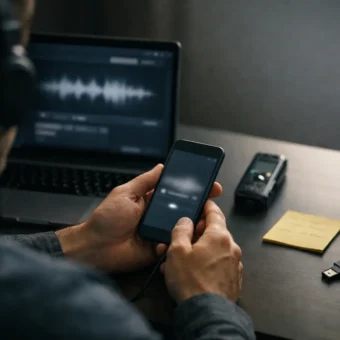
Proof usually comes from a bundle of evidence. Save the original file, the upload link, and any metadata you can keep. Note odd cadence, repeated phrasing, or editing seams. Detection and watermarking tools can help, but results vary, so careful evidence handling still matters.
What should you do if a platform refuses to remove impersonation audio?
Escalate inside the platform first. Use the right report category, add timestamps, and explain the harm and the lack of consent. Keep copies of reports and replies. If there are threats, money loss, or serious harm, consider reporting to authorities and seeking legal advice.
Can you copyright your voice?
Your voice as an identity trait usually isn’t treated as a copyrighted work. Copyright often protects recordings and other creative works, not the idea of a voice. That’s why many disputes use privacy, publicity, defamation, passing off, or fraud routes instead of copyright alone.
What safety features should a voice cloning tool have?
Look for consent checks, identity verification, and clear rules against impersonation. Watermarking or labeling options can add transparency. Audit logs, permission controls, and SSO matter for organisations. If a tool won’t explain how it handles consent and misuse, treat that as a red flag.
This article is general information, not legal advice. It doesn’t create a lawyer-client relationship. Laws can change, and details matter, so consider getting advice from a qualified lawyer for your situation.





[…] is the legal right that controls copying, sharing, and certain re-uses of creative works. A copyright infringement claim says someone used […]