




Foldable Phones in 2026: Are They Finally Worth Buying? (Honest Review)
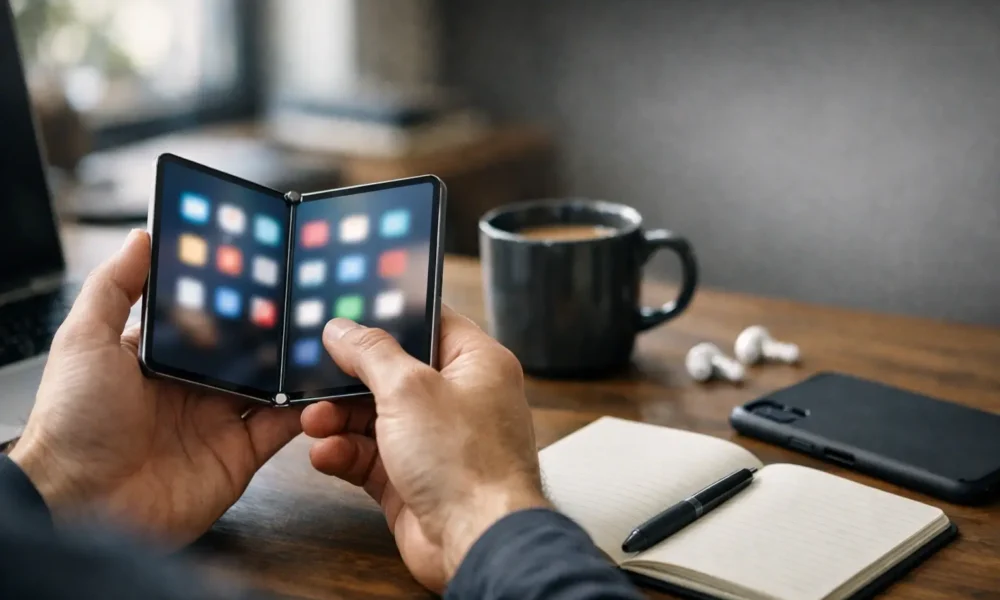
Foldable phones are back in your feed again.
New models. New claims. New “must-buys”.
If you feel lost, you’re not alone.
Tech moves fast, advice gets messy, and some takes are more hype than help.
So here’s my promise.
I’ll keep this simple, practical, and fact-led, so you can buy with confidence, or walk away with zero regret.
What Is a Foldable Phone?
A foldable phone is a smartphone with a screen that bends on a hinge, so it can fold shut and open up bigger.
In 2026, there are two main types: book-style (phone + tablet) and flip-style (compact clamshell).
The 30-Second Verdict
Foldables make sense in 2026 for a specific kind of buyer.
They’re also still a bad deal for others.
Here’s the clean split.
Buy in 2026 if you want…
You want a bigger screen, but you hate carrying a tablet.
You read a lot, work on the go, or love split screen multitasking.
You also don’t mind paying more.
And you’re fine with buying insurance or an extended warranty, because repairs can cost a lot.
Skip in 2026 if you need…
You want the best camera for the money.
You want the lightest phone, the easiest repairs, and zero stress about dust.
You also hate babying tech.
If a “sand in pocket” story would ruin your week, a foldable still isn’t your friend.
What’s Actually Better in 2026
Some changes this year are real.
Some are just nicer wording on the same old limits.
Durability milestones: IP ratings finally matter
Most modern foldables still land on IP48.
That means water immersion is covered, but dust protection isn’t complete.
The big headline is IP68.
The Google Pixel 10 Pro Fold is called out as the first foldable to offer full water and dust resistance, which is a big deal for long-term hinge and inner-screen survival.
What that means in real life:
Less fear of a gritty pocket, a beach trip, or a dusty bag.
Battery improvements: silicon-carbon changes the math
Battery life is improving, but not by magic.
A big part of it is bigger cells in slim bodies, helped by silicon-carbon battery tech in some models.
Example: Tech Advisor notes the Honor Magic V5 pushing a large battery in a slim foldable, with strong endurance in testing language.
And some makers are pairing that with very large capacities, like the Oppo Find N5 listing a 5600mAh battery.
Here’s the catch.
Big inner screens drain fast when you live on them.
Charging and magnets: Qi2 starts to show up
Wireless charging is also getting more useful.
The Pixel 10 Pro Fold supports Qi2 and has built-in magnets for accessories.
That matters day to day.
A magnetic car mount that actually stays put feels small until you’ve had it.
Fold vs Flip: Which Form Factor Fits Your Life?
If you want a phone that can become a mini tablet, pick a book-style fold.
If you want a phone that becomes smaller in your pocket, pick a flip.
Book-style wins for split screen work and reading.
Flip wins for quick messages, compact carry, and “open only when needed.”
Fold (book-style): best for work and multitasking
This is the “phone + tablet” idea.
You use the cover screen like normal, then open the inner display when you need space.
Where it shines:
Email + calendar side by side.
Maps on one side, messages on the other.
Spreadsheets that don’t feel like punishment.
Look for these features:
A wide cover screen (so typing feels normal).
Good multitasking tools like split screen, app pairs, and floating windows.
Flip (clamshell): best for pocket life
Flip phones fold down smaller.
They’re great if you want a full-size phone that fits better in tight pockets.
The cover screen matters a lot here.
A bigger, end-to-end cover screen means you can do more without opening the phone, like replying to messages or checking directions.
The “novelty wears off” reality check
Flip phones feel fun at first.
Then real life hits.
If the cover screen can’t run the apps you use smoothly, you’ll open the phone anyway.
Even with improvements, running full apps on the cover screen can still be hard.
The Real Tradeoffs
This is the part that saves you money.
Because foldables still ask you to give up a few things.
Cameras: why foldables can lag
Foldables can take great photos.
But they often trail the very best slab flagships at the same price.
Review coverage points out camera limits even on top picks, including the Pixel 10 Pro Fold falling short of other “10 Pro” models, especially in low light.
If you’re camera-first, here’s the rule I use:
If you often shoot kids, pets, or night scenes, don’t pay foldable prices for “almost”.
Battery and charging: the inner screen tax
A bigger inner display burns power.
So “all day” often depends on how much you use that big screen.
Some reviews are blunt here: the Pixel 10 Pro Fold can last all day with light inner-screen use, but heavy inner-screen use can put battery in the red by bedtime.
Charging can also feel slow for the price.
So don’t buy based on a single “mAh” number.
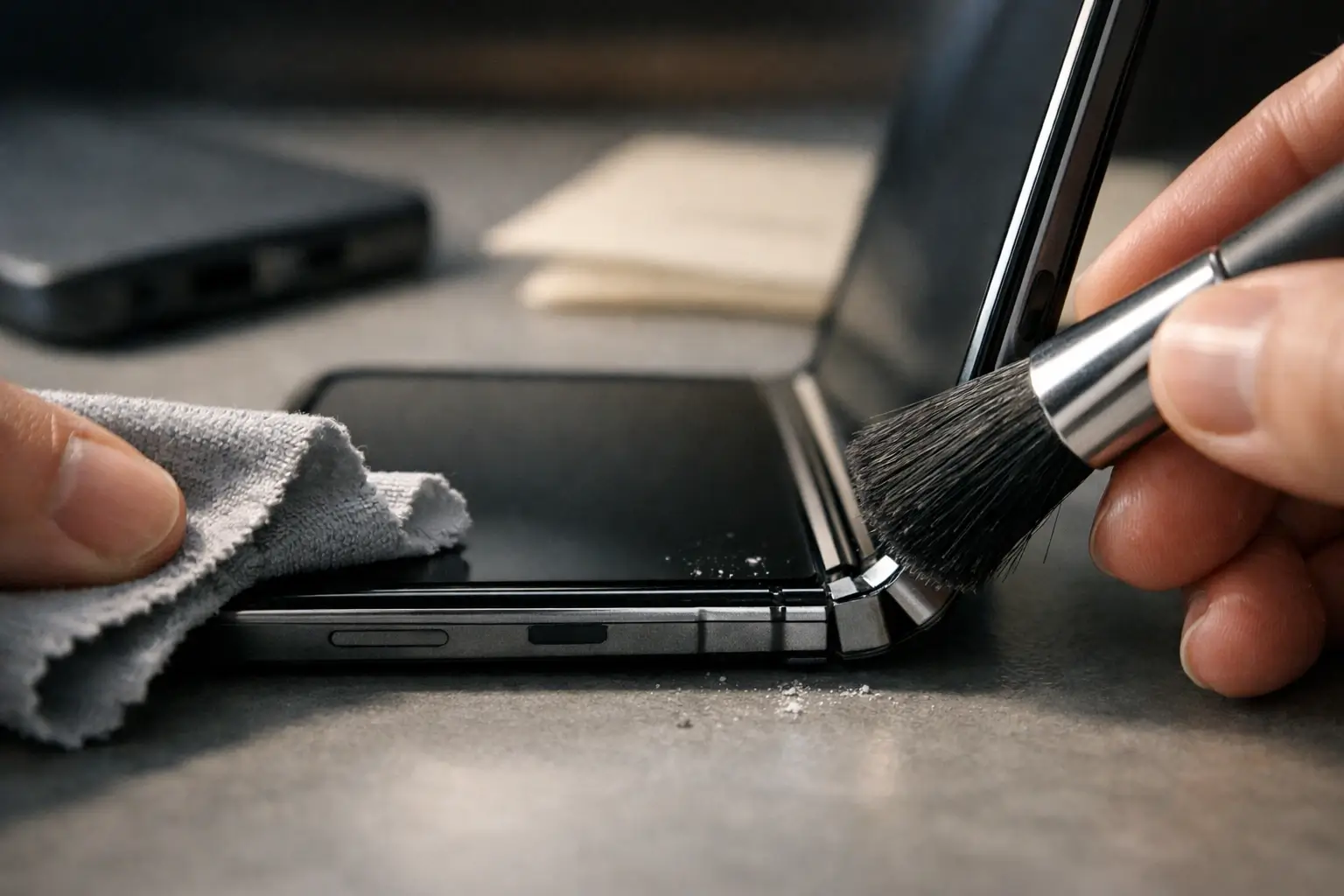
Durability: hinge, crease, and dust
The hinge is a moving part.
Dust is the quiet enemy.
Most foldables still sit at IP48, which covers water immersion and solid bits 1mm or larger, but not full dust protection.
That’s why IP68 is such a big step when you can get it.
Also, the inner display is softer than normal glass.
That’s why you’ll hear about fingernail dents, scratch risk, and why the factory screen protector matters.
Best Foldable Phones to Consider in 2026
This is the “quick list” part people expect.
I’m keeping it tight, with clear watch-outs.
Best durability-focused book-style: Pixel 10 Pro Fold
Best for: people who fear dust and beach days
- Why it wins: IP68, Qi2 with built-in magnets, strong overall balance
- Watch-outs: heavy feel, cameras behind the top slab phones, battery drops faster with heavy inner-screen use
- Who it’s for: you want a big inner screen, but you also want peace of mind
Best book-style “feels like a normal phone”: Galaxy Z Fold 7
Best for: people who want slim carry plus a big screen
- Why it wins: Samsung lists a slim folded thickness (8.9mm) and a large 8-inch class inner display
- Watch-outs: battery capacity is still in the foldable norm range (Samsung lists 4,400mAh), so heavy inner-screen days can still bite
- Who it’s for: you want the foldable shape, but you still care about pocket feel
Best flip-style: Galaxy Z Flip 7
Best for: compact carry and quick replies
- Why it wins: bigger 4.1-inch cover screen, strong everyday use, good battery for a flip
- Watch-outs: IP48 means dust is still a worry, and full apps on the cover screen can still be fiddly
- Who it’s for: you want a smaller pocket footprint, not a mini tablet
Best flip design and battery: Motorola Razr 60 Ultra
Best for: heavy flip users who want long battery life
- Why it wins: Tech Advisor calls out strong battery life and a Snapdragon 8 Elite chipset
- Watch-outs: shorter update window than Samsung in Tech Advisor’s wording
- Who it’s for: you love flip life, and you’re on your phone a lot
Best slim fold with big battery focus: Honor Magic V5 (and friends)
Best for: people who want thin carry without tiny battery
- Why it wins: Tech Advisor highlights a very slim build and strong battery results in testing language
- Watch-outs: software taste is personal, and some skins aren’t for everyone
- Who it’s for: you want a book-style fold without the “brick in pocket” vibe
UK Buying Advice
UK prices can swing a lot.
So I’d rather you buy smart than buy fast.
When to buy
Launch season is the worst time for price.
The best time is usually after the first wave of deals, when trade-ins get aggressive.
If you can wait, do.
If your current phone is dying, focus on total cost, not sticker price.
Trade-in vs unlocked vs refurb
Trade-in deals can be real value, but only if the maths works.
Unlocked is safer if you hate long contracts.
Refurb can be the sweet spot, especially for last-gen foldables, as long as the condition checks out.
A simple rule:
If the discount isn’t big enough to cover “repair fear”, don’t do it.
Must-check list before you buy
This is where people get burned.
So I keep it basic.
- Check the hinge: smooth movement, no crunch, no uneven resistance
- Check the crease: it’s normal to see it, but it shouldn’t look damaged
- Check the inner screen protector: it should be clean and firmly attached
- Check the IP rating: IP48 vs IP68 changes real-life stress levels
- Check update support: aim for strong OS and security update promises
Should You Wait for the Next Wave (Tri-folds + iPhone Fold)?
If you want the safest buy, wait only if you’re happy on your current phone for another year.
Tri-folds cost a lot and suit a small crowd.
A foldable iPhone could pull more people in, but first-gen hardware often comes with first-gen quirks and high prices.
Tri-folds: who they’re for
Tri-folds are real now, not just a concept.
Samsung says the Galaxy Z TriFold launches in the US on January 30, 2026, with a 10-inch display and a starting price of $2,899.
That price tells you everything.
This is for people who truly need a pocketable big screen and don’t blink at cost.
For most buyers, it’s a “watch and wait” device.
Not a sensible first foldable.
iPhone Fold expectations
The “should I wait for Apple?” question isn’t silly anymore.
A Reuters report on January 30, 2026 says Apple plans to launch a foldable iPhone in 2026, with a clamshell model also expected in 2027.
If you live in Apple’s world, that matters.
App polish and accessory support can change how safe a new category feels.
My buy-now vs wait rule
Buy now if your phone is failing and you know which form factor fits.
Wait if you’re mostly curious and you’d feel bad if prices drop hard.
Curiosity is expensive in foldables.
Needs-based buying saves you money.
Final Verdict: Are Foldables Worth It in 2026?
Yes, foldable phones are worth buying in 2026 if you’ll use the bigger screen or the compact fold every day, and you accept higher price plus repair risk.
If you mainly want the best camera and battery for the money, a normal flagship phone still makes more sense.
Here are three buyer types I see most.
1) The power user multitasker
You live in email, calendar, docs, and split screen.
A book-style fold can feel like a real upgrade.
Pick durability-first if you’re rough on tech.
That’s why IP68 on a foldable matters so much.
2) The pocket-first person
You want smaller carry, not a bigger screen.
Flip phones can fit your life better than any slab phone.
But be honest about the cover screen.
If you won’t use it, you’re paying for a party trick.
3) The camera-first, stress-free buyer
If you want zero worry, foldables still aren’t perfect.
Dust, repairs, and cost can turn “cool” into “regret”.
If that sounds like you, skip.
Buy a strong slab flagship and enjoy your weekends.
If you want one simple next step
Pick your form factor first.
Then pick your risk level.
If you tell me your budget in GBP, your phone brand today, and whether you want fold or flip, I’ll narrow it to 2-3 safest picks for a UK buyer.
FAQs
Are foldable phones worth buying in 2026?
For the right person, yes.
If you’ll use the inner screen for reading, split screen work, or travel, foldables finally feel less fragile.
If you mainly want the best camera, best value, and least hassle, a normal flagship phone is still the safer buy.
How long do foldable phones last?
Most foldables are built for years of normal use, but they still rely on moving parts and softer inner screens.
Longevity depends on dust exposure, how you treat the hinge, and whether you replace worn screen protectors on time.
Strong warranty support matters more here than with slab phones.
Do foldable screens crease over time?
Yes, a crease is normal and you’ll usually see it from certain angles.
It can become more noticeable with heavy use, but the crease alone isn’t “damage.”
What matters is whether the screen shows bubbling, lifting protector edges, or touch issues, which are real warning signs.
Are foldables more likely to break than normal phones?
They’re still riskier than slab phones because the hinge and inner display add failure points.
Dust is a bigger threat, and inner screens are easier to mark.
The good news is durability is improving, with IP ratings and better build quality helping.
Still, expect higher repair stress.
What does IP48 mean on a foldable phone?
IP48 usually means the phone can handle water immersion, and it blocks solid particles 1mm or bigger.
It’s not full dust protection.
Fine grit can still cause trouble over time, especially around hinges.
That’s why IP48 is better than nothing, but not a “carefree” rating.
Is there any foldable phone with full dust resistance (IP68)?
Yes.
Review coverage in early 2026 calls out Google’s Pixel 10 Pro Fold as IP68, and notes it as the first foldable to offer full water and dust resistance.
That matters if you keep phones for years or you’re often around sand, lint, and dusty pockets.
Fold vs flip: which is better for everyday use?
Fold is better if you want a bigger screen for work, reading, and split screen apps.
Flip is better if you want compact carry and you mostly do quick tasks.
If you never use the big inner screen, a fold is wasted money.
If you hate opening your phone, avoid flip.
Are foldables good for work and multitasking, or is it a gimmick?
They’re useful when your apps support split screen well and you actually do multi-app tasks, like email plus calendar or docs plus chat.
If you only scroll social apps, the extra screen won’t change much.
A fold helps most when you treat it like a mini tablet, not a toy.
Do foldables have worse cameras than flagship slab phones?
Often, yes.
Many foldables take great photos, but they can trail the very best slab flagships at the same price.
Review notes in 2026 point out compromises, like low-light limits on some top foldables.
If photography is your main reason to upgrade, check real samples first.
How much should you spend on a foldable phone?
Set a budget that includes protection.
That means a case plus either insurance or an extended warranty, because repairs can be costly.
If the phone price already feels painful, don’t stretch for a foldable.
You’ll enjoy it less.
Look for deals only if they’re big enough to ease repair fear.
Is it smarter to buy last year’s foldable?
Often, yes.
Last-gen foldables can be the best value if the discount is real and the model still has strong update support.
The tradeoff is missing newer durability upgrades, like better dust handling or stronger IP ratings.
If you’re risk-averse, paying more for a tougher new model can be worth it.
Should You Wait for tri-fold phones to get cheaper?
If price matters, yes.
Tri-folds are premium devices with very high launch prices, so early buyers pay the most.
Samsung’s own US launch info lists a $2,899 starting price, which puts it in “specialist” territory.
Most people should wait for second-gen hardware and lower prices.
Should I wait for the iPhone Fold?
If you’re deep in Apple’s ecosystem and you keep phones for years, waiting can make sense.
Reuters reported on January 30, 2026 that Apple plans a foldable iPhone in 2026.
First-gen hardware can still bring first-gen issues, so waiting doesn’t remove risk, it shifts it.
Do you need phone insurance for a foldable?
It’s strongly recommended.
Foldables cost more, repairs can be pricey, and not every local shop can fix them.
A warranty or insurance plan lowers the “what if my inner screen fails” stress.
If you can’t afford coverage, you should question buying the phone at all.
What are the best accessories for foldables (cases, magnetic gear)?
Start with a case that protects hinge edges and corners.
Add a car mount you trust.
If your foldable supports Qi2 and built-in magnets, magnetic chargers and mounts become much more reliable.
Some new foldables include Qi2 support and magnets, which makes daily charging and mounting simpler.








[…] “everything we know” guide to the iPhone Fold. It’s a foldable iPhone (also called an Apple foldable phone) that’s widely expected to land in fall 2026, with a headline iPhone Fold price rumour around […]