




From Brandos to Granny Pods: The Complete Guide to Non-Traditional Housing in 2026 (UK)
You can do everything “right” in UK property and still feel lost. Rules change. Costs hide in the small print. Timelines stretch when one form or one check gets missed.
Then someone throws in a curveball.
A house looks like normal bricks and mortar, but the lender asks: what is the construction type? Or you want a garden annexe, and suddenly you’re knee-deep in permitted development, Class E, and “incidental use”.
This guide keeps it simple.
I’ll explain what non-traditional housing means in the UK, what can go wrong, what checks to run, and how newer options like MMC, barndominiums, and granny pods fit into 2026.
What “Non-Traditional Housing” Means (and why people get confused)
People use the same phrase for two different things. That’s why buyers, sellers, investors, landlords, and business owners talk past each other.
One meaning is about how a house is built. The other is about how people choose to live.
Meaning #1 (UK property): Non-traditional / non-standard construction
In the UK, a non-traditional house usually means non-traditional construction. It’s also called non-standard construction or a system build.
It’s the opposite of traditional construction, like a brick and block cavity wall home. Think “bricks and mortar” in the way most people picture it.
Meaning #2 (2026 trend): Alternative housing formats + MMC
In 2026, “non-traditional housing” also points to formats people want right now.
That includes Modern Methods of Construction (MMC), off-site builds, modular homes, and panelised systems. It also includes lifestyle choices people talk about online.
Things like a barndominium (a “barndo” or “shouse”), tiny homes, container homes, and a granny pod or ADU.
The UK backstory: Why non-traditional houses exist
This part starts after the war.
The UK faced a housing shortage and needed homes fast. So the country built at speed.
That era includes post-war housing, big council house building programme waves, and many prefabricated buildings.
Some systems worked well for decades. Others aged badly, especially where materials and detailing couldn’t cope with British weather.
That’s why these homes still matter in 2026. They’re not rare, and they’re not always “bad”, but they do need smarter checks.
The 4 main construction families (with a simple ID guide)
You don’t need x-ray vision. You need a calm method.
Start with the big four families. Then match clues like frames, panels, and cladding.
Quick reference table
Family Frame Typical outer finish Common issues to watch What a survey checks Mortgage notes
- Timber frame
- Frame: Timber
- Typical outer finish: render, vertical tiling, brick slips
- Common issues to watch: moisture penetration, cold bridging, condensation
- What a survey checks: hidden frame condition, damp routes, junctions
- Mortgage notes: usually fine if built to accepted standards
- Metal / steel frame
- Frame: steel frame / metal frame
- Typical outer finish: panel cladding, render, overcladding
- Common issues to watch: corrosion, rusting, hidden frame risk
- What a survey checks: steel reinforcement corrosion, fixings, movement
- Mortgage notes: lender rules vary by type
- In-situ concrete
- Frame: poured concrete
- Typical outer finish: render, panels, brick slips
- Common issues to watch: cracking, carbonation, chlorides
- What a survey checks: cracking patterns, spalling, wall ties
- Mortgage notes: some types are easier to lend on
- PRC panels
- Frame: precast reinforced concrete (PRC)
- Typical outer finish: concrete panels, cladding
- Common issues to watch: chloride attack, freeze-thaw, spalling
- What a survey checks: panel joints, reinforcement condition
- Mortgage notes: may need PRC Certificate or repair proof
Now add the names you’ll actually see in the UK.
Common examples include Wimpey No-Fines (a no-fines concrete system) and BISF homes (British Iron and Steel Federation) with a steel frame.
You may also hear names like Airey, Cornish Unit, and Reema. And then the list gets long: Orlit, Wates, Tarran, Reema Conclad, Unity & Butterly, Parkinson, Thorncliffe, Stonecret, and Wessex.
Here’s the part people miss.
A house can look “normal” because of overcladding, render, brick slips, or vertical tiling hiding what’s underneath.
What can go wrong (defects and durability in plain English)
Some issues shout. Others whisper.
A crack can be nothing, or it can be the first breadcrumb. That’s why “it looks fine” isn’t a check.
Concrete problems
Concrete can suffer chemical and moisture-driven damage over time. You’ll hear terms like carbonation, chlorides, and chloride attack.
Those can lead to cracking and spalling (bits breaking away). Add freeze-thaw cycles and moisture penetration, and the surface can fail faster.
Steel problems
Steel can corrode when moisture gets in. That shows up as corrosion, rusting, and sometimes steel reinforcement corrosion inside concrete.
The tricky part is access.
A survey may need “opening up the structure” in targeted spots to confirm what’s happening.
Moisture and energy performance
Old systems often struggle with heat loss. That can mean cold bridging, then condensation, then mould growth.
It’s not just comfort. It affects thermal performance, running costs, and resale questions.
Asbestos-containing materials
Some older systems used asbestos products. That can include asbestos-cement cladding and asbestos roof sheets.
It doesn’t always mean danger on day one. It does mean you must treat repairs and alterations with care, and get proper advice before disturbing materials.
Hidden issues and indirect signs
Non-traditional homes can hide problems behind layers.
Surveyors look for indirect signs like staining, patch repairs, odd junction details, and repeating hairline cracks. That’s what people mean by hidden issues.
The house tells a story, but you need someone who speaks the language.
Mortgage, insurance, and resale in 2026 (what you need before you offer)
This is where many buyers get stuck.
A home can be a bargain, then become “cash buyers only” overnight.
Lenders care about risk and resale. So mortgage lenders can refuse certain types, or change their rules over time due to lending criteria changes.
That’s why the word mortgageable matters.
It’s not about your income alone. It’s about the building.
Insurance can also get picky. Expect insurance concerns, tighter valuation notes, and questions about resale value.
The paperwork that often matters most
Ask early for proof, not promises. This is where many deals slow down.
Confirm the construction type identification. Ask: “What is the construction type on the lender’s form?”
Check for approved repair schemes and certification pathways if a system has known issues. For PRC homes, certification can be a big deal.
The Concrete Society notes that some houses linked to past government assistance were covered by a PRC Certificate, and that information is now held by NHBC records.
You might also hear “designated defective” or defective types. That label can affect lending, even after repairs, unless documentation is clear.
Surveys and due diligence (how to avoid expensive surprises)
A basic survey can miss the point. Non-traditional homes often need a deeper look.
Start with the right professional.
A RICS surveyor or chartered surveyor who knows system builds can spot risks faster.
Which survey is which?
A building survey suits older or altered properties.
A structural survey or structural engineer input can help where you suspect movement, cracking, or frame issues.
The goal is simple.
You want the surveyor to confirm the build type, flag defect risks, and guide lender-friendly evidence.
Refurbishment and retrofit options (warmth, structure, longevity)
Many non-traditional homes can be upgraded. But “just add insulation” can be the wrong move.
Thermal upgrade basics
A retrofit often starts with a thermal upgrade plan. That means improving heat retention while staying within current regulations.
You’ll hear a lot about external wall insulation (EWI). It can help comfort and bills.
When standard EWI doesn’t work
Some walls can’t take a standard system without checks. That’s where structural EWI and substrate suitability come in.
If the surface can’t hold fixings, the system can fail.
So the order matters: identify the structure, check condition, then choose the method.
Common refurbishment challenges
Layers can hide layers.
A home may have old cladding, new cladding, and a mystery gap between them.
That’s why the first job is still identification. Once you know the bones, a refurbishment programme becomes a plan, not a guess.
The 2026 expansion: Modern non-traditional housing options
This is where the topic gets fun, but it still needs rules.
New formats can save time, add space, or cut waste. They can also trigger planning and building control steps.
So treat them like property, not like a garden gadget.
MMC: Today’s system building, done with modern controls
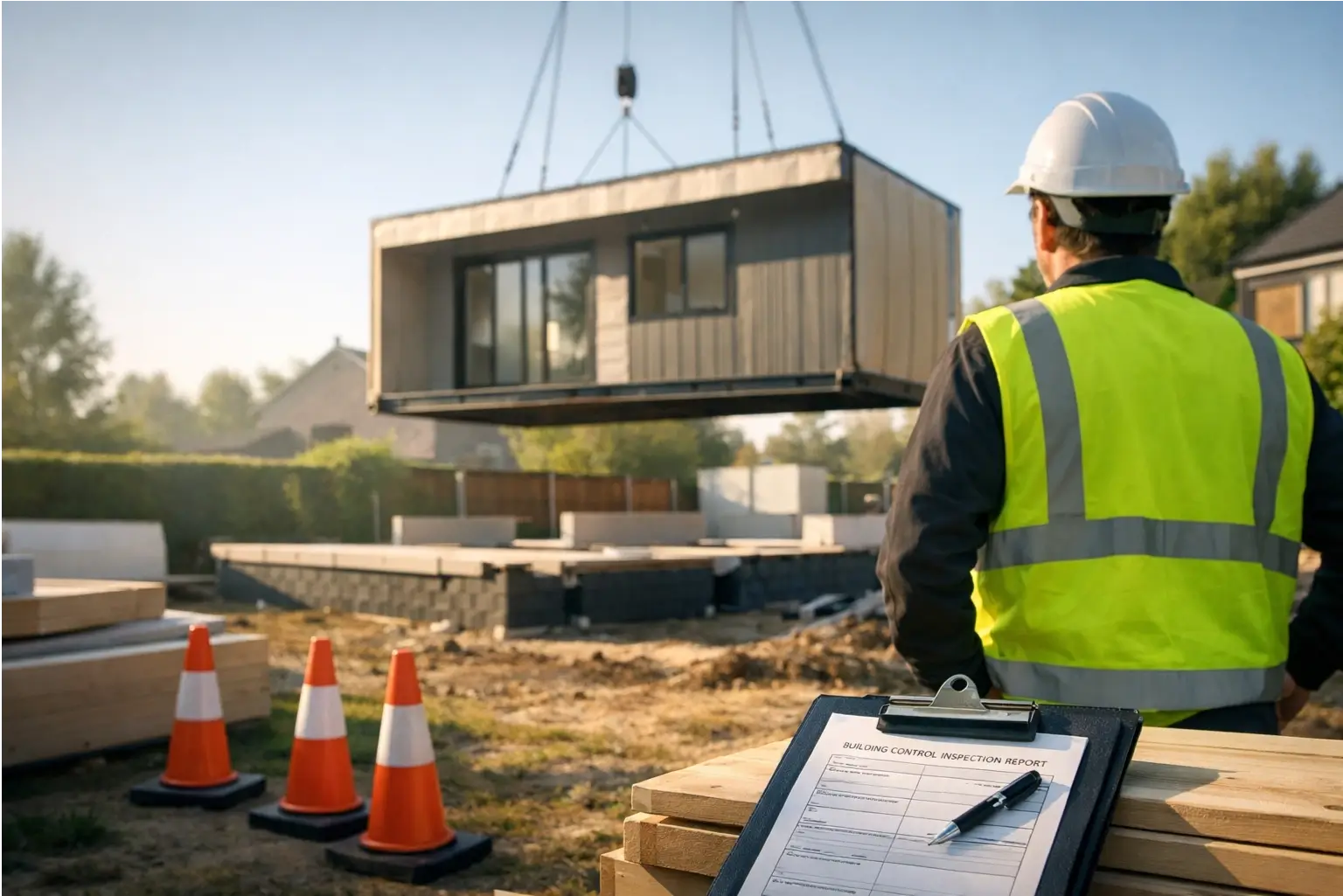
Modern Methods of Construction (MMC) is a wide umbrella. It covers methods that shift work off-site, improve consistency, and speed up parts of the build.
Two terms matter most for real people:
- modular: whole units made in a factory, then assembled on site
- panelised: walls and floors made as panels, then put together on site
MMC still needs good design and good inspection. It’s not “risk-free”. It’s just a different set of checks.
Barndominiums (barndos) and “shouses”
A barndominium started as a barn-style building with living space. People shorten it to barndo, and a shouse blends shop and house.
In the UK, the big issue isn’t the nickname. It’s use class, location rules, services, and build standards.
If you’re converting an agricultural building, expect planning questions. If you’re building new, expect design, access, drainage, and neighbour impacts to matter.
Granny pods, ADUs, and garden annexes
A granny pod or ADU is usually a small living unit for family on the same plot. In UK terms, you’ll hear garden annexe or a backyard cottage.
Here’s the hard line in England: outbuildings can be permitted development, but they come with limits and conditions.
Planning Portal guidance also notes that a permitted development outbuilding must not be separate, self-contained living accommodation.
So what’s the practical takeaway?
A garden room for a gym or office often fits Class E “incidental use”. A self-contained annexe can push you into planning permission territory.
If you need certainty, consider a lawful development certificate.
Planning Portal explains that an LDC can confirm a proposal is lawful, even when permission isn’t required.
Also note the UK map.
Planning rules differ across England, Wales, Scotland, and Northern Ireland, so always check your local authority’s guidance.
Quick “Should I buy it?” decision guide
This is the one-screen mindset. It’s how you stop a “cheap house” from turning into an expensive lesson.
Green flags
- Construction type is clear in writing
- Specialist survey booked early
- Repair evidence is complete and readable
- Lender and insurer both say yes in principle
Amber flags
- Overcladding hides the original system
- Valuation says “non-standard construction” without detail
- Signs of condensation or mould growth
- Seller can’t show repair certificates
Red flags
- Surveyor can’t confirm the system build type
- Lender refuses, and broker can’t place it
- Cracking plus spalling plus damp signs together
- Asbestos risk is likely, and nobody has records
If you’re selling, the same list still helps. A tidy paperwork pack can protect your timeline and your price.
FAQs
What is a non-traditional house in the UK?
A non-traditional house in the UK is a home that isn’t built with standard brick and block cavity wall construction. It may use non-traditional construction methods like steel frame systems, in-situ concrete, or precast reinforced concrete (PRC) panels. The label can affect surveys, mortgages, and insurance.
Many are perfectly liveable. The key is proving the construction type early.
What’s the difference between non-traditional and non-standard construction?
Non-traditional and non-standard construction usually mean the same thing in UK property talk. Both describe homes built using system build methods rather than traditional construction like bricks and mortar cavity walls. The exact system matters because some types have known defects and tighter lender rules.
If someone uses both terms, ask for the system name. That’s where the real answer sits.
Are non-traditional houses mortgageable?
Some non-traditional houses are mortgageable, and some aren’t, depending on the system type, condition, and repair evidence. Mortgage lenders assess resale risk and durability. A clear construction type, a specialist survey, and proof of approved repair schemes can improve your chances of getting a loan.
Treat the lender like a second buyer. They want proof, not reassurance.
Why do some mortgage lenders refuse non-traditional properties?
Some mortgage lenders refuse non-traditional properties because certain systems have known durability risks, uncertain repair history, or poor resale demand. Lenders also change criteria over time, so a type that passed before may fail later. Valuation notes and insurance concerns can also trigger a “no”.
A broker can help, but documents matter more. Get facts before you spend on searches.
How can I tell if a house is non-traditional if it looks “normal”?
A house can look like traditional bricks and mortar but still be non-traditional underneath. Overcladding, render, brick slips, or vertical tiling can hide concrete panels or a steel frame. Indirect signs like unusual window reveals, repeating crack lines, or odd wall thickness can hint at system build construction.
If you suspect it, ask for the construction type in writing. Then book the right survey.
What are the most common UK types (Airey, Cornish Unit, Reema, Wimpey No-Fines, BISF)?
Common UK non-traditional types include Airey, Cornish Unit, Reema, and other PRC panel systems, plus Wimpey No-Fines concrete houses and BISF steel frame homes. You may also come across Orlit, Wates, Tarran, Reema Conclad, Unity & Butterly, Parkinson, Thorncliffe, Stonecrest, and Wessex systems.
Names vary by area. Surveyors use them like fingerprints.
What does “PRC” mean, and what is a PRC Certificate?
PRC means precast reinforced concrete, where concrete panels form key parts of the structure. Some PRC house types were linked to government assistance and had certification to show repair and status. The Concrete Society notes these were covered by a PRC Certificate and that information is held by NHBC for property checks.
If a seller claims “it’s been repaired”, ask for the paperwork. A verbal history won’t satisfy lenders.
Where do I check non-traditional house records (NHBC or repair history)?
For some historic non-traditional and PRC-related properties, repair and certification information may be held by NHBC. The Concrete Society points buyers towards NHBC as a place to request information on a particular property, especially where past assistance or PRC certification applied.
Also ask the seller for guarantees and scheme documents. Cross-check dates and addresses.
What defects are most common (corrosion, carbonation, chlorides, spalling)?
Common defects in non-traditional homes include corrosion and rusting in steel, plus carbonation and chlorides in concrete that can lead to cracking and spalling. Freeze-thaw cycles and moisture penetration can speed up damage. Surveyors look for patterns, junction problems, and signs that repairs only covered symptoms.
One crack isn’t always a problem. A pattern of cracks can be.
Do non-traditional houses have asbestos, and is it always dangerous?
Some non-traditional houses used asbestos-containing materials like asbestos-cement cladding or asbestos roof sheets. It isn’t always dangerous if it’s intact and unmanaged, but disturbance during repairs can release fibres. That’s why you should get proper advice before drilling, cutting, or stripping older cladding or sheets.
Don’t panic-buy. Don’t panic-rip-out. Treat it as a managed risk.
What type of survey should I get for a non-traditional property?
A non-traditional property often needs more than a basic inspection because the key risks sit in the structure type and hidden details. A RICS surveyor or chartered surveyor who understands system build homes may recommend a building survey, plus structural input where cracking, movement, or frame issues are suspected.
Book the survey early. It protects your mortgage timeline.
Can you insulate or retrofit non-traditional homes effectively?
Many non-traditional homes can be insulated and upgraded, but the method must suit the structure. External wall insulation (EWI) can improve thermal performance, yet substrate suitability matters, especially where panels, fixings, or moisture routes are involved. A survey-first approach helps avoid trapping damp or stressing weak surfaces.
Warmth upgrades work best when they respect the bones. Guesswork can backfire.
What is MMC and how is it different from post-war system builds?
Modern Methods of Construction (MMC) is a broad term for building approaches that can include off-site manufacturing, modular units, and panelised systems. The government published a definition framework to help classify MMC. Unlike many post-war system builds, MMC today aims for better consistency, testing, and standard controls.
MMC still needs good design and inspection. The checks just look different.
What is a granny pod or garden annexe, and do I need planning permission?
A granny pod or garden annexe is a small unit added on a home’s plot, often to house family. In England, outbuildings can fall under permitted development, but limits apply. Planning Portal guidance notes permitted development outbuildings must not be separate, self-contained living accommodation, which can trigger planning needs.
Always check your local authority. Rules can vary by area and site.
What counts as “incidental” use for an outbuilding (Class E)?
Class E permitted development in England covers buildings within a home’s curtilage that are for a purpose “incidental” to enjoying the dwellinghouse. The law gives examples like keeping pets or bees for domestic enjoyment, which shows it’s about supporting the main home, not creating a separate home.
“Incidental” often fits a gym, office, or hobby room. A self-contained flat is a different question.
What is a barndominium (barndo) and how does it relate to non-traditional housing?
A barndominium is a barn-style building with living space, often shortened to barndo, and a shouse mixes a shop and house. It links to non-traditional housing because it sits outside typical bricks and mortar expectations. In the UK, the key issues are planning, services, build standards, and use.
The format doesn’t remove the paperwork. It just changes the checklist.







No Comment! Be the first one.