




Barndominiums: The 90,500 Monthly Searches and +50% Growth Explained (Are They Worth It?)
Here’s what I’m seeing. Buyers, landlords, and investors feel swamped by UK rules, hidden costs, and long timelines.
Table Of Content
- What Is a Barndominium?
- Barndo vs Barn Conversion vs “Shop House (Shouse)”
- Post-Frame, Pole Barn, Steel Frame, PEMB: What Those Mean
- Full Living Space vs Part Shop/Garage/Workspace
- Why Barndominiums Are Trending (and What the Growth Really Means)
- Hallmarks of a Great Barndominium Floor Plan
- The #1 Feature: Huge Garage/Workshop (and RV Bays)
- Wraparound Porches and Curb Appeal
- Open Concept Inside (Kitchen Islands, Vaulted Ceilings, Primary Suite, Spa Bath)
- Loft and Mezzanine Ideas (Office, Teen Hangout, Guest Zone)
- Barndominium Cost (Shell vs Finished)
- Typical Cost Per Square Foot (Ranges) and Why Estimates Conflict
- Kit and Shell Pricing Plus What’s NOT Included
- The Biggest Cost Drivers
- Interior Finishes Are Where Budgets Blow Up
- Financing and Appraisal: Can You Get a Mortgage?
- Why Lenders Hesitate (Non-Traditional Comps)
- How to Improve Approval Odds
- What Lenders Look At (Credit, DTI, Down Payment)
- Where You Can Build One (Zoning, Codes, and Land Reality)
- Limited Locations and the Rural Advantage
- Class Q and Barn Conversion Routes
- Utilities Checklist (Water, Electric, Septic, Propane, HVAC)
- Pros (Benefits That Actually Matter)
- Flexible Space for Real Life
- Shell Goes Up Fast
- Energy and Comfort Can Be Strong, With the Right Build
- Cons (and How to Reduce the Risk)
- Financing and Appraisal Headaches
- Noise in Rain and Wind
- Wiring and Retrofit Challenges in Metal Walls
- Rust and Corrosion
- Smaller Resale Pool
- Is a Barndominium Worth It? (Decision Guide)
- Best-Fit Buyers
- Not a Great Fit If…
- “Worth It” Checklist
- How to Build a Barndominium (Step-by-Step)
- Step 1: Pick the Route (New Build vs Conversion)
- Step 2: Talk to the Local Council Early
- Step 3: Lock the Plan and Layout
- Step 4: Price the Build in Layers
- Step 5: Sort the Finance Before the Digger Arrives
- Step 6: Build Shell, Then Services, Then Fit-Out
- Step 7: Keep Building Control in the Loop
- FAQ
- What is a barndominium (barndo)?
- Is it cheaper to build a barndominium than a house?
- How much does a barndominium cost per square foot?
- How much do barndominium kits cost, and what’s excluded?
- What’s the most expensive part of building a barndominium?
- Can you get a mortgage on a barndominium?
- Why is financing harder?
- Where can you build one in the UK?
- Are barndominiums noisy in rain or wind?
- Do barndominiums rust or corrode?
- Are barndominiums energy efficient?
- How long does a barndominium last?
- Are barndominiums hard to resell?
- What floor plan features are most common?
- What’s the difference between a barndominium and a barn house plan?
Then a shiny new idea pops up on TikTok, YouTube, or HGTV, and it sounds like an easy win.
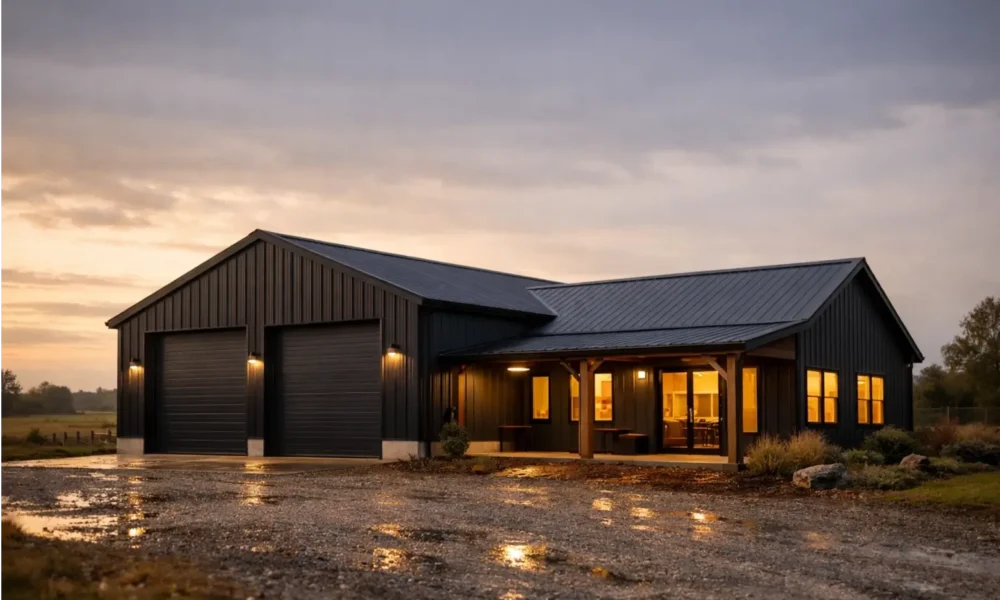
Barndominiums (barndos) sit right in that gap. They promise space, flexibility, and a workshop under the same roof.
But UK property rarely plays nice with shortcuts, especially once planning, Building Regulations, and finance show up.
One more thing. That “90,500 monthly searches” and “+50% growth” figure is usually from SEO tools, not an official count.
It still tells a simple story: loads of people want to know what a barndominium is, what it costs, and what can go wrong.
In the UK, the big twist is this. Outside the US, this idea often looks more like a converted barn, or a metal building home with a shop.
So the “worth it” question often becomes a planning-and-finance question first.
What Is a Barndominium?
A barndominium is a barn-style home, often a metal or post-frame building, with living space built into it. Some are full conversions of an old barn. Others are new builds that start as a metal shell and get finished inside. Many include a workshop, garage, or storage area.
People also call it a barndo. A close cousin is a shouse, short for “shop + house.”
The vibe is simple: one building, two jobs, and fewer wasted rooms.
Barndo vs Barn Conversion vs “Shop House (Shouse)”
A barn conversion is usually an older farm building turned into a home. A barndominium can be that, or it can be a new build made to look barn-like. A shouse leans harder into the workshop or garage side.
Post-Frame, Pole Barn, Steel Frame, PEMB: What Those Mean
This part sounds technical, but it’s not scary.
- Post-frame / pole barn: big posts do the heavy lifting, so the inside stays open.
- Steel frame / metal building: steel structure with metal siding, often built as a shell first.
- PEMB: a pre-engineered metal building, made from factory-designed parts.
You’ll also hear about truss systems and free-span trusses. That’s the reason barndos often have fewer load-bearing walls, plus high ceilings and vaulted ceilings.
Full Living Space vs Part Shop/Garage/Workspace
Most plans follow one of two paths:
- Full living conversion: the whole interior becomes living space.
- Part living, part work: home on one side, workshop or garage on the other.
This is why barndominium homes keep showing up in home-business talk. Studio. Storage. RV bay. Even horse stalls in some rural setups.

Why Barndominiums Are Trending (and What the Growth Really Means)
Pop culture gave barndos a megaphone. The word spread fast after TV exposure and social media clips.
Now people search it because they want a clear answer, not a fantasy.
The real driver is space. A normal UK house can feel like living in a well-decorated shoe box.
A barn-style home sells the idea of breathing room, plus somewhere to work or store kit.
I’ll say this plainly. In the UK, land and planning rules decide your options.
So “trending” doesn’t mean “easy.”
Hallmarks of a Great Barndominium Floor Plan
A good layout solves real-life problems. Noise. Privacy. Storage. Heating bills.
Bad layouts turn that big open space into a big open regret.
The #1 Feature: Huge Garage/Workshop (and RV Bays)
Most barndo plans lead with the same headline feature: a huge garage or workshop. Some designs add an RV bay for tall vehicles or vans.
This is why tradespeople love the idea. Tools stay out of the kitchen. And your business doesn’t spill into your living room.
Wraparound Porches and Curb Appeal
A metal shell can look stark. A wraparound porch softens it and gives you outdoor living space.
It also helps resale, because first impressions still matter.
Open Concept Inside (Kitchen Islands, Vaulted Ceilings, Primary Suite, Spa Bath)
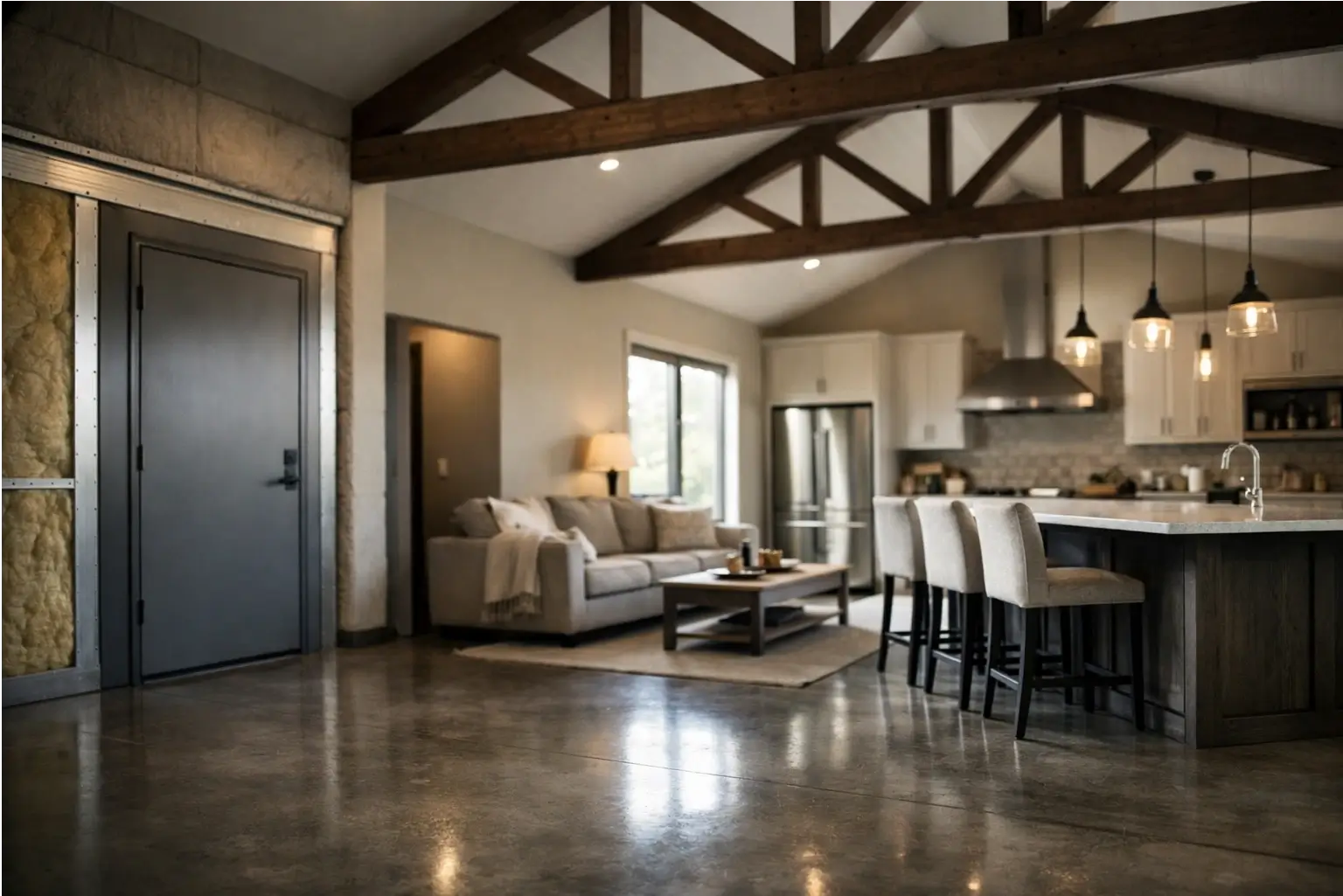
Most barndominiums lean into an open concept main area. Common add-ons include a kitchen island, vaulted ceilings, and a primary suite on the main level.
Some plans go big on a spa-like master bath to balance the “working building” feel.
Loft and Mezzanine Ideas (Office, Teen Hangout, Guest Zone)
A loft or mezzanine uses vertical space without adding a full second floor. It works well as a home office, guest zone, or teen hangout.
It also lets you keep the main living area open without losing quiet corners.
Optional style terms show up a lot: barn doors, gambrel roof, rustic exterior. Just remember: the UK planner cares more about fit and impact than Pinterest.
Barndominium Cost (Shell vs Finished)
Most online cost talk is US-based. Still, the shape of the budget is useful.
It shows where people lose control of the numbers.
Typical Cost Per Square Foot (Ranges) and Why Estimates Conflict
Many guides quote a broad build range. One common range is $62 to $136 per square foot, but it depends on size, materials, and finish level.
Another source puts typical costs around $65 to $160 per square foot.
These numbers clash for one main reason: Some quotes mean “shell only.” Others mean “move-in ready.”
Kit and Shell Pricing Plus What’s NOT Included
Kit pricing often gets pitched as the bargain. One estimate for kits is $50 to $100 per square foot, and it can exclude key items like insulation and interior work.
So the kit can be cheap, while the finished home isn’t.
The Biggest Cost Drivers
A few items swing the budget fast. Think square footage, porch additions, cupolas, garage doors, plus insulation and finishes.
Add a big workshop and tall doors, and costs climb.
Interior Finishes Are Where Budgets Blow Up
The shell feels like progress. Then the inside arrives with a long shopping list.
One guide flags interior fit-out as a major cost driver, with wide cost ranges once you pick finishes and fixtures.
Here’s a simple cost map you can use when getting quotes:
- Shell — steel frame, metal siding, roof (early)
- Foundation — slab, groundworks, drainage routes (early)
- MEP — mechanical, electrical, plumbing (mid)
- Insulation — spray foam or other systems (mid)
- Finishes — kitchen, bathrooms, floors, doors (late)
- Land + utilities — access, water, power, septic (varies)
That “MEP” line matters. It’s where many self-builds stall. It also affects lender confidence.
Financing and Appraisal: Can You Get a Mortgage?
You can sometimes get a mortgage on a barndominium, but lenders want proof it’s a normal home in legal terms.
The big snag is valuation. If local sale comparisons don’t exist, the surveyor may struggle.
Your odds improve with clear plans, proper approvals, and lenders used to non-standard builds.
Why Lenders Hesitate (Non-Traditional Comps)
Lenders like familiar property types. Barndos can sit outside that comfort zone.
If the valuer can’t find “like for like” comps, the risk feels higher.
How to Improve Approval Odds
Start with lender shopping. Guides often suggest speaking to multiple lenders, including those open to unusual builds.
In the UK, that can mean specialist brokers and lenders who deal with non-standard construction.
Bring evidence, not hope: Plans. Specs. A clear build cost breakdown. And proof you’ve dealt with planning and Building Control.
What Lenders Look At (Credit, DTI, Down Payment)
Lenders still check the basics. Credit score, income, debt-to-income, and down payment all matter.
If your numbers are tight, a quirky property can make the “yes” harder.
Where You Can Build One (Zoning, Codes, and Land Reality)
In the UK, this section decides everything. Because “buildable” is a legal idea, not a vibe.
Limited Locations and the Rural Advantage
Barndominium builds tend to work best in rural settings. That matches the UK reality too, because large metal buildings raise eyebrows in tight towns.
Neighbours notice. Planners notice. Surveyors notice.
Class Q and Barn Conversion Routes
If you’re thinking “I’ll convert an existing farm building,” you’ll hear about Class Q in England. It’s a permitted development route for changing certain agricultural buildings into homes, but it still needs prior approval and strict conditions.
Rules also differ across Scotland, Wales, and Northern Ireland, so you must check local guidance.
Prior approval checks can include transport impact, noise, contamination, flood risk, and whether the site works for housing.
Timeframes vary, but a common baseline is around 8 weeks for a decision.
Utilities Checklist (Water, Electric, Septic, Propane, HVAC)
Land can hide costs like a magician hides cards. You need answers on water, power, and waste early.
In rural areas, that often means septic planning, trenching, and longer lead times.
Pros (Benefits That Actually Matter)
Space is the headline. But the real benefits are practical.
Flexible Space for Real Life
A barndo can hold a workshop, studio, storage, or a home business setup.
That can help landlords building a rural holiday let. It can also help business owners who need storage without renting a separate unit.
Shell Goes Up Fast
Many builds start “outside-in.” That shell-first approach can move faster at the start than a traditional build.
Just don’t confuse “fast shell” with “fast finished home.”
Energy and Comfort Can Be Strong, With the Right Build
Some guides point to energy efficiency potential with the right insulation and windows.
In the UK climate, insulation and moisture control matter even more. Done badly, you get drafts and condensation risk in metal buildings.
Cons (and How to Reduce the Risk)
This is the part most hype skips. But it’s the part that protects your money.
Financing and Appraisal Headaches
Non-standard builds can be harder to value and finance. If you need an easy resale later, this matters.
Reduce it: keep the home side “normal.” Standard bedroom counts. Normal layout. Solid paperwork. And finishes that don’t scare off buyers.
Noise in Rain and Wind
Metal buildings can be noisy in heavy weather. That’s not a dealbreaker, but it’s real.
Reduce it: plan sound control early. Keep bedrooms away from the shop wall. Pick insulation and internal wall build-ups that help with sound.
Wiring and Retrofit Challenges in Metal Walls
Some guides flag wiring work as harder in metal structures. Repairs can also be less straightforward than timber stud walls.
Reduce it: get a contractor who’s done it before. Ask for photos of past metal building home projects. Don’t let this be their first attempt.
Rust and Corrosion
Metal can corrode if moisture control is poor. In damp UK areas, details matter.
Reduce it: focus on ventilation, vapour barriers, and proper insulation design. Also plan ongoing maintenance checks.
Smaller Resale Pool
Barndominiums can attract fewer buyers than standard homes. That can hit price and sale speed.
Reduce it: aim for broad appeal. Keep finishes calm. Keep kerb appeal strong. Treat the workshop as a bonus, not the whole point.
Is a Barndominium Worth It? (Decision Guide)
A barndominium can be worth it when you need flexible space, have a suitable rural site, and can handle non-standard finance and planning steps.
It’s less likely to suit you if you need a town location, quiet rooms, or a simple resale.
The win comes from fit, not hype.
Best-Fit Buyers
I see the best fit in a few groups:
- Tradespeople who need shop space
- Rural families who want more room
- Multi-vehicle owners who want a big garage
- Business owners who need storage
- Landlords building a rural stay with a twist
If that’s you, the barndo idea matches your life.
Not a Great Fit If…
Some needs clash with barndos.
- You need a city plot.
- You hate noise travel in open spaces.
- You want a safe, simple mortgage path and quick resale.
If any of those are true, a standard home may cost more upfront but save stress later.
“Worth It” Checklist
Use this as your quick filter.
- Do you have a site that planners can support?
- Do you have utilities sorted on paper, not guesses?
- Do you have a lender route, or cash buffer?
- Do you have a builder with relevant experience?
- Do you plan to stay long enough to ride out resale limits?
If you can’t tick at least four, pause. A pause is cheaper than a legal mess.
How to Build a Barndominium (Step-by-Step)
Step one is never “order the kit.” Step one is checking what you’re allowed to build.
Step 1: Pick the Route (New Build vs Conversion)
Conversion often means planning checks and Building Regulations upgrades. New build often means full planning permission plus design work.
Either way, get your route clear before you spend.
Step 2: Talk to the Local Council Early
In England, some barn conversions may fit Class Q rules, but they still need prior approval.
Prior approval looks at issues like noise, flood risk, and transport. In other UK nations, the rules differ, so check locally.
Step 3: Lock the Plan and Layout
Pick your key features now: workshop, garage, RV bay, wraparound porch, loft, kitchen island, primary suite.
Also place quiet rooms away from noisy zones.
Step 4: Price the Build in Layers
Split your budget into shell, foundation, MEP, insulation, finishes, and utilities.
This stops “nice-to-have” choices from eating “must-have” money. It also helps lenders understand the plan.
Step 5: Sort the Finance Before the Digger Arrives
Mortgage or self-build finance needs early work. Your lender will still check credit, income, DTI, and deposit.
A solid paper trail helps when the property type looks unusual.
Step 6: Build Shell, Then Services, Then Fit-Out
Many barndo builds go shell-first. Then come mechanical, electrical, and plumbing.
Then insulation, sound control, and finishes.
Step 7: Keep Building Control in the Loop
Building Regulations cover safety, structure, insulation, ventilation, and fire safety.
Paperwork matters at resale time too. A missing completion record can scare buyers and slow sales.
FAQ
What is a barndominium (barndo)?
A barndominium is a barn-like building with living space inside, often using metal or post-frame construction. Some are old barns turned into homes, and some are new builds made to look like barns.
Is it cheaper to build a barndominium than a house?
Sometimes, but only in certain setups. Shells and kits can look cheaper, but interior work can erase that gap fast.
How much does a barndominium cost per square foot?
Many guides quote wide ranges, like $62 to $136 per square foot, depending on finish level. Other sources place it roughly $65 to $160 per square foot.
How much do barndominium kits cost, and what’s excluded?
One estimate puts kits around $50 to $100 per square foot. Kits can exclude insulation and interior work, so always ask what’s included before you budget.
What’s the most expensive part of building a barndominium?
The inside often drives the final total. Finishes, kitchens, bathrooms, and systems add up once you go beyond the shell.
Can you get a mortgage on a barndominium?
It can be possible, but the lender must be happy with valuation and property standards. Clear approvals and solid documents help.
Why is financing harder?
Valuation can be tricky if there are no close sale comparisons. That can make lenders cautious, even if the build quality is strong.
Where can you build one in the UK?
It depends on planning rules and the site. Some barn conversions in England may fit Class Q rules with prior approval, but other areas and UK nations differ.
Are barndominiums noisy in rain or wind?
They can be, especially with metal exteriors. Sound control choices in insulation and layout matter a lot.
Do barndominiums rust or corrode?
Metal can corrode if moisture control is poor. Good insulation, ventilation, and correct detailing reduce that risk.
Are barndominiums energy efficient?
They can be, with strong insulation and good windows. Done poorly, they can suffer condensation and comfort issues, so design matters.
How long does a barndominium last?
Lifespan depends on build quality, weather exposure, and maintenance. A well-built structure can last decades, but metal needs checks for moisture and corrosion.
Are barndominiums hard to resell?
They can be, because the buyer pool is smaller than for standard homes. Neutral finishes and clear paperwork help protect resale appeal.
What floor plan features are most common?
Big shops and garages are top of the list, and RV bays show up in many plans. Wraparound porches, open layouts, and loft spaces are also common.
What’s the difference between a barndominium and a barn house plan?
“Barndominium” often points to a shop-plus-home setup, sometimes in metal. “Barn house plan” can also mean a normal house that borrows barn styling, with more traditional construction.








No Comment! Be the first one.