




Barbara Roufs: Life, Legacy, and the Racing World She Shaped
Search this name and the internet usually does what it does best. It throws half-facts, recycled trivia, and a lot of breathless noise at you. If you’re tired of that whole circus, I get it.
Table Of Content
- Who Was Barbara Roufs?
- Why Barbara Roufs Still Gets Searched Today
- Barbara Roufs and the 1970s Drag Racing Scene
- What Trophy Girls Represented in That Era
- Why Barbara Roufs Stood Out
- Career Highlights and Public Recognition
- The Private Side of Barbara Roufs
- The Tragic End of Barbara Roufs’ Story
- How Her Legacy Returned Through Vintage Photos
- What Barbara Roufs Represents in Motorsports Memory
- Final Thoughts on Barbara Roufs
- FAQs About Barbara Roufs
- Who was Barbara Roufs?
- Was Barbara Roufs a race car driver?
- Why was Barbara Roufs famous in drag racing?
- What happened to Barbara Roufs?
- Who is Jet Dougherty?
- What role did Barbara Roufs play in 1970s drag racing culture?
- Why are Barbara Roufs photos still shared online today?
Barbara Roufs deserves a calmer read. Not a gossip page. Not a scrapbook of vague claims. A real look at who she was, why her image still travels through drag racing history, and why people still stop scrolling when her photos appear.
That staying power matters. Readers often come in wanting a quick answer, but what they really seem to want is context without a lecture. They want to know why this woman from the 1970s still feels present in a sport built around speed, chrome, and split-second memory.
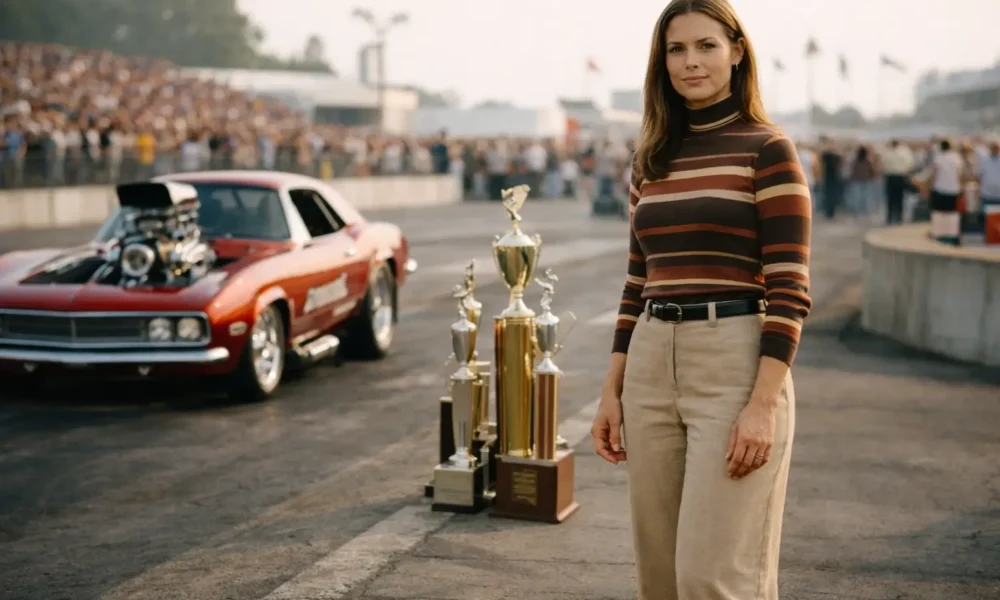
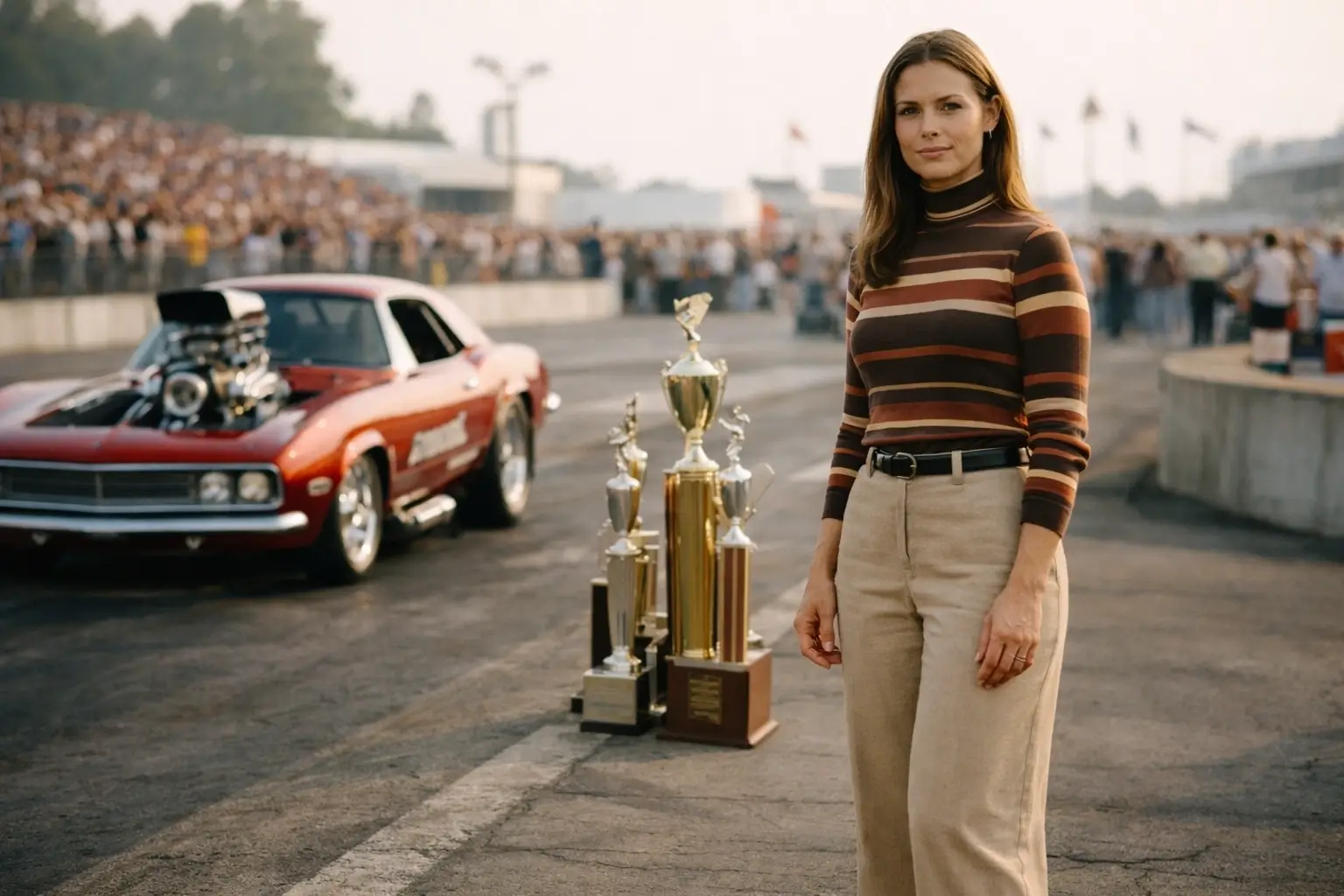
Barbara Roufs was not a driver. That point needs saying early, because a lot of pages blur it. She became known as a trophy girl, model, and drag racing queen linked to the Southern California racing scene of the early 1970s, especially around Orange County International Raceway and the Professional Dragster Association.
What makes her story stick is not just a title or a set of old photos. It’s the way she came to represent a whole slice of motorsport culture. A sport is never only about the people behind the wheel. Sometimes the faces around the track help shape what an era looks like when the engines go quiet.
Who Was Barbara Roufs?
Barbara Roufs was a 1970s drag racing trophy girl and model tied to the Southern California drag strip scene. She was not a race car driver. Her name lasted because her image became linked with the mood, style, and public face of that period in motorsport culture.
That’s the clean answer. The fuller one is more human.
Most accounts place her roots in California and connect her rise in public memory to the early 1970s drag racing world. In ranking pages and fan discussions, she appears again and again as a racing icon of that visual era, not because she competed, but because she stood at the center of the spectacle.
That distinction matters. A trophy girl in vintage drag racing was part host, part symbol, part public-facing image for the event. Think of it like movie posters before streaming took over everything. The stars matter, sure, but so does the image that tells people what kind of world they’re stepping into.
Barbara Roufs fit that world with unusual force. Her photos carried the energy of 1970s motorsports glamour without looking stiff or staged. Even now, they feel less like museum pieces and more like someone caught in the middle of a loud, sunlit Saturday.
Why Barbara Roufs Still Gets Searched Today
Barbara Roufs still gets searched because people keep finding her through vintage photos, drag racing nostalgia, and old track history. Some arrive with basic questions. Others are pulled in by the feeling that her image captures something larger than one person, one event, or one decade.
That pull is easy to understand. Old racing images have a strange kind of gravity.
A single photo can do a lot of work. It can stop you cold, make you wonder who someone was, and leave you slightly annoyed that half the internet keeps answering with fluff. Barbara Roufs sits right in that space. Her name turns up because the images are strong, but also because the story around them feels unfinished.
There’s also a modern habit at play here. People love archival material now. Vintage photos get reshared, clipped, reposted, and passed around with captions that often say less than they should. So readers go looking for more, hoping for a page that gives them the person, the setting, and the meaning without turning everything into cheap drama.
That’s where her legacy lives now. Not just in old race-day memory, but in the online rediscovery of motorsport history.
Barbara Roufs and the 1970s Drag Racing Scene
The 1970s drag racing scene was loud, visual, and deeply social. Southern California drag strips were not just places to watch cars launch down a track. They were stages for car culture, fashion, fan identity, and a full race-day spectacle that mixed speed with style.
That setting matters because Barbara Roufs makes the most sense inside it. Pull her out of that world and she can look like a random figure from a photo archive. Put her back at the strip, though, and the picture sharpens fast.
This was a period shaped by California car culture. Long hair, go-go boots, promotional models, polished cars, and packed stands all fed the same atmosphere. The sport sold motion, but it also sold a feeling. People came for the race and the mood around it.
That’s why she still matters in motorsport visual history. She helped define what race day looked like to the public eye.
What Trophy Girls Represented in That Era
Trophy girls in that era helped present drag racing as both sport and spectacle. They were public symbols tied to promotion, glamour, and fan culture. Their role sat beside the cars and drivers, shaping how the event looked, how it felt, and how people later remembered it.
That role can sound shallow if it’s reduced to one line. It wasn’t.
In 1970s motorsport culture, promotional figures were part of the event’s public language. They gave shape to the atmosphere. They helped connect competition to crowd energy, media images, and the larger style of the scene.
That does not mean the role was simple. Women in drag racing culture were often made highly visible but not always taken seriously beyond the frame. That tension is part of why Barbara Roufs still sparks interest. She stands at the crossroads of glamour, sport, memory, and how women were seen in public racing culture.
Why Barbara Roufs Stood Out
Barbara Roufs stood out because she looked like she belonged to the era without feeling generic inside it. Accounts often point to her confidence, warmth, long hair, go-go boots, and the fact that she appeared older and more self-possessed than many of the younger women around her.
That last detail matters more than it first appears. According to the brief, her maturity at age twenty-nine helped set her apart in a scene often built around youth and surface impressions.
In photos, she doesn’t fade into the background. She has presence. Not the forced kind. More the sort that makes a crowd photo suddenly feel like a portrait.
That’s a hard quality to fake. It’s why people still pause over her images now.
Career Highlights and Public Recognition
Barbara Roufs is often linked to Orange County International Raceway and to the Professional Dragster Association, where the “PDA Queen” angle shows up as a key part of her public identity. The brief specifically points to PDA Queen 1973 as one of the clearest career markers tied to her name.
That matters because many competitor pages flatten her into “famous because photos.” The racing world around her was more specific than that.
She was part of a defined scene with real places, recurring audiences, and clear visual rituals. Fan recognition did not appear from nowhere. It grew from repeated visibility inside a motorsport culture that prized image as much as horsepower.
Calling her a drag racing queen or racing icon makes sense when used carefully. Those labels point to how she was seen in public memory. They should not be turned into puffed-up myth.
The Private Side of Barbara Roufs
Barbara Roufs also had a life away from the track, though public material on that side remains limited. That gap is worth respecting.
The brief notes recurring references to family background, California roots, and her daughter, Jet Dougherty. It also warns against building the article around private claims that are weakly sourced or repeated as internet filler.
That’s the right call. Not every silence needs to be filled.
A lot of biography pages on the web act like a person only becomes “complete” once there’s a list of measurements, relationships, and household trivia. I find that pretty thin. In Barbara Roufs’ case, the stronger and more honest path is to say what is known, note what stays uncertain, and keep the focus where the evidence is firmer.
The Tragic End of Barbara Roufs’ Story
Barbara Roufs died in January 1991. Some sources state that she died by suicide, and the brief advises handling that fact with care, in one restrained section, without turning it into spectacle or building theories around private circumstances.
That restraint matters. Too many pages treat loss like a hook.
There’s no need for dramatic language here. A short factual note does more good than a page full of heavy-handed sadness. When a story includes pain, the decent thing is to keep the tone steady and let the person remain larger than the tragedy.
How Her Legacy Returned Through Vintage Photos
Barbara Roufs came back into wider public view through archival images, fan sharing, and the internet’s long memory for striking visual history. The brief points to vintage photos, Tom West photographs, and public remembrance from her daughter Jet Dougherty as key parts of that return.
That rediscovery says something bigger about racing nostalgia. Fans are not only chasing stats and records. They’re also chasing texture. They want the look of the stands, the clothes, the signage, the atmosphere, the faces.
Barbara Roufs fits perfectly into that hunger for texture. Her photos hold the spirit of a time when drag strips felt like full cultural worlds. Not polished, not corporate, not cleaned up for modern branding decks. Just vivid, human, and very alive.
This is why her name keeps resurfacing. She became a visual shortcut to a whole era.
What Barbara Roufs Represents in Motorsports Memory
Barbara Roufs represents more than one person’s place in drag racing history. She represents how a sport builds memory through image as well as action.
Motorsports memory is not made only by winners. It’s also made by the people who gave an era its face. In that sense, Barbara Roufs had a legacy beyond the track. She helped shape the atmosphere that fans now look back on with such force.
There’s something quietly moving about that. We often think history belongs to the loudest names. Then someone like Barbara Roufs appears and reminds us that culture keeps its own score.
She also helps open a larger conversation about women in motorsport history. Not every woman linked to racing was handed a steering wheel, and not every public role offered equal respect. Still, those women shaped how the culture looked, how it was marketed, and how it was later recalled.
That does not make her story simple. It makes it worth reading with care.

Final Thoughts on Barbara Roufs
Barbara Roufs still matters because she helps explain how sports memory works. Not cleanly. Not neatly. But honestly.
Her legacy sits in that rich space between person and symbol. She was a trophy girl, a model, a drag racing queen, and a figure now rediscovered through archival photography and fan memory. More than that, she became part of the visual language of 1970s drag racing, and that’s why her name keeps coming back.
FAQs About Barbara Roufs
Who was Barbara Roufs?
Barbara Roufs was a 1970s drag racing trophy girl and model linked to the Southern California racing scene. She became known for her presence at race events and for the images that later made her a lasting figure in drag racing nostalgia and motorsport visual history.
She is best understood as a promotional figure tied to the public face of vintage drag racing, not as a competitor on the track.
Was Barbara Roufs a race car driver?
No, Barbara Roufs was not a race car driver. She is most often described as a trophy girl, model, and drag racing queen connected to race-day promotion and fan culture during the early 1970s Southern California drag racing scene.
That confusion shows up a lot online, so it helps to clear it up fast.
Why was Barbara Roufs famous in drag racing?
Barbara Roufs became well known because her image came to represent a slice of 1970s drag racing culture. She stood out in promotional and event settings, and later her vintage photos helped make her a visual icon inside racing nostalgia and motorsport history.
Her fame was cultural and visual more than competitive.
What happened to Barbara Roufs?
Barbara Roufs died in January 1991. Some sources describe her death as suicide, but careful writing keeps that fact brief and avoids private guesswork. The more respectful approach is to state the known detail clearly, then keep the focus on her life and public legacy.
That balance matters. A person should not be reduced to the darkest line in their story.
Who is Jet Dougherty?
Jet Dougherty is Barbara Roufs’ daughter, mentioned in sources tied to her family history and later public remembrance. In writing about Barbara Roufs, Jet Dougherty belongs in the legacy section because she connects the public image with a more personal thread of memory.
She appears in the story as part of family context, not as gossip material.
What role did Barbara Roufs play in 1970s drag racing culture?
Barbara Roufs played the role of a promotional figure and trophy girl in 1970s drag racing culture. She helped shape the public look and mood of race day, which is why her image still carries weight in discussions of vintage drag racing and California car culture.
She was part of the spectacle that made the sport feel bigger than the track itself.
Why are Barbara Roufs photos still shared online today?
Barbara Roufs photos still circulate because they capture the look and feeling of 1970s motorsports glamour. Fans share them as pieces of racing nostalgia, while newer readers often stop to ask who she was and why one face can hold so much history.
That’s the real answer. The photos don’t just show a person. They show a world.








[…] Barbara Roufs: Life, Legacy, and the Racing World She Shaped […]