




Why Everyone’s Talking About Automotive Cybersecurity Now
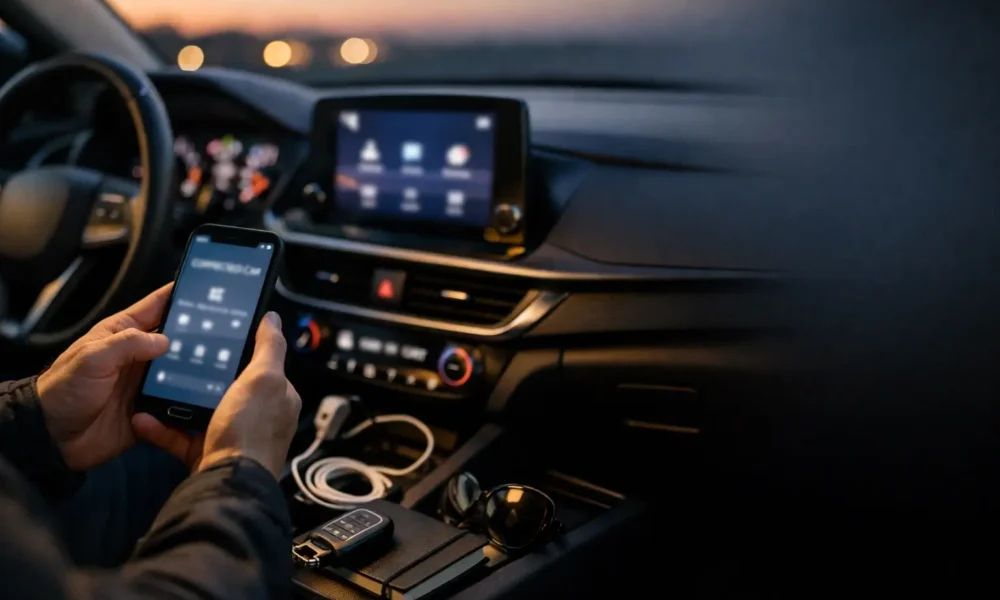
Buying a car used to be simple. You checked miles, service history, and how it drove. Now you’re also buying software, apps, and a rolling Wi-Fi hotspot.
Table Of Content
- What “Automotive Cybersecurity” Actually Means
- A 30-second definition
- What it protects
- Why This Topic Exploded (And Why It’s Not Hype)
- Features that expanded the attack surface
- Regulators got serious
- Where Cars Get Attacked (Attack Surface Map)
- The Core Process: Cybersecurity Across the Vehicle Lifecycle
- TARA in plain English
- Security-by-design and defense-in-depth
- The Defenses That Actually Matter
- How Teams Prove It’s Secure (Testing and Validation Stack)
- Common failure patterns
- After the Car Ships: Monitoring, Patching, Fleet Response
- Compliance Without the Confusion (CSMS + SUMS + Evidence)
- CSMS vs SUMS in one minute
- What OEMs need from suppliers
- What This Means for Real People (Buyers, Fleets, Engineers)
- For buyers
- For fleet operators
- For engineers and product teams
- Key Takeaways
- FAQs
- What is automotive cybersecurity in simple terms?
- Why is automotive cybersecurity suddenly a big deal?
- What is ISO/SAE 21434 and who should follow it?
- What are UN R155 and UN R156?
- What’s the difference between CSMS and SUMS?
- When did these rules start applying in the EU/UK type approval process?
- What is TARA and why do automakers do it?
- How do hackers actually get into cars (remote vs physical)?
- What are the most important cybersecurity tests for vehicle software?
- What does “continuous monitoring” mean for a vehicle fleet?
- Do over-the-air updates improve security or increase risk?
- What evidence do suppliers need to provide to OEMs for compliance?
That’s where the confusion starts. Forums argue. Ads oversell. And you’re left worrying about safety, warranty cover, and costly mistakes.
I’m David Wright, and I’ll keep this calm. Automotive cybersecurity is about keeping connected vehicles safe from cyber threats across the whole vehicle lifecycle, not just when the car’s brand new.
What “Automotive Cybersecurity” Actually Means
Cars run on networks. Inside the vehicle, many small computers (ECUs) trade messages to run brakes, steering assist, charging, infotainment, and more. That whole electrical and electronic setup is often called the vehicle’s E/E systems.
Automotive cybersecurity is the work of reducing cyberattacks and vulnerabilities across those systems. It covers the car, your phone app, and the backend services the car talks to.
It’s also about process. ISO/SAE 21434 lays out cybersecurity risk management across the lifecycle of vehicle E/E systems, from concept through operation, maintenance, and even decommissioning.
A 30-second definition
Think of it like home security for a modern car. Locks matter, but so do cameras, alarms, and how fast you react if something looks wrong.
A good approach covers prevention, detection, and response. It also keeps going after the sale, because connected vehicles keep changing through updates.
What it protects
First, it protects safety. A cyber incident can turn into a safety issue if a system misbehaves, or a driver gets bad guidance at the wrong time.
Second, it protects privacy. Cars store and send data about location, usage, and driver profiles.
Third, it protects business risk. Recalls, fixes, and reputational damage cost money, and car makers now talk about cyber incidents as a top business risk.
Why This Topic Exploded (And Why It’s Not Hype)
Cars got more connected. That sounds handy until you think about the new attack surface. Every connection is another door that needs a lock, plus a plan for what happens if the lock fails.
Software-defined vehicles pushed this faster. More features now depend on software, and software changes more often than metal.
Teams also learned a hard lesson. Software vulnerabilities have led to safety recalls, and regulators now expect manufacturers to show how they manage cyber risk.
Features that expanded the attack surface
ADAS adds sensors and data flows. It’s not “self-driving” in most cars, but it still relies on cameras, radar, and control logic.
OTA and FOTA updates add a delivery channel into the car. That channel can help fix issues fast, but it also needs strong checks and safe rollout.
V2X adds radio links to the outside world. It can help with road safety in some setups, but it adds another route for unwanted traffic if it’s poorly controlled.
Regulators got serious
In Europe and the UK type approval world, UN R155 and UN R156 changed the tone. These rules are audit-based and risk-based, so they focus on management systems, roles, and evidence, not just a one-off test.
Here’s the simple timeline many people search for, with UK context.
| Area | What changes | Key dates (EU/UK type approval context) |
|---|---|---|
| Cybersecurity (UN R155) | Applies for new whole-vehicle type approval | 06 July 2022 |
| Cybersecurity (UN R155) | Applies for existing vehicle type approval | 07 July 2024 |
| Software updating (UN R156) | Applies for new whole-vehicle type approvals (EU unlimited series) | 06 July 2022 |
| Great Britain type approval | GB brings UN R155 and UN R156 into its scheme for new types of complete and base vehicles | 01 June 2026 |
If you’re shopping today, this matters because it shapes what manufacturers must prove, and how updates get handled over time.
Where Cars Get Attacked (Attack Surface Map)
Most people picture a “hacker” jumping into the car like a film scene. Real life is usually duller and more practical.
Attack surfaces fall into two buckets. Remote entry points reach the car through networks and services. Physical entry points need someone close to the vehicle.
Common entry points include:
- Telematics (the car’s cellular link)
- Infotainment and Bluetooth
- Mobile apps tied to the car
- Backend and cloud services that support the car
- The OTA update channel
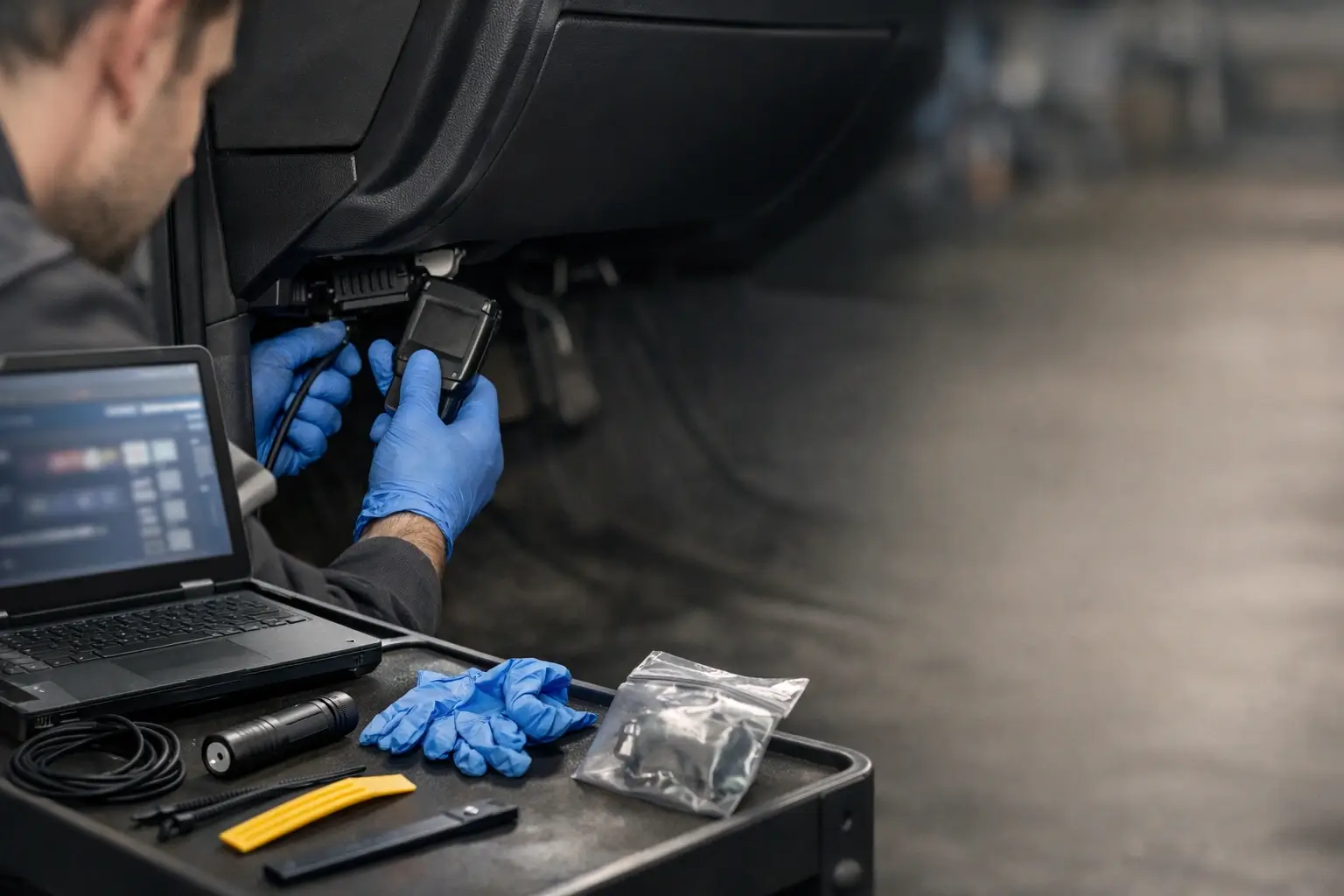
- Diagnostic interfaces like the OBD port
One weak link can matter. A car is part of a digital ecosystem, so the risk can sit in the vehicle, the phone, the server, or the supplier component that feeds them.
The Core Process: Cybersecurity Across the Vehicle Lifecycle
Security isn’t a single feature. It’s a set of repeatable steps from the first design sketches through the years the car stays on the road.
ISO/SAE 21434 sets expectations for cybersecurity engineering and risk management across the lifecycle of vehicle E/E systems. It explicitly covers concept, development, production, operation, maintenance, and decommissioning.
That lifecycle focus matters because cars stay in service for a long time. Meanwhile, threats change fast.
TARA in plain English
TARA means Threat Analysis and Risk Assessment. It’s a structured way to list threat scenarios, map attack vectors, and decide which risks need stronger controls.
In plain terms, it’s asking: “What could go wrong, how could it happen, and what do we do about it before the car ships?” You’ll also see this tied to security requirements, secure coding, and testing plans.
Security-by-design and defense-in-depth
Security-by-design means teams build controls into the design from day one. It includes guidelines, coding standards, and policies inside the secure development lifecycle.
Defense-in-depth means layers. If one layer fails, another still helps.
ETAS describes multi-layer protection that spans secure ECUs, secure onboard communication, and secure vehicle IT infrastructure, plus in-vehicle intrusion detection and backend incident response.
The Defenses That Actually Matter
It’s easy to get lost in buzzwords. I focus on what each defence does.
Cryptography protects data in motion and at rest. It helps stop snooping and tampering, but only if key management is solid.
Secure communication protocols help ECUs and services trust each other. This often links to hardware security modules (HSMs) that store keys and handle sensitive operations.
Firewalls and network segmentation help limit where messages can travel. That reduces the blast radius if one part gets compromised.
Intrusion detection watches for signals that don’t look normal. In a vehicle fleet, this can feed a vehicle SOC (sometimes called a VSOC) so incidents get triaged and handled.
How Teams Prove It’s Secure (Testing and Validation Stack)
“Secure” isn’t a feeling. It’s something teams try to show through software verification and validation.
Different tests find different problems. That’s why good programmes mix methods instead of betting on one tool.
Here’s a simple map.
| Test type | What it tends to catch | Where it fits |
|---|---|---|
| Static code analysis | Code-level issues like buffer overflows or hardcoded secrets | Early, while writing code |
| Dynamic analysis (fuzzing) | Runtime crashes and odd behaviour under unexpected inputs | Integration and system testing |
| Penetration testing | Realistic attack paths that slip through earlier checks | Late-stage and near-release |
| Vulnerability scanning + SCA | Known issues in components and third-party libraries (CVE) and weakness classes (CWE) | Ongoing during builds and updates |
SCA means Software Composition Analysis. It’s a way to track what third-party code is inside a build, then watch for known issues.
CVE is a catalogue of known vulnerabilities. CWE groups common weakness patterns. Those labels help teams talk clearly about what they found.
Common failure patterns
Patchwork fixes cause trouble. A rushed change can stop one issue and create another.
Poor update controls also hurt. If the update process lacks strong checks and safe rollback, a bad update can break features or open new holes.
Weak supplier handoffs are another risk. If a part arrives with vague evidence and unclear responsibilities, it’s hard to prove the full system stays safe.
After the Car Ships: Monitoring, Patching, Fleet Response
Cybersecurity doesn’t stop at sale. Connected vehicles keep receiving updates, and new threats keep showing up.
That’s why continuous monitoring matters. ETAS points to in-vehicle intrusion detection and backend incident response across the whole fleet and lifecycle.
Updates can be a safety tool. They can also be a risk if the process is sloppy.
A sensible post-production plan includes:
- Tracking issues across the fleet
- Prioritising what needs a patch
- Testing updates properly
- Rolling out in stages, with a clear rollback plan
Compliance Without the Confusion (CSMS + SUMS + Evidence)
These two acronyms cause more panic than they should. Here’s the plain version.
CSMS is the Cyber Security Management System under UN R155. It’s the organisational setup that shows how the manufacturer treats cyber risk, with clear roles, governance, and evidence. VCA notes these rules are audit-based and risk-based, including management system review and stakeholder interviews.
SUMS is the Software Update Management System under UN R156. UL describes it as the system that helps ensure updates are carried out safely, traceably, and in line with type approval needs, including OTA.
CSMS vs SUMS in one minute
CSMS answers: “How do we manage cyber threats across the lifecycle?” SUMS answers: “How do we push software updates safely and keep track of what’s on each vehicle?”
They’re linked. UL notes a CSMS can inform when updates are needed, and SUMS then governs how updates happen, because poor update handling can introduce new vulnerabilities or safety issues.
What OEMs need from suppliers
Only vehicle manufacturers can obtain approval under UN R155, but suppliers still matter. VCA points out manufacturers must manage supply chain risk and cascade security requirements to suppliers that could affect a vehicle type.
That usually means clearer contracts, better evidence, and tighter control of software supply chain changes.

What This Means for Real People (Buyers, Fleets, Engineers)
This topic can feel distant. It isn’t. The choices land on your driveway, your depots, and your workshop ramp.
For buyers
Updates matter more than badges. Ask how the car gets updates, and how long the manufacturer supports them.
Treat the car app like a bank app. Use strong passwords, lock down your phone, and only install official apps.
Be careful with plug-in gadgets. Cheap OBD dongles and unknown add-ons can widen the attack surface.
For fleet operators
Fleet risk is shared risk. One issue can hit many vehicles, fast.
Ask for a clear update and incident plan. You want to know how patches roll out, how issues get flagged, and who you call when something looks off.
Keep records tight. Software version tracking helps with safety, compliance evidence, and downtime planning.
For engineers and product teams
Build security into requirements early. That’s where TARA and security requirements save time later.
Mix testing methods. Static analysis, fuzzing, and penetration testing find different classes of problems.
Plan for years, not months. Post-production monitoring and response are part of the job, not an optional add-on.
Key Takeaways
Cars now depend on software. That grows the attack surface, even when the car feels normal to drive.
Cybersecurity means lifecycle work. Standards like ISO/SAE 21434 expect risk management from concept through operation and maintenance.
Rules also tightened. In the UK and Europe, UN R155 and UN R156 push audit-based proof, plus clear evidence for CSMS and SUMS.
If you want one simple buyer takeaway, it’s this. Support and updates matter as much as horsepower.
FAQs
What is automotive cybersecurity in simple terms?
Automotive cybersecurity is how car makers and suppliers protect connected vehicles from cyber threats. It covers the car’s internal computers (ECUs), the networks linking them, the phone apps that control features, and the backend services that support updates and data. It also covers the whole vehicle lifecycle.
It’s not one gadget. It’s processes, controls, and testing that reduce the chance of unsafe or costly failures.
Why is automotive cybersecurity suddenly a big deal?
Cars now rely on software, connectivity, and regular updates. That adds more entry points, more code, and more chances for vulnerabilities. Regulators also expect audit-based proof that manufacturers can manage cyber risk and software updates over time, not just at launch.
This “why now” moment is driven by real-world complexity. It’s also driven by tighter type approval expectations.
What is ISO/SAE 21434 and who should follow it?
ISO/SAE 21434 is a standard for cybersecurity engineering in road vehicles. It sets expectations for cybersecurity risk management across the lifecycle of vehicle E/E systems, from concept and development to production, operation, maintenance, and decommissioning. It’s relevant for OEMs and suppliers working on vehicle electronics and software.
It doesn’t demand one specific tool. It focuses on how teams manage risk through the build and beyond.
What are UN R155 and UN R156?
UN R155 covers cybersecurity management for vehicles through a Cyber Security Management System (CSMS). UN R156 covers software update management through a Software Update Management System (SUMS). In the UK and EU type approval space, they’re treated as audit-based and risk-based rules that ask for evidence, roles, and governance.
Think of them as “prove your process” rules. They push manufacturers to show how they manage threats and updates over time.
What’s the difference between CSMS and SUMS?
CSMS is the organisational system for managing cyber threats and risk across the vehicle lifecycle. SUMS is the organisational system for managing software updates safely and traceably, including OTA updates, and keeping track of vehicle configurations. CSMS can drive when updates are needed, while SUMS controls how updates happen.
Both rely on evidence. Both rely on clear responsibilities.
When did these rules start applying in the EU/UK type approval process?
For EU unlimited series, VCA lists key dates like 06 July 2022 for new whole-vehicle type approval and 07 July 2024 for existing vehicle type approval under cybersecurity requirements. For Great Britain type approval, VCA states the first mandatory date for new types of complete and base vehicles is set for 01 June 2026.
Dates vary by category and scheme. If you run fleets, those details can shape procurement and update planning.
What is TARA and why do automakers do it?
TARA stands for Threat Analysis and Risk Assessment. It’s how teams list threat scenarios, map attack vectors, rate risk, and turn that into security requirements. Automakers use it to decide where protections matter most, then plan testing and controls around those risks across the development and post-production phases.
It’s basically structured “what could go wrong” work. Done early, it reduces late surprises.
How do hackers actually get into cars (remote vs physical)?
Remote entry points include telematics, infotainment, apps, backend services, and the OTA update channel. Physical entry points include diagnostic interfaces like the OBD port and other access during service or repairs. Most real risks tie to weak links across the car, phone, server, or supplier component.
You don’t need a movie plot. A weak password, bad update handling, or unsafe add-on can be enough to create trouble.
What are the most important cybersecurity tests for vehicle software?
Teams usually combine static code analysis, dynamic analysis like fuzzing, and penetration testing. Static analysis finds code-level weaknesses early. Fuzzing finds runtime crashes under unexpected inputs. Pen testing checks realistic attack paths and helps show whether controls hold up in near-release or deployed setups.
SCA also matters because third-party code sits in most vehicles. It helps track components and known issue lists like CVEs.
What does “continuous monitoring” mean for a vehicle fleet?
Continuous monitoring means watching for suspicious activity after vehicles are on the road, not just before launch. It can include in-vehicle intrusion detection and a backend team that reviews events, spots patterns across the fleet, and triggers incident response steps like patches or feature changes when needed.
This is the “after the sale” reality. It’s how fleets handle new threats without waiting for a major failure.
Do over-the-air updates improve security or increase risk?
OTA updates can improve security by fixing vulnerabilities quickly across many vehicles. They can also raise risk if the update process lacks strong checks, testing, safe rollout, and rollback plans. That’s why SUMS exists, to keep updates safe, traceable, and controlled for vehicles in the field.
A good update system is a safety net. A sloppy one is a new weak point.
What evidence do suppliers need to provide to OEMs for compliance?
Manufacturers must show they manage supply chain risk, including cascading security requirements to suppliers that could affect a vehicle type. Evidence can include secure development practices, test results, vulnerability handling processes, and clear responsibilities for updates and incident response. The goal is traceable proof, not promises.
This is where contracts and change control matter. A single untracked change can cause big compliance headaches later.





No Comment! Be the first one.