




Smartphone Prices in 2026: Why Your Next Phone Could Cost ~20% More (And It’s Not Apple’s Fault)

Phone prices feel jumpy right now. One week you see deals, next week the same handset costs more. If you’re tired of mixed advice and loud takes, we’re with you.
Tech moves fast, and the jargon gets worse. Add privacy worries, contract traps, and sketchy “too good to be true” offers, and it’s easy to freeze. Today we’ll keep things plain, UK-first, and focused on what you can do.
The Quick Answer for Skimmers
Smartphone prices are under pressure. A big driver sits inside the phone, not on the logo. Memory parts like RAM and storage have jumped in cost, and supply looks tight as chip makers chase higher-profit AI server memory.
That squeeze hits most brands. Some raise prices. Some cut specs like storage tiers or RAM tiering. Some absorb cost for a while, but margins don’t stretch forever.
If you’re shopping in the UK, you still have strong options. Pair SIM-free with SIM-only, track prices, and consider refurbished with a clear warranty and returns.
What’s Actually Pushing Smartphone Prices Up?
Smartphone prices are rising mainly because key parts cost more and arrive in smaller supply. RAM and storage chips sit in almost every phone, and their prices can swing fast. When phone makers pay more for parts, they either raise the retail price or cut specs to cope.
Prices don’t move for one reason. Think of a phone like a packed lunch. If bread, cheese, and fruit all get pricier, the lunch costs more even if the box stays the same.
Memory Is the Quiet Price Killer (RAM + Storage)
RAM and storage look boring on a spec sheet. They still shape the cost of the whole device.
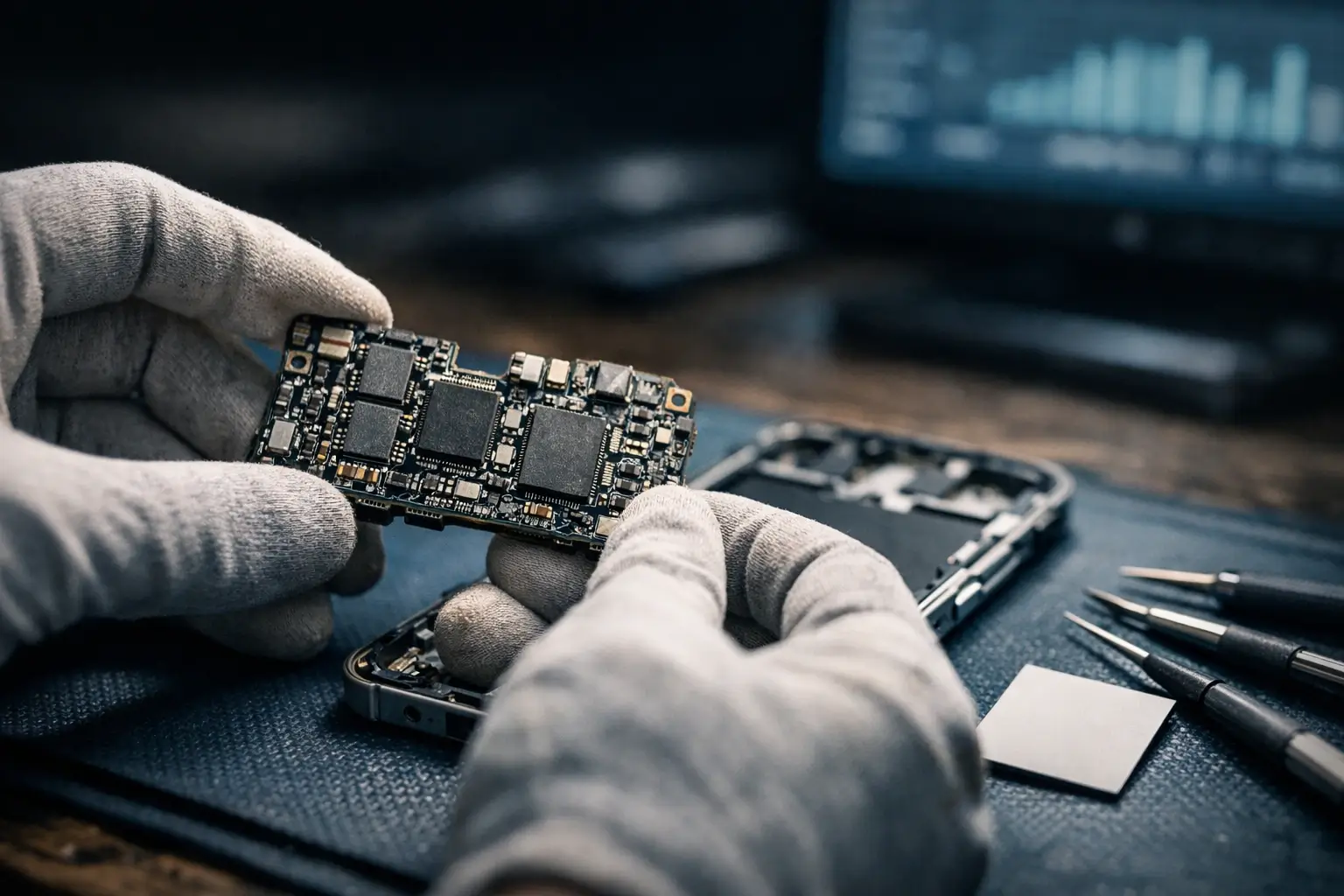
Analysts say DRAM and NAND prices have risen sharply, and availability can be limited. When that happens, brands face a moving target for both cost and supply.
Here’s the simple version.
- DRAM often means your phone’s RAM.
- NAND often means your phone’s storage.
When both get pricier, the “bill of materials” (BOM) rises too.
AI Is Competing With Phones for the Same Parts
AI data centres don’t just want GPUs. They also want huge amounts of memory, including high-bandwidth memory (HBM), because AI workloads chew through it.
Reports say chip makers have been prioritising AI-related memory like HBM, and that can squeeze supply for the more “normal” memory used in smartphones and PCs.
Industry analysis frames this as a strategic shift in manufacturing capacity, not just a short blip. If factories spend more effort on high-margin server memory, phones can end up waiting.
Brands Have 3 Options (And None Feel Good)
Brands face a short list of choices. They can raise prices, cut specs, or absorb the hit.
Market commentary explains the squeeze can force makers into hard trade-offs as parts cost more and stay harder to source.
Other reporting points to Apple trying to keep pricing steady while handling higher memory costs, which hints at the “absorb it” option. That works better for some brands than others, because margins and services income vary.
A Quick Price-Drivers Mini-Table
This isn’t a perfect maths model. It’s a shopper’s map.
| Driver | What happens | What you can do |
|---|---|---|
| Memory prices (DRAM, NAND) | RAM and storage cost more, supply tight | Watch for RAM tiering and storage tiers; consider last-year flagships |
| AI data centres + HBM prioritisation | Factories focus on higher-profit server memory | Expect slower price drops on new models |
| Retail finance + APR | Monthly payments can hide the real total | Always check total paid, not just “per month” |
| Currency swings | Imports cost more when the pound weakens | If FX looks rough, deals matter more |
“But Apple Started It…” Why This Is Bigger Than One Brand
Apple shapes headlines. It doesn’t set the price of DRAM or NAND for the whole world.
Big Names Are Feeling the Same Memory Squeeze
Reports say Apple has warned memory chip price rises are starting to bite, linked to supply constraints as major suppliers prioritise AI memory. That’s not an Apple-only issue. It’s a parts market issue.
Other coverage frames the same pressure: keep prices flat, or swallow higher costs, or adjust specs. Those are industry moves, not brand drama.
Why Mid-Range Phones May Get Hit Hardest
Mid-range phones often win on value. They don’t have much spare margin.
Analysts warn the device market can face limited component availability and rising costs, which can lead to spec trade-offs. In plain terms, mid-range can lose storage, RAM, or “nice-to-have” extras first.
That’s why “cheap” can feel less cheap in 2026. The floor price rises, even if the top price stays loud.
What This Means for Shoppers in the UK
UK shoppers have more routes than ever. That’s good, but it also creates noise.
The “Real” Price of a Phone (SIM-Free vs Pay Monthly)
SIM-free prices look clear. Pay monthly can look smaller, because it’s split into chunks.
Retailers show SIM-free shopping language plus finance options and representative APR examples, which tells us many buyers will see “spread the cost” messaging while browsing.
Deal sites explain that SIM-only plans often avoid long commitments, and can be cheaper than monthly contracts. That’s the key idea: separate the phone cost from the airtime cost, then do the maths.
Here’s the quick maths we use:
Monthly total = (phone monthly cost + plan monthly cost) x months.
Then add any upfront cost.
The Best Ways to Avoid Paying Tomorrow’s Prices
We can’t control memory prices. We can control how we shop.
Start with three strong tactics.
- Pair SIM-free + SIM-only. SIM-only often keeps commitment shorter and cost lower than full contracts.
- Go refurbished or used with a clear warranty. Use a price-comparison mindset, then check warranty and returns at the seller.
- Use trade-in value wisely. Trade-in programmes have condition rules and time windows. Always read the terms and timing.
One more tip that saves real money.
Don’t buy storage you’ll outgrow in six months. Low storage tiers can push you into cloud add-ons, which raises total cost of ownership.
Track Prices Like a Pro
Price comparison helps you spot the real “best price.” It also stops you from falling for a fake discount.
Price-comparison tools are useful for tracking price drops, spotting deals, and checking if something’s truly on sale.
Use alerts and price trackers where possible. If you see a price jump after payday, don’t panic. Check history, then wait a week if you can.
Timing: When Prices Tend to Drop
Timing won’t fix a supply squeeze. It can still save money.
Deal guides note that price drops on older models often start in late August and continue through September and early October around big launches. That matches how UK discount windows often work.
Money coverage also points to classic sale periods like Black Friday and Boxing Day as times bargains tend to show up.
If you’re flexible, time becomes a tool. If you need a phone now, use shopping rules instead of waiting rules.
What Specs Are Worth Paying For (And What’s Marketing Fluff)
Specs can feel like a trap. Brands throw numbers at you, and half of them don’t matter for your day.
The “Must-Haves” List by Budget Tier
Buying guides often lean on practical checks for budget phones, including NFC, IP rating, and long software support with security patches. Those are real-life features, not brag numbers.
Here’s a UK-friendly, plain list by price band.
- Under £200: battery life, acceptable camera, enough storage, basic 5G if available, clear update policy.
- Under £300: NFC for payments, better display, stronger cameras, some water resistance if possible.
- Under £500: OLED display, 120Hz refresh rate, stronger chipset, longer updates, better night photos.
- Under £1,000: top cameras, top display, premium build, best update policy, strong resale value.
If a phone lacks NFC, it can annoy you daily. If it lacks security patches, it can hurt you quietly. Both belong on the “pay attention” list for good reason.
The Hidden Cost Traps
Some costs don’t show at checkout. They show up later.
Watch for these traps.
- Low storage tiers. You’ll hit limits fast, then pay for cloud storage or delete stuff weekly.
- Short update support. Fewer security patches can raise privacy risk over time.
- Weak repairability. A small crack becomes a big bill, so a “cheap” phone can cost more over two years.
Total cost of ownership beats sticker price. That’s the only way to compare fairly.
What Changed in 2026?
The phone market always changes. The 2026 twist sits in parts supply.
Industry analysis says the memory shortage isn’t just the usual up and down cycle. It ties to how global manufacturing capacity gets allocated, with supply growth below past norms and availability limited.
Reporting adds the here-and-now: suppliers prioritising AI memory can squeeze conventional DRAM used in smartphones, and that pressure can keep going through 2026 and beyond.
That’s why a 20% price increase doesn’t sound wild. It won’t hit every model the same way, but the pressure is real.
Spec Downgrade Watchlist
When costs rise, brands often “trim” before they “charge.” This is where shoppers get caught.
Look for these signals in listings and reviews.
- RAM tiering gets tight. The base model keeps the same price, but RAM stays low.
- Storage tiers shrink. You see 128GB where you expected 256GB.
- Charging slows down. Fast charging becomes a paid add-on in pricier models.
- Extras vanish. Fewer camera sensors, fewer accessories, less durable build.
If you spot two phones at the same price, check RAM and storage first. Those parts sit close to the supply squeeze story.

Bottom Line: How to Buy Smart in a Year of Rising Smartphone Prices
We don’t need hype. We need a plan.
A Simple 3-Step Decision Tree
Step 1: Set your budget.
Pick a price band, not a brand. Use under £200, £300, £500, or £1,000 as your guardrails.
Step 2: Choose SIM-free + SIM-only vs pay monthly.
If you want flexibility, SIM-only deals can avoid long commitments and can cost less overall.
Step 3: Pick new vs refurbished, then track prices.
Use price comparison to check best price, then buy from sellers with clear warranty and returns.
If you follow those steps, you’ll feel calmer. You’ll also make fewer rushed choices, which is where bad deals and risky sellers win.
FAQs
Why Are Smartphone Prices Going Up in 2026?
Smartphone prices are going up because key components cost more and supply stays tight. Memory chips used for RAM and storage have risen in price, and suppliers are prioritising higher-profit AI server memory. That pushes up the parts cost for many brands, not just one.
If you only see “Apple did it,” you’re missing the bigger picture. Parts markets move across the whole industry, and brands react in similar ways.
Will Smartphone Prices Go Down Later in 2026?
Some prices can drop later in 2026, but not always for the newest models. Older phones often fall when new launches arrive, and big sale periods can help. If memory supply stays tight, the “floor price” may stay higher even when discounts appear on older stock.
If you need a phone soon, shop smart rather than waiting for a perfect moment.
Is It Cheaper to Buy SIM-Free and Get a SIM-Only Deal?
It’s often cheaper to buy SIM-free and use a SIM-only plan, because you separate the phone cost from the airtime cost. SIM-only can avoid long commitments, and you can switch more easily. The key is to compare the full total paid over the same number of months.
Do the maths once, then your choice feels obvious.
Are Refurbished Phones Safe to Buy in the UK? What Warranty Should We Expect?
Refurbished phones can be a good buy if you stick to clear rules. Check the grade, confirm the warranty length, and read the returns policy before paying. Use price comparison to find a fair price, then choose sellers that explain condition, support, and refunds in plain language.
Avoid listings that hide battery health, condition, or return steps.
How Much RAM Do We Really Need for a Phone in 2026?
Most people are fine with 6GB to 8GB of RAM for everyday use in 2026, but heavy multitasking and gaming can need more. RAM matters because it links to DRAM supply and cost, and brands may use RAM tiering to manage shortages. Check RAM before you pay.
If you keep phones for years, extra RAM can help the phone feel smooth longer.
What’s the Best Time of Year to Buy a Phone in the UK?
In the UK, prices on older models often drop around major launches, especially late August through September and early October. Big sales like Black Friday can also bring real discounts. Timing won’t beat every price rise, but it can help you avoid paying full launch-day prices.
If you can wait a few weeks, you’ll often see better deals.
Is 5G Worth Paying More for Now?
For most people, 5G is worth it if you keep a phone for more than two years. It can improve speed and reduce congestion in busy areas, but it depends on coverage where you live. Don’t pay extra for 5G if the phone sacrifices updates, battery life, or storage to hit the price.
Coverage matters more than logos on the box.
How Can We Track a Phone Price and Spot a Real Deal?
Use price comparison to check today’s price across retailers, then watch for patterns over time. A real deal usually shows a clear drop versus recent history, not just a “was” price that nobody paid. Price trackers and alerts help you wait for a true price drop without checking daily.
Also check delivery, returns, and warranty. Those details change the true value.
Should We Buy Last Year’s Flagship Instead of a New Mid-Range Phone?
Last year’s flagship can be a smarter buy if it offers longer updates, better cameras, and stronger build quality at a discounted price. New mid-range phones can get hit by spec cuts like smaller storage tiers when costs rise. Compare updates, battery, and resale value, not just the launch year.
If you like keeping phones longer, flagships often age better.
Do AI Features Make Phones More Expensive (And Do We Need Them)?
AI features can add cost, but the bigger price pressure right now comes from shared components like memory. AI data centres compete for memory supply, which can raise costs across the industry. Most people don’t need every AI tool, so don’t pay extra unless it saves you time in daily tasks.
Treat AI features like any other feature. Pay for what you’ll actually use.








[…] reading here, and that’s the right mental model. In fact, one TechRadar piece tried replacing a smartphone with a phone-sized e-reader for everyday tasks, using a Boox Palma model as the case […]
[…] is an “everything we know” guide to the iPhone Fold. It’s a foldable iPhone (also called an Apple foldable phone) that’s widely expected to land in fall 2026, with a headline iPhone Fold price rumour around […]
[…] isn’t the same as affordable. A low price can hide high running costs. Here are the “gotchas” I see over and […]
[…] check affordability. A lower car price can still feel costly if the APR is […]
[…] depends on stage. Pre-seed? Basic assumptions about pricing and costs are fine. Seed? You need a proper financial model with revenue projections, cost structure, and […]
[…] or border cost → landed cost → distributor pricing → dealer margin and stock risk → finance residuals → used car […]
[…] 3–6 months of monthly running costs, before revenue settles. Buffer: 10–20% for unexpected costs and price creep. That last two items are where the $12k turns into […]
[…] (or UK ASA): a simple agreement that turns into shares later, usually at the next priced […]
[…] and it’s the reason a backup strategy isn’t optional. Without one, a single lost phone can cost you access to critical […]
[…] that the contact has an email address or phone number in your Contacts app that matches their Apple Account. Ask them to check their iOS or macOS version too. Sorting those two things resolves the […]
[…] When the situation is genuinely uncertain, structure becomes a useful anchor rather than a bureaucratic obstacle. A shared framework to return to reduces the coordination cost of not knowing exactly what comes next. […]