




Panasonic NEBS6AK Review: Specs, Performance & Real Kitchen Tips
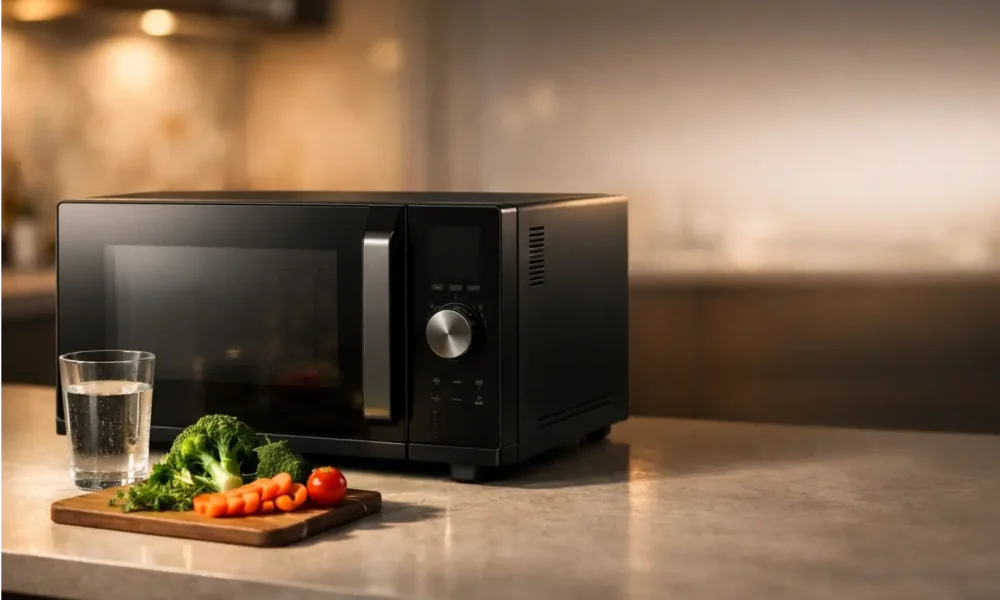
Choosing a countertop steam oven microwave can feel like a trap. One page says “steam fixes everything,” another says “it’s just a microwave,” and the specs read like a maths test. If you’re worried about wasting money, cooking unsafe food, or buying something that doesn’t even fit your kitchen, you’re not alone.
Table Of Content
- Quick Verdict
- Best For
- Not Ideal If…
- Specs at a Glance
- What These Numbers Mean in a Real Kitchen
- Design & Usability
- Controls & Display (カラータッチ)
- Door & Ergonomics
- Size, Placement & Ventilation
- Cooking Tech
- Flat High-Power Heater & Double-Sided Grilling
- Heat Grill Tray (ヒートグリル皿): Crisp Without Flipping
- Sensors & Even Heating
- A Note on Cyclone Wave Heating
- Performance Tests
- Toast Test
- Crisp-Bottom Tip vs Soft-Bottom Tip
- Reheating Leftovers Without Drying
- Defrost Performance
- Steam Cooking
- Baking & Proofing
- 10-Minute Menus
- What Cookware You’ll Want
- Cleaning, Descaling, and Long-Term Care
- Daily and Weekly Routine
- Auto-Clean Courses and Timings
- Water Tank Care
- A Simple Maintenance Rhythm
- NE-BS6A-K vs NE-BS658
- Key Differences That Matter
- Cleaning and Ceiling Design
- Pros and Cons
- Pros
- Cons
- Price, Value, and Where to Buy
- Power and Transformer Risk
- When Wiring Work Becomes Official
- FAQs
- Is NEBS6AK the same as NE-BS6A-K?
- Can the Panasonic NEBS6AK toast bread? How long does it take?
- How many slices can you toast at once?
- What’s the difference between toast and steam toast?
- Does it cook evenly, or do you get hot spots?
- What is the Swing Search infrared sensor and what does it do?
- Does the 1000W microwave power stay on the whole time?
- What is the oven temperature range, and does 250°C hold?
- How do you clean the water tank, and can you use detergent or a dishwasher?
- What is citric acid cleaning (クエン酸洗浄) and how often should you do it?
- Is it safe to place under cabinets? What clearance does Panasonic recommend?
- NE-BS6A vs NE-BS658: which should I buy?
This Panasonic NEBS6AK review cuts through the noise and sticks to facts, plain language, and real kitchen habits. By the end, you’ll know what NEBS6AK (NE-BS6A-K / NE-BS6A, ビストロ / Bistro) can do, where it can annoy you, and how to set it up safely.
Quick Verdict
Best For
If you want one box that handles steam + oven combo cooking, this model makes sense. It’s a 25L capacity steam oven range / スチームオーブンレンジ with a flat cavity and a steam tank, so it can reheat, grill, bake, and steam without juggling three appliances.
It also suits people who like guided cooking. Panasonic lists 160 auto menus, plus a touch screen setup (カラータッチ).
Not Ideal If…
If you want “set one dial and go,” the learning curve may bug you. You’ll also need to accept the 100V power standard, which matters a lot if you’re outside Japan.
And if you often cook for a big group, 25L can feel tight. It’s roomy for daily meals, not giant trays.
Specs at a Glance
Here are the numbers that actually affect your kitchen.
| Spec | Panasonic NE-BS6A (NEBS6AK family) |
|---|---|
| Capacity | 25L (総庫内容量 25L) |
| External size | 500 × 400 × 347mm |
| Internal size | 319 × 350 × 223mm |
| Weight | 15.7kg |
| Water tank | 600mL (給水タンク / タンク容量) |
| Clearance | Sides 2cm, top 10cm+ |
| Microwave max | 1000W (about 3 min, then 600W) |
| Manual microwave | 800 / 600 / 500 / 300 / 150W (+ 300W steam) |
| Oven range | 80–250°C (250°C for 5 min, then 210°C) |
| Grill | 1.35kW |
| Steam | 1000W (650W+350W), superheated steam (過熱水蒸気) |
| Proofing | 35 / 40°C |
| Annual energy | 70.4kWh/year |
| Door open depth | 670mm open, 449mm max depth including handle |
What These Numbers Mean in a Real Kitchen
The 500mm width is “microwave-sized,” but the 670mm door-open depth surprises people. Plan for it like a drawer. If the oven sits on a tight counter run, you may bump into the open door.
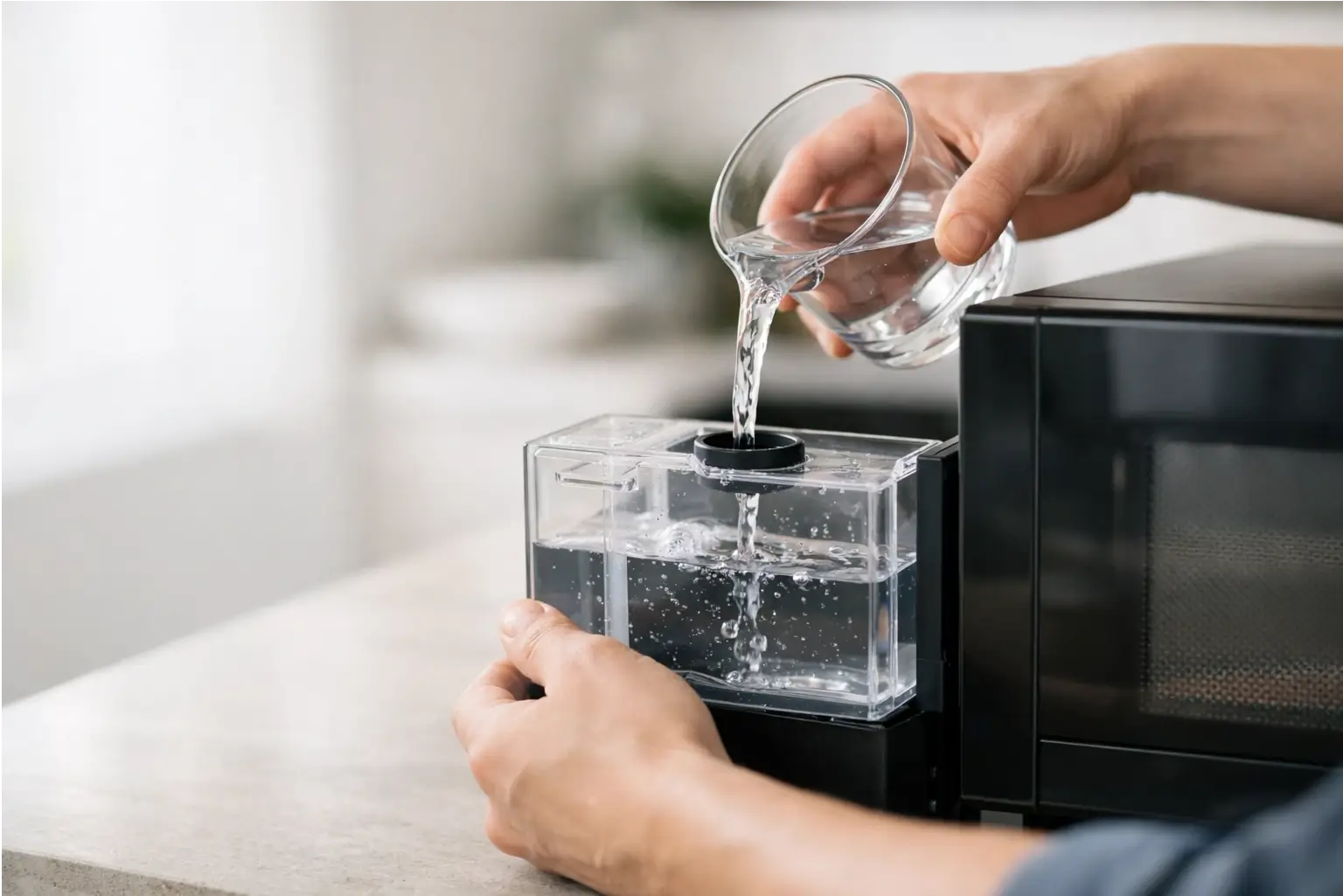
The 600mL tank usually covers a normal run of steam cooking, but you still need the habit of topping it up. Forget once and you’ll wonder why steam isn’t showing.
Design & Usability
Controls & Display (カラータッチ)
This model uses a colour touch display (カラータッチ). It’s made for menu picking, not guesswork. That’s great when you’re tired and just want a button that does the right thing.
It also helps with “what mode do I use?” stress. You get fewer wrong turns than you do with old-school dials.
Door & Ergonomics
Panasonic lists a soft-damper door (ソフトダンパー). It closes in a controlled way, which feels safer when hands are wet or you’re holding a hot tray.
Size, Placement & Ventilation
Panasonic’s clearance guide is simple: 2cm on both sides and 10cm+ above. That top gap matters, because heat and steam need somewhere to go.
If you plan to slide it under a wall cabinet, measure twice. Steam hitting a cabinet base over time can swell cheap chipboard.
Cooking Tech
Flat High-Power Heater & Double-Sided Grilling
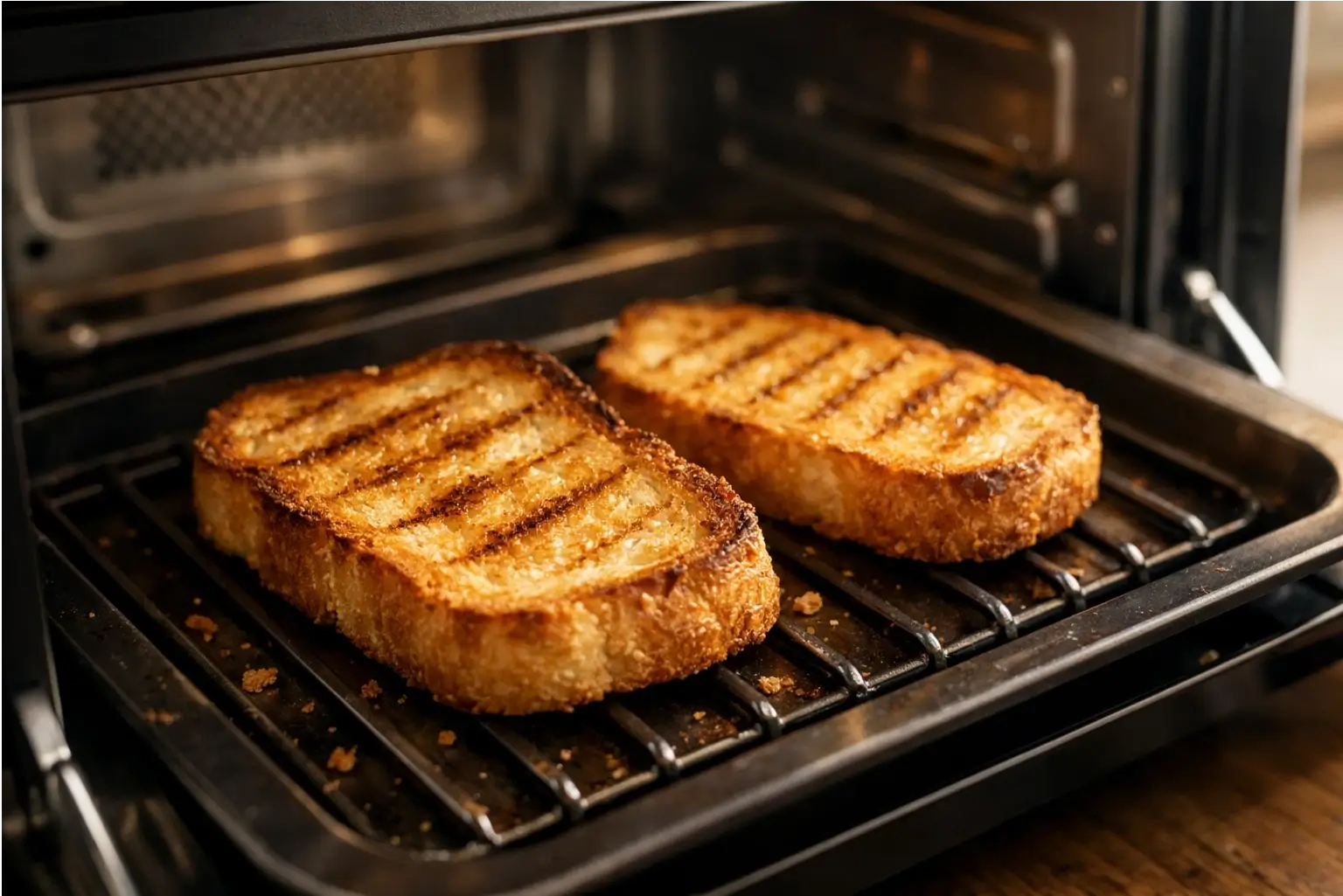
This unit uses a flat high-power heater (大火力平面ヒーター) and supports double-sided grilling (両面グリル).
In plain terms, it’s built to brown from above and below with less babysitting. That matters for fish, chicken pieces, and anything you want crisp.
Heat Grill Tray (ヒートグリル皿): Crisp Without Flipping
Panasonic includes a heat grill tray (ヒートグリル皿). It’s the “no flipping needed (裏返さなくても)” idea you’ll see owners talk about.
Treat it like a hot plate inside the oven. Preheating it can change your results more than changing the temperature.
Sensors & Even Heating
Panasonic lists a Swing Search infrared sensor (スイングサーチ赤外線センサー) and an inverter (インバーター).
The short version: the sensor watches food temperature patterns, while inverter control helps adjust power smoothly. That combo aims to cut hot spots and cold centres, especially on reheat and defrost.
A Note on Cyclone Wave Heating
You’ll see people mention Cyclone Wave heating (サイクロンウェーブ加熱) when they talk about Panasonic defrost results. It’s often described as a pattern of microwave energy that moves around to avoid patchy thawing.
Panasonic also markets “defrost that loosens to the centre” on this model: 芯までほぐせる解凍 (full or half defrost).
Performance Tests
This is the section that stops buyer regret. Below are starting points, then the small tweaks that fix common complaints like soggy toast or dry leftovers.
Toast Test
The owner-style timing guidance for NE-BS6A looks like this:
- Toast (トースト): 1 slice ~4:55, up to 4 slices
- Steam toast (スチームトースト): 1 slice ~6:15, 2 slices ~7:00
Those times can shift with bread thickness and fridge-cold bread. Still, they’re a useful baseline.
Crisp-Bottom Tip vs Soft-Bottom Tip
Steam toast can leave the bottom softer. That’s normal when moisture stays in the bread.
If you want a crisper base, three habits help. Don’t crowd slices — leave gaps so steam and heat flow. Give it a 1-minute rest with the door cracked open. If your tray allows it, warm the tray first.
Reheating Leftovers Without Drying
Steam-assisted reheat shines on rice, pasta, and chicken. The goal isn’t to soak food. The goal is to keep moisture around the surface while the centre warms.
Two real-kitchen rules help: reheat in a shallow bowl, not a deep mug, and stir halfway when you can, because any microwave can still form hot spots.
Also remember the 1000W headline number has a catch. Panasonic says it runs as a short high-power mode (up to about 3 minutes) and then drops to 600W during cooking.
Defrost Performance
This model lists 芯までほぐせる解凍, which aims to loosen frozen food through the middle.
To stop the half-cooked edge effect, split thick blocks before defrost — even one cut helps. Use a plate, not foil and not a deep bowl. Let meat rest 5 to 10 minutes after defrost so cold spots level out.
If you rush from defrost to grilling, the surface can over-brown while the core stays cold.
Steam Cooking
Steam is where this oven feels like a kitchen upgrade, not a gadget. Panasonic lists superheated steam (過熱水蒸気) and 1000W steam output.
For veg, keep pieces similar in size. If broccoli stems are thick, slice them. That one step can fix “tops cooked, stems hard.”
For fish, dry the surface first. Steam plus wet skin makes sticking more likely, even on a good tray.
Baking & Proofing
Panasonic lists proofing/fermentation at 35°C and 40°C.
That’s handy if your kitchen runs cold. Treat it like a warm cupboard. Cover dough so it doesn’t dry out, and don’t proof right next to a hot tray you just used.
10-Minute Menus
Panasonic fans talk a lot about the “10-minute” shortcuts. You’ll see names like:
- こんがり10分
- 蒸し物10分
- 煮物10分
- 中華10分
These are guided patterns, not magic. They use preset power and heat steps to hit a “good enough” result fast.
What Cookware You’ll Want
One practical note from owner-style writeups: have a heatproof glass bowl and oven mitts ready for these quick menus.
Silicone tongs are also useful for turning hot food on the grill tray. Metal forks scratch coatings fast.
Cleaning, Descaling, and Long-Term Care
Steam ovens fail when people ignore upkeep. Not because the parts are weak, but because limescale and grease build up in quiet corners.
Daily and Weekly Routine
Wipe the cavity after cooking. Do it while it’s still slightly warm, not stone cold. You need less force, and you avoid baked-on splatter.
Also empty and air-dry the water tank (給水タンク). It’s basic hygiene.
Auto-Clean Courses and Timings
Owner-style notes list several auto-care options and rough run times, including:
- Wash/drain (洗浄・水抜き): ~30 seconds
- Cavity clean (庫内): ~30 minutes
- Ceiling or deodorise: ~40 minutes
- Citric acid wash (クエン酸洗浄): ~29 minutes
Panasonic lists auto-clean courses (自動お手入れコース) and includes citric acid cleaning (クエン酸洗浄) on the spec sheet.
Water Tank Care
A common warning from user guides: don’t put tank parts in a dishwasher, and don’t wash them with detergent unless the manual says so.
That’s not fussiness. Detergent film can cause smells, and heat can warp parts.
A Simple Maintenance Rhythm
Daily: quick wipe, empty tank, dry tray. Weekly: deeper wipe, check the door seal area. Monthly: run a clean cycle, wash tank parts by hand. When scale shows: run クエン酸洗浄.
NE-BS6A-K vs NE-BS658
These models sit close, so the choice often comes down to small details.
Key Differences That Matter
Panasonic lists the following distinctions:
- Capacity: NE-BS6A = 25L vs NE-BS658 = 26L
- Auto menus: 160 vs 167
- Tank: 600mL vs 560mL
- Grill heater: flat high-power heater vs far-infrared W heater (遠赤Wヒーター)
- Internal height: 223mm vs 215mm
Cleaning and Ceiling Design
NE-BS658 is listed with ceiling coating and “ceiling auto-clean” as part of care features.
Some comparison writeups also point out that a flatter ceiling area can feel easier to wipe in daily life. If you hate cleaning, that detail matters more than one extra litre.
Pros and Cons
Pros
Clear official specs, including placement clearances and door-open depth. Strong steam setup with 600mL tank and 過熱水蒸気. Toast guidance exists, including steam toast timing. Double-sided grill support with a dedicated tray.
Cons
100V power means extra planning outside Japan. 1000W is a short burst, not a constant setting. Steam gear adds cleaning tasks, including descaling.
Price, Value, and Where to Buy
In the UK, NEBS6AK is often an import buy. That changes the “value” story, because you’re not only paying for the oven. You’re also paying for safe power conversion and the right setup.
Power and Transformer Risk
Panasonic lists the unit as 100V 50/60Hz.
A step-down transformer can help, but don’t treat it like a cheap phone charger. The UK’s Office for Product Safety and Standards has issued product safety reports on step-down transformers that posed a serious electric shock risk, including missing earthing and non-compliant plugs.
If you import, buy electrical gear from reputable sellers and consider a qualified electrician’s advice on safe connection.
When Wiring Work Becomes Official
If you end up adding a new circuit for a high-load kitchen appliance, Part P can come into play. Local authority building control guidance notes that some work, like installing a new circuit or consumer unit replacement, needs notification and proper certification routes.
This isn’t about red tape. It’s about fire risk, shock risk, and paperwork you may need later.
FAQs
Is NEBS6AK the same as NE-BS6A-K?
NEBS6AK is commonly used as an English shorthand for Panasonic’s NE-BS6A series naming, and you’ll often see it written alongside NE-BS6A-K. The core product people mean is Panasonic’s 25L steam oven microwave with the same headline spec set and feature labels.
Can the Panasonic NEBS6AK toast bread? How long does it take?
Yes, it can toast. Owner-style timing notes for the NE-BS6A list about 4 minutes 55 seconds for one slice on the toast mode. It’s a solid starting point, but bread thickness and starting temperature can shift results by a bit.
How many slices can you toast at once?
Toast capacity is often listed as up to four slices for the toast setting on NE-BS6A. You’ll get better browning if you leave small gaps between slices, because crowding blocks heat flow and can leave pale patches even when the timer finishes.
What’s the difference between toast and steam toast?
Steam toast adds moisture during heating. Notes for NE-BS6A put steam toast at about 6 minutes 15 seconds for one slice, and about 7 minutes for two slices. Steam can keep the inside softer, while standard toast tends to dry the crumb more.
Does it cook evenly, or do you get hot spots?
It’s built to reduce uneven warming using Panasonic’s Swing Search infrared sensor and inverter control. That said, any microwave can still form hot spots if food is piled high or sits in a deep container. Spreading food out and stirring halfway helps.
What is the Swing Search infrared sensor and what does it do?
Panasonic lists a Swing Search infrared sensor on this model. In plain terms, it scans surface temperature patterns to help choose power and timing for auto heating. It’s most useful for reheating and defrost modes where small changes in food mass can change results fast.
Does the 1000W microwave power stay on the whole time?
No. Panasonic states the 1000W output is a short high-power function that runs for up to about three minutes, then the unit switches to 600W during cooking. It also notes this behaviour applies to limited automatic menus rather than every possible use case.
What is the oven temperature range, and does 250°C hold?
The oven range is listed as 80–250°C. Panasonic also notes that 250°C runs for about five minutes, then the unit switches to 210°C. That means you can use 250°C as a quick heat push, but not as a long steady bake temperature.
How do you clean the water tank, and can you use detergent or a dishwasher?
User guidance for NE-BS6A commonly warns against putting tank parts in a dishwasher and against using detergent on certain parts. A safer habit is hand-washing with water, then air-drying. It helps avoid warped parts, residue smells, and steam flow problems later.
What is citric acid cleaning (クエン酸洗浄) and how often should you do it?
Citric acid cleaning is a descaling cycle meant to break down mineral build-up from water. Panasonic lists クエン酸洗浄 as part of the auto-care courses on this model. Frequency depends on your water hardness, but it’s smart to run it when you see scale signs or steam output drops.
Is it safe to place under cabinets? What clearance does Panasonic recommend?
Panasonic’s guidance calls for at least 2cm of space on both sides and 10cm or more above the unit. Also plan for the door-open depth, listed as 670mm, so it doesn’t clash with handles or wall units. If cabinets are low, steam can also stress finishes over time.
NE-BS6A vs NE-BS658: which should I buy?
Pick NE-BS6A if you want the 600mL tank and the flat high-power heater setup in the 25L body. Pick NE-BS658 if you want 26L capacity and more auto menus, and you like its listed ceiling auto-clean features. Both share 100V power and similar size.






[…] Panasonic NEBS6AK Review: Specs, Performance & Real Kitchen Tips […]
[…] builds familiarity. Familiarity often translates to reliability. Over time, a distinctive term like nebs6ak can evolve from an unfamiliar word into a recognized digital […]