




Home Energy Audit Credit: How to Make It Actually Worth It
You’ve probably heard that the government will pay you to get a home energy audit. That sounds appealing – but then the questions start piling up. How much is the credit, exactly? Do you even qualify? And is it really worth booking an audit in the first place? I get it. Tax credits for home improvements can feel like a maze, and one wrong step means missing out on money you’re legitimately entitled to.
Table Of Content
- What Is the Home Energy Audit Tax Credit?
- How Much Is the Credit Worth?
- Why the Non-Refundable Rule Actually Matters
- Who Qualifies for the Home Energy Audit Credit?
- Homeowners: Rules for Your Primary Residence
- Can Renters Claim the Home Energy Audit Credit?
- Who Is NOT Eligible
- What Makes a Home Energy Audit Qualify?
- The Audit Report Must Include These 4 Things
- Finding a DOE-Certified Home Energy Auditor
- Recognised Certification Programmes (BPI, RESNET, and More)
- Questions to Ask Before Hiring an Auditor
- How to Claim the Home Energy Audit Credit: Step-by-Step
- Step 1: Confirm Eligibility Before the Audit
- Step 2: Get the Right Documentation from Your Auditor
- Step 3: File IRS Form 5695 with Your Tax Return
- Is the Home Energy Audit Credit Actually Worth It? (Real Numbers)
- What Does a Home Energy Audit Actually Cost?
- The Math: Credit + Savings = Real ROI
- State Rebates and Utility Programmes That Stack With the Credit
- Using Your Audit to Unlock Up to $3,200/Year in Tax Credits
- The Annual Credit Limit Structure Explained
- A 3-Year Credit Stacking Strategy
- Why the Audit Should Come First
- The Credit Expired Dec. 31, 2025: What Are Your Options Now?
- If You Completed Your Audit Before Dec. 31, 2025
- Still Worth Getting an Audit in 2026?
- FAQs
- How much is the home energy audit tax credit?
- Do I need to itemize deductions to claim the home energy audit credit?
- Can renters claim the home energy audit credit?
- What form do I use to claim the home energy audit credit?
- Does the home energy audit credit count toward the $3,200 annual limit?
- What is a qualified home energy auditor?
- Is the home energy audit credit still available in 2026?
- How much does a home energy audit cost without the credit?
- Can I claim the home energy audit credit in multiple years?
- What improvements does a home energy audit typically recommend?
Here’s the short version. The home energy audit credit gives you back 30% of your audit cost, up to a maximum $150 credit, through Section 25C of the federal tax code. You don’t need to itemize your deductions to claim it. Just file IRS Form 5695 – the Residential Energy Credits form – with your regular federal tax return. But honestly, the $150 is the least interesting part. The real value is what the audit tells you about your home, and how that information opens the door to up to $3,200 per year in energy efficient home improvement credits. That’s what this guide is really about.
What Is the Home Energy Audit Tax Credit?
The home energy audit tax credit is a federal income tax credit under Section 25C, updated by the Inflation Reduction Act of 2022. It covers 30% of a qualifying audit’s cost, up to $150 per year. You claim it on IRS Form 5695 with your annual federal tax return. No itemizing required.
The credit was introduced as part of the broader energy efficient home improvement credit – a package of federal tax credits designed to reduce home energy use across the country. Before the Inflation Reduction Act updated the programme in 2022, the credits had lower limits and a lifetime cap. The 2022 update reset everything to annual limits, making it far more useful for homeowners planning upgrades over multiple years.
The $150 audit credit sits within a larger $1,200 annual cap that also covers building envelope improvements like insulation and air sealing. That means the audit credit and your insulation upgrades share one combined annual bucket – something worth knowing before you plan your claims for the year.
How Much Is the Credit Worth?
The home energy audit credit is worth 30% of your audit cost, capped at $150. If your audit costs $400, you get $120 back. If it costs $500 or more, you hit the $150 maximum. The credit applies to the year the audit was completed, not when you file.
Here’s the maths in plain terms:
| Audit Cost | Credit (30%) | Maximum Applied |
|---|---|---|
| $300 | $90 | $90 |
| $400 | $120 | $120 |
| $500 | $150 | $150 (cap) |
| $600 | $180 | $150 (cap) |
The cap kicks in at $500, so spending more than that on the audit itself won’t increase your credit. That said, a more thorough audit typically costs $400-$600 and covers far more ground – blower door tests, thermal imaging scans, HVAC efficiency assessments – all of which produce recommendations that can lead to far larger savings over time.
Why the Non-Refundable Rule Actually Matters
This is one of those details that catches a lot of people off guard. The home energy audit credit is non-refundable, which means it can only reduce your federal income tax bill to zero. It can’t put money back in your pocket beyond what you already owe.
Say you owe just $80 in federal income taxes for the year. Even if you’re entitled to the full $150 credit, you’ll only receive $80 worth of benefit. The remaining $70 doesn’t carry forward to next year, and it doesn’t come back as a cash refund.
This matters most for retirees, part-time workers, and lower-income filers whose federal tax liability is small. If that’s your situation, the credit’s real value to you may be less than the headline figure suggests. Worth knowing before you spend $500 on an audit specifically to get the tax benefit.
Who Qualifies for the Home Energy Audit Credit?
To qualify for the home energy audit credit, you must pay federal income taxes, live in the audited home as your primary residence, and hire a certified home energy auditor. There’s no income limit. The home must be an existing US property and cannot be new construction, a vacation home, or rental property.
Homeowners: Rules for Your Primary Residence
The audit must be carried out on your principal residence – the home where you live most of the year. Existing homes qualify across many property types, including houses, condos, co-ops, manufactured homes, houseboats, and mobile homes. New construction does not qualify for this credit.
Your second home, holiday cottage, or investment property doesn’t count here. The credit applies only to the home you actually live in. If you own multiple properties, you can still claim the credit – but only for the one you call your primary residence.
You also can’t claim the credit for a property you’re renting out to tenants, even if it’s your only property. The home must be where you live, not where someone else lives.
Can Renters Claim the Home Energy Audit Credit?
Yes, renters can claim the home energy audit credit for their primary residence. The key requirement is where you live, not who owns the home. Landlords cannot claim the credit for properties they rent to others. The credit belongs to the occupant who paid for the audit.
In practice, a renter can hire a certified energy auditor for their flat or house, pay for the audit out of pocket, and then claim the 30% credit on their own tax return. The landlord gets nothing from this credit. Only the tenant who paid for the audit and lives in the property can make the claim.
If you’re a renter considering this, keep your receipt from the auditor and the signed written audit report. You’ll need both when you file IRS Form 5695.
Who Is NOT Eligible
To keep it simple, here’s who can’t claim the home energy audit credit:
- Landlords auditing a rental property they don’t personally live in
- Anyone auditing a second home, vacation home, or holiday property
- Anyone auditing a property outside the United States
- Anyone whose audit was carried out on a newly built home
- Anyone with no federal income tax liability
If you fall into any of these categories, the federal credit won’t apply to you. That said, state-level programmes and utility rebates may still offer incentives worth looking into.
What Makes a Home Energy Audit Qualify?
A qualifying home energy audit must be carried out by a certified home energy auditor, produce a written inspection report, and identify the most cost-effective energy efficiency improvements for your home. The report must also include estimated cost savings for each recommended improvement. An audit without a written report doesn’t qualify.
This is where many people go wrong. Not every home inspection qualifies as a home energy audit under IRS rules. The requirements are specific – and if your audit doesn’t meet them, your credit claim won’t hold up.
The Audit Report Must Include These 4 Things
Your auditor’s written report must contain all four of the following:
- The auditor’s full name and employer identification number (EIN) or taxpayer identification number (TIN)
- Written confirmation of the auditor’s certification from a DOE-recognised qualification programme
- A list of the most significant energy efficiency improvements for your specific home
- An estimated cost savings figure for each recommended improvement
Keep this signed report in your personal tax records. You don’t send it to the IRS with your return – but you must hold onto it in case of a future IRS review. Treat it exactly like any other supporting tax document.
Finding a DOE-Certified Home Energy Auditor
Not everyone who calls themselves an energy auditor holds certification to the standard the IRS requires. Your auditor must be certified by a programme recognised by the Department of Energy (DOE) at the time the audit is carried out.
The most straightforward way to find a certified auditor is through the DOE’s qualification programmes list at energy.gov. The site details which certification bodies are formally recognised and points you toward local certified professionals.
Two widely recognised options are auditors certified through the Building Performance Institute (BPI) or those holding the RESNET HERS rater designation. Both meet the DOE’s qualification requirements under IRS Notice 2023-59. If you’re unsure whether an auditor qualifies, ask them to confirm their current certification and show you the documentation.
Recognised Certification Programmes (BPI, RESNET, and More)
| Certification Body | Programme Name | DOE-Recognised? |
|---|---|---|
| Building Performance Institute | BPI Building Analyst | Yes |
| RESNET | HERS Rater | Yes |
| Department of Energy | Home Energy Score Assessor | Yes |
| ENERGY STAR | Certified Contractor (selected programmes) | Verify at energy.gov |
Always confirm that the auditor’s certification is current before you book. The certification must be valid at the time of the audit itself – not just at some point in the past.
Questions to Ask Before Hiring an Auditor
Before you commit to hiring anyone, ask these questions directly:
- What certification do you hold, and is it currently active?
- Will you provide a signed written report that includes your EIN or TIN?
- Does your report include estimated cost savings for each improvement you identify?
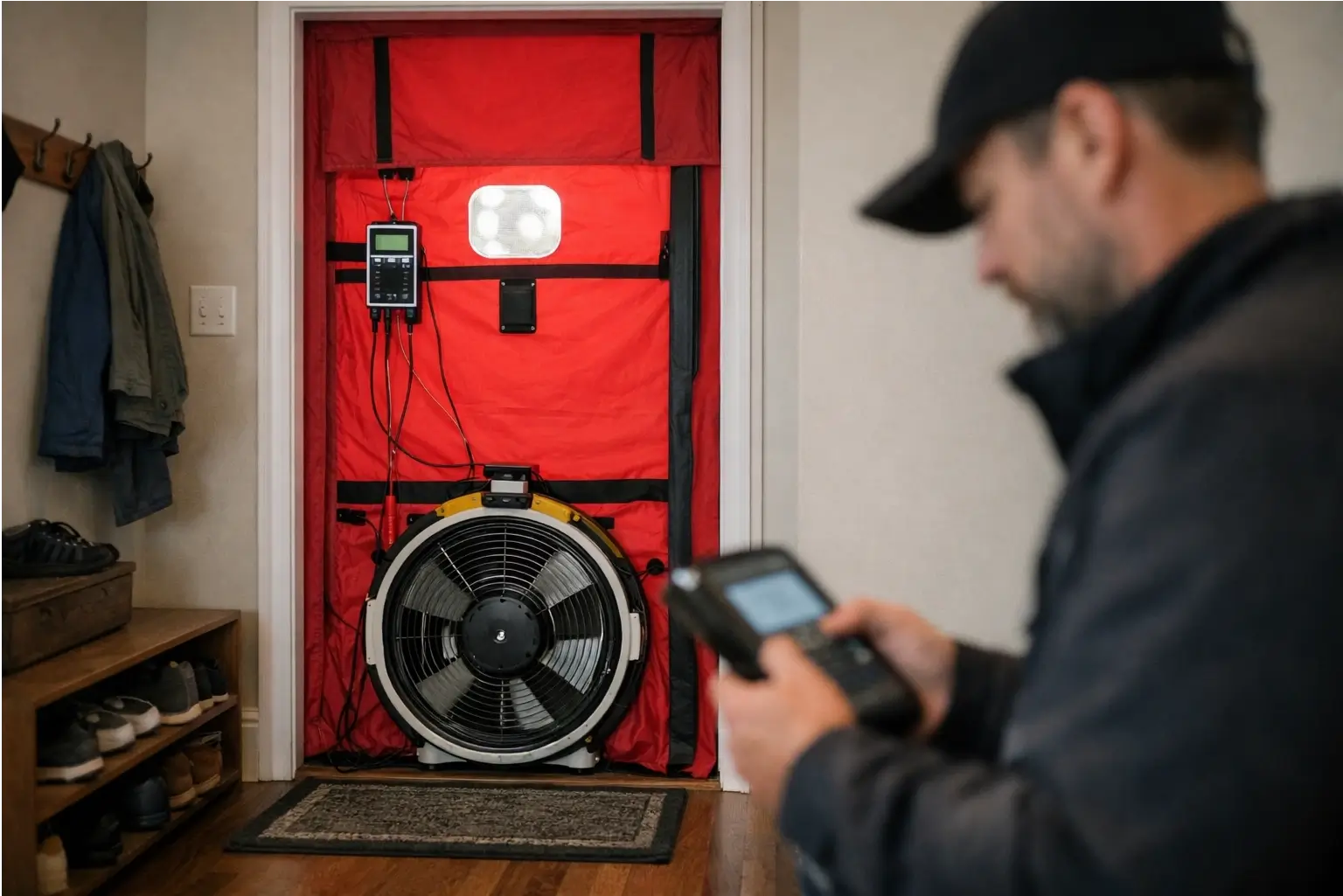
- Do you carry out blower door tests and thermal imaging scans as part of the inspection?
A reputable, qualified auditor will answer all of these without hesitation. If someone hedges on the certification question or doesn’t know what an EIN is, that’s a clear red flag.
How to Claim the Home Energy Audit Credit: Step-by-Step
Claiming the credit is more straightforward than most people expect. You don’t need a separate filing, and you don’t need to itemize your deductions. Here’s exactly how it works.
Step 1: Confirm Eligibility Before the Audit
Before spending money on an audit, confirm your home and situation actually qualify. Run through this checklist:
- The property is your primary residence, located in the US
- It’s an existing home – not a newly built property
- You pay federal income taxes
- You plan to hire a certified home energy auditor, not just any contractor
If the Section 25C credit was still active when your audit was carried out – that is, before 31 December 2025 – you’re in a position to claim on your 2025 return. The credit expired at the end of 2025, but any audit completed before that date still qualifies.
Step 2: Get the Right Documentation from Your Auditor
After the audit, make sure you receive a written report that meets all IRS requirements. Check for:
- The auditor’s full name and EIN/TIN
- Written confirmation of their DOE-recognised certification
- A list of the most significant energy efficiency improvements recommended
- Estimated energy cost savings for each improvement listed
Keep a copy of this report in your personal records. You do not file it with your return – but you must hold onto it in case of a future IRS review. Don’t skip this step.
Step 3: File IRS Form 5695 with Your Tax Return
IRS Form 5695, the Residential Energy Credits form, is where you claim the home energy audit credit. Complete Part II of the form, enter your qualified audit costs, and the form calculates 30% of that amount – capped at $150.
Form 5695 attaches to your standard federal tax return, Form 1040. Most major tax software platforms – including TurboTax and H&R Block – include Form 5695 and walk you through it step-by-step. Claim the credit for the year the audit was completed, not the year you file. If your audit was done in late 2025, you claim it on your 2025 return, filed in spring 2026.
Is the Home Energy Audit Credit Actually Worth It? (Real Numbers)
For most homeowners, yes. The home energy audit credit is worth it, but not mainly because of the $150. The real return comes from the energy savings the audit identifies, and the larger tax credits it helps you access. The payback period on audit costs is typically under a year.
I want to give you the full picture with actual numbers – because most articles don’t bother.
What Does a Home Energy Audit Actually Cost?
A professional home energy audit in the US typically costs between $300 and $600. Basic inspections sit at the lower end; a thorough audit with a blower door test, thermal imaging, and written report sits in the $400 to $600 range. Some utility companies offer free audits to their customers.
| Audit Type | Typical Cost | What’s Included |
|---|---|---|
| Basic visual inspection | $150-$250 | Walk-through, general recommendations |
| Standard professional audit | $300-$400 | Blower door test, insulation review, written report |
| In-depth professional audit | $400-$600 | Thermal imaging, HVAC assessment, full savings estimates |
If your utility company offers a free home energy audit, take it. You won’t qualify for the $150 federal credit on a free audit – you didn’t pay anything – but you’ll still receive the written report that can guide your upgrades and help you access other credits.
The Math: Credit + Savings = Real ROI
Here’s a worked example using a mid-range professional audit:
| Item | Figure |
|---|---|
| Audit cost | $400 |
| 30% tax credit received | -$120 |
| Net out-of-pocket cost | $280 |
| Annual energy savings identified by audit | $350 |
| Payback period on net cost | ~10 months |
After that first year, you’re saving $350 on your energy bills annually. The $280 you actually spent pays for itself in under a year. And if you act on the bigger upgrades the audit recommends – proper insulation, a heat pump, new windows – those savings grow year on year.
The audit isn’t really a cost. It’s a road map to a much bigger long-term return.
State Rebates and Utility Programmes That Stack With the Credit
Here’s something most guides skip entirely. Several states and utility companies offer their own rebates for home energy audits – separate from and in addition to the federal credit. In some cases, these bring your net audit cost down to near zero.
The HOMES Rebate Programme (Home Owner Managing Energy Savings) and the HEAR Programme (High-Efficiency Electric Home Rebate Act) – both part of the Inflation Reduction Act – offer additional incentives tied to energy efficiency upgrades. Some of these programmes require a qualifying audit as a prerequisite, which means the audit pays for itself just by making you eligible for the larger rebate.
Check your state energy office website and your utility provider before booking an audit. A quick search for your state name and “home energy audit rebate” will point you to what’s available locally.
Using Your Audit to Unlock Up to $3,200/Year in Tax Credits
This is the part most people don’t know about – and it’s where the home energy audit credit really earns its place.
The energy efficient home improvement credit doesn’t just cover audits. It covers a wide range of home upgrades, and the annual limits reset every year. A well-planned multi-year strategy can produce thousands of dollars in total tax credits – well beyond the $150 the audit generates on its own.
The Annual Credit Limit Structure Explained
The Section 25C credit runs on two separate annual caps:
| Category | Annual Cap | What It Covers |
|---|---|---|
| Building envelope + energy property | $1,200 | Insulation, air sealing, windows, doors, audit |
| Heat pumps and biomass boilers | $2,000 | Heat pump HVAC, heat pump water heaters, biomass boilers |
| Total combined annual limit | $3,200 | Both categories combined |
The $150 audit credit counts toward the $1,200 bucket. In a year where you also add insulation and air sealing, you could claim up to $1,200 total from that bucket – with the audit as one item within it. The heat pump category sits on top of that, adding another $2,000 annually.
These limits reset every January 1st. You’re not drawing from a lifetime cap – it’s a fresh $3,200 available each year while the programme is active.
A 3-Year Credit Stacking Strategy
Here’s how a homeowner can plan improvements across three years to get the most out of these annual limits:
| Year | Improvements | Estimated Credits Available |
|---|---|---|
| Year 1 | Audit ($150) + insulation and air sealing credit | Up to $1,200 |
| Year 2 | Heat pump tax credit ($2,000) + energy-efficient windows ($600) | Up to $2,600 |
| Year 3 | Heat pump water heater ($2,000) + electric panel upgrade ($600) | Up to $2,600 |
Spread out the right way, a homeowner could claim up to $6,400 in federal tax credits over three years – all from improvements a single audit helped them plan and prioritise.
Why the Audit Should Come First
Carrying out the audit before any upgrades isn’t just a credit technicality – it’s genuinely smart planning. The audit tells you which improvements will save the most energy per dollar spent, and in what order they make sense for your specific home.
Adding a heat pump to a poorly insulated home, for example, is like fitting a high-performance engine to a car with no doors. The pump works overtime to make up for heat loss, and you get a fraction of the efficiency you paid for. Insulate first, then upgrade the HVAC – that’s the order a qualified auditor will most likely recommend, and it’s the order that produces the best long-term return.
A certified auditor also calculates the right capacity for your home’s actual heat load – not just its square footage. That prevents over-sizing your HVAC system, which is a common and expensive mistake that leaves homeowners with equipment that runs inefficiently from day one.

The Credit Expired Dec. 31, 2025: What Are Your Options Now?
The Section 25C home energy audit credit expired on 31 December 2025. If you’re reading this in 2026 or later, new audits no longer qualify for the federal credit. Some older guides still present this credit as active – they’re out of date. That said, there are still real options available, and if you completed an audit before the deadline, the credit is still within reach.
If You Completed Your Audit Before Dec. 31, 2025
Good news: the deadline was for completing the audit, not for filing your return. If your audit was finished before 31 December 2025, you can still claim the credit on your 2025 federal tax return, filed in spring 2026.
File IRS Form 5695 as part of your 2025 return. Make sure your documentation is in order: signed written report, auditor’s EIN or TIN, confirmation of current certification, and the list of recommended improvements with savings estimates. Keep all of this in your personal records – you don’t send it with the return.
Still Worth Getting an Audit in 2026?
Yes, a home energy audit is still worth getting in 2026, even without the federal credit. Many states offer their own audit rebates. Utility companies often run free or subsidised programmes. And an audit is often required to access HOMES or HEAR rebate funding through the Inflation Reduction Act.
State energy offices and utility providers have stepped in to fill some of the gap left by the expired federal credit. Programmes vary by location, but several states offer rebates of $100-$300 for professional audits. In some areas, lower-income households can access the Weatherisation Assistance Programme (WAP), which covers the audit cost in full.
Even without any rebate at all, the energy savings an audit identifies – and the upgrade road map it produces – typically pay back the audit cost within months. The federal credit made it even more attractive, but the underlying value of a professional home energy inspection hasn’t changed.
FAQs
How much is the home energy audit tax credit?
The credit is 30% of your audit cost, capped at a maximum of $150. A $300 audit gives you $90 back; a $500 or higher audit gives you the full $150. It’s a non-refundable tax credit, so it can only reduce your federal tax bill to zero. It won’t produce a refund if your liability is lower than the credit amount.
Do I need to itemize deductions to claim the home energy audit credit?
No. The Section 25C credit is a tax credit, not a deduction. You can take the standard deduction and still claim it in full. Tax credits directly reduce your tax bill, dollar for dollar, regardless of whether you itemize.
Can renters claim the home energy audit credit?
Yes. Renters can claim the credit for an audit carried out on their primary residence. The home doesn’t need to be owned by the person claiming the credit. However, landlords cannot claim it for properties they rent out. Only the occupant who paid for the audit and lives in the home can make the claim.
What form do I use to claim the home energy audit credit?
You file IRS Form 5695, the Residential Energy Credits form, as part of your annual federal tax return (Form 1040). Complete Part II of the form with your qualifying audit costs. Most tax software platforms include this form and guide you through it automatically.
Does the home energy audit credit count toward the $3,200 annual limit?
Yes. The $150 audit credit falls within the $1,200 annual cap that covers building envelope and energy property improvements. You can claim the audit credit and additional insulation or window credits in the same tax year, as long as the total from that category stays within the $1,200 combined cap.
What is a qualified home energy auditor?
A qualified home energy auditor is an individual certified by a DOE-recognised programme – such as the Building Performance Institute (BPI) or RESNET (as a HERS rater) – at the time the audit is carried out. Their name, EIN or TIN, and certification details must appear in the signed written report they provide you.
Is the home energy audit credit still available in 2026?
The Section 25C credit expired on 31 December 2025. Audits completed before that date can still be claimed on your 2025 federal tax return, filed in spring 2026. Audits completed in 2026 or later no longer qualify for the federal credit. State and utility incentive programmes may still apply depending on where you live.
How much does a home energy audit cost without the credit?
A professional audit typically costs $300-$600 for most homes. With the $150 federal credit applied, your net out-of-pocket cost would be $150-$450. Some utility companies offer free or low-cost audits independently of the federal programme – worth checking before you book anything.
Can I claim the home energy audit credit in multiple years?
Yes – while the programme was active, the credit reset each tax year. Claiming it in one year didn’t stop you from claiming it again the following year, as long as each audit was a separate qualifying event at your primary residence.
What improvements does a home energy audit typically recommend?
Most professional audits flag attic insulation, air leakage and air sealing, HVAC efficiency upgrades, window replacements, and water heater improvements as the most cost-effective fixes. The specific priorities depend on your home’s age, construction type, and existing systems – which is exactly why the written report from a certified auditor is so valuable.








[…] Home Energy Audit Credit: How to Make It Actually Worth It (2025 & Beyond) […]